Nepal Presses India for More Airspace Access as PM Balendra Shah Visits New Delhi on 22-23 November
Why It MattersThe dispute shows how a single corridor can shape which airports and airlines are commercially viable, while a neighbour's security, capacity and sequencing concerns slow route liberalisation across decades of talks.
What happened
Nepal is expected to raise long-running disputes over cross-border air routes when Prime Minister Balendra Shah visits New Delhi on 22-23 November. Nepal's request for additional airspace has featured in several high-level meetings and has repeatedly neared resolution before stalling.
Nepal's immediate focus is the L626 route, which links Kathmandu with Delhi via Mahendranagar in western Nepal and Pantnagar in Uttarakhand. Nepal wants international aircraft to be able to use it in both directions; at present it is available only for outbound flights from Nepal. L626 is about 20 miles shorter than the existing B345 corridor, which connects Kathmandu and Delhi via Bhairahawa and Lucknow. Opening L626 to inbound flights would route international aircraft through about 291 nautical miles of Nepalese airspace, against about 100 nautical miles on B345.
Under the current arrangement, most international flights arriving from the west must enter through the single Simara corridor before proceeding to Kathmandu. Nepal's Tourism Ministry estimates that aircraft approaching Pokhara from western destinations must fly an additional 185 km because alternative entry routes are unavailable. Of the 28 international airlines serving Nepal, about half enter from the east. Nepal argues that the restrictions undermine the commercial viability of Gautam Buddha International Airport (Bhairahawa) and Pokhara International Airport.
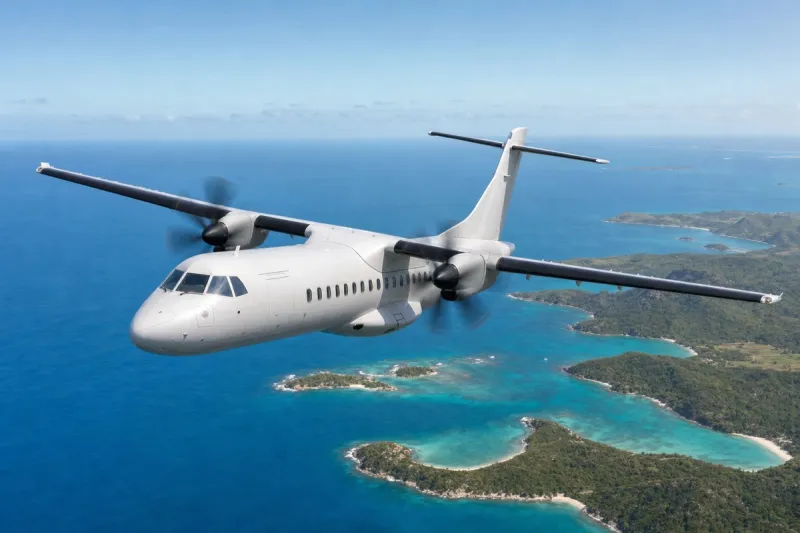
An Indian aviation official said the Simara corridor operates below traffic levels normally considered manageable under international standards and questioned whether congestion justified immediate expansion. The official also said India's assessment must weigh Nepal's capacity in air traffic control, technical staffing, airport security and regulatory oversight, and suggested a gradual approach. India had earlier proposed allowing smaller turboprops such as ATRs to use lower-altitude airspace first, but that proposal did not progress because Nepal did not accept it.
A decade of stalled talks
The history of the issue spans more than a decade. During Prime Minister Narendra Modi's August 2014 visit to Nepal, the two governments agreed that additional entry points through Janakpur, Bhairahawa and Nepalgunj would help connectivity; a six-month deadline passed without agreement.
In 2016 the countries agreed in principle to two-way operations on L626, but India sought further internal consultations, citing military installations in the Gorakhpur region. In February 2017 they agreed to set up a joint technical team. By April 2018 India appeared more receptive.
A reciprocal element
The latest talks add a reciprocal element. Nepalese media reported that a Civil Aviation Authority of Nepal delegation travelled to India last week to discuss additional airspace and to accommodate India's request for use of Nepali airspace for international flights to and from Bagdogra.
Nepali media have reported that India has sought reciprocal permission for aircraft operating to and from Bagdogra airport in West Bengal, which also functions as an Indian Air Force base under Eastern Command, to use part of Nepalese airspace. Sources cited by ANI on Sunday said there are no such proposals.
Industry impact & what to watch
The case illustrates how airspace access, not just airport infrastructure, determines the economics of a smaller market. When most western arrivals funnel through one entry corridor, a secondary airport such as Pokhara inherits extra flying distance before an airline has sold a seat, and that weighs on route decisions.
It also shows why corridor negotiations tend to move slowly. The Indian side frames the question around traffic thresholds, the receiving country's controller staffing and oversight capacity, and military installations near the route, while Nepal frames it around commercial viability. Each side is arguing from a different metric, which makes a phased compromise more plausible than a full opening.
The next concrete marker is the 22-23 November meeting itself. Whether a joint technical process or a staged opening of L626 emerges from it, and whether the Bagdogra question is formally tabled by either government, will show if this round differs from the earlier ones that stalled.