Southern California Airports Race to Complete Terminal Expansions Before 2028 Los Angeles Olympics
Why It MattersA fixed Olympic deadline is forcing airports to compress multi-year terminal and airside construction into live operations, testing how contractors sequence heavy work without disrupting scheduled flights.
What happened
Airport operators across Southern California are accelerating infrastructure overhauls to meet a deadline set by the July 2028 Los Angeles Olympic and Paralympic Games. Los Angeles World Airports launched a multi-billion-dollar modernization program at LAX, with construction beginning in early 2026 under contractor Clark Construction.
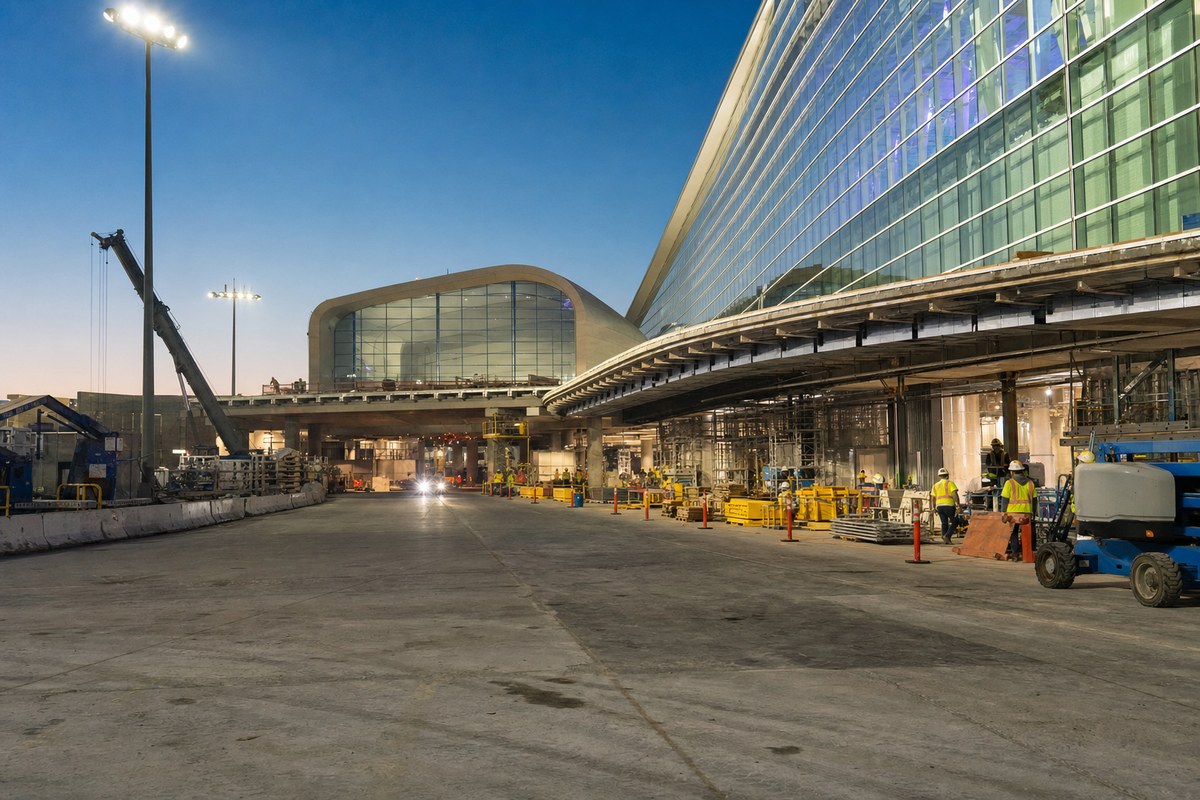
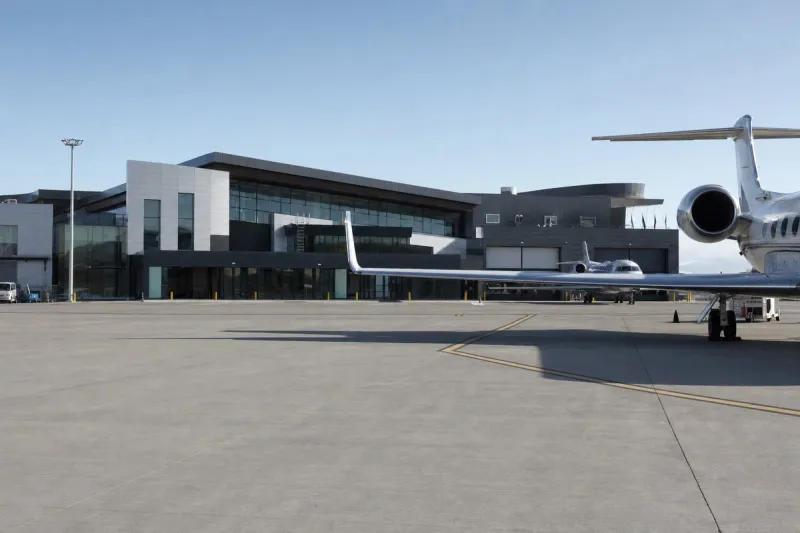
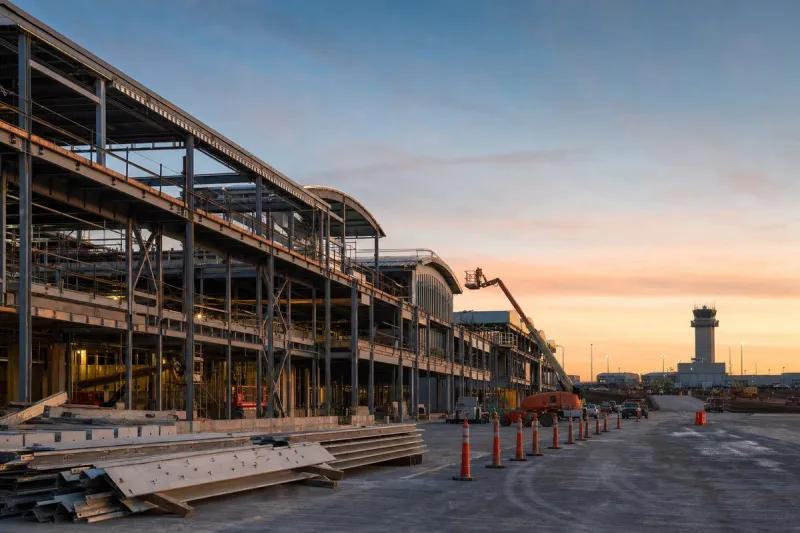
The Tom Bradley International Terminal is receiving a $203 million refresh covering 200,000 sq feet (18,580 sq meters) of passenger processing space, including modernizing more than 200 check-in counters, installing self-service bag drop kiosks, upgrading baggage handling systems, and replacing 60,000 sq feet (5,574 sq meters) of overhead skylights. At Terminal 4, LAX's primary hub for American Airlines, construction teams placed the final steel beam in 2026, moving the project into its interior fit-out phase, with new centralized automated security screening lanes, wider circulation corridors, modernized gate podiums, and upgraded baggage handling facilities. A post-security passenger connector will link Terminal 4 directly to Tom Bradley International Terminal and Terminal 5, letting travelers move between domestic and international gates without re-clearing security.
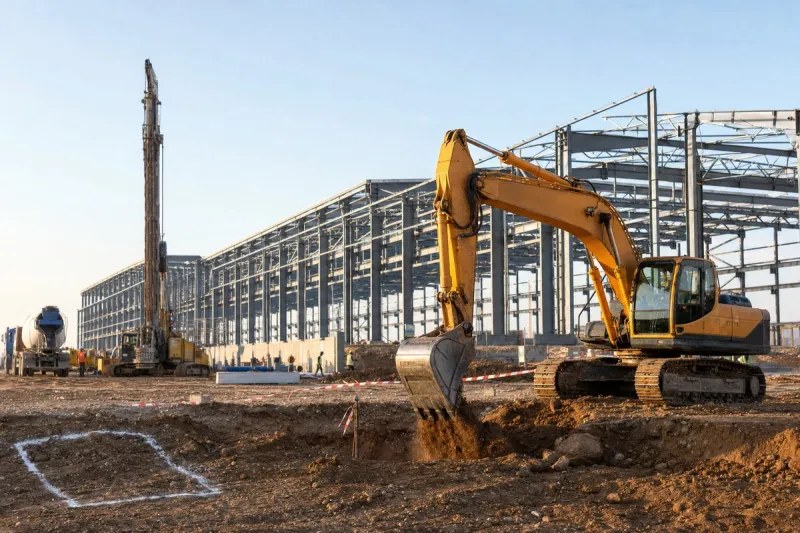
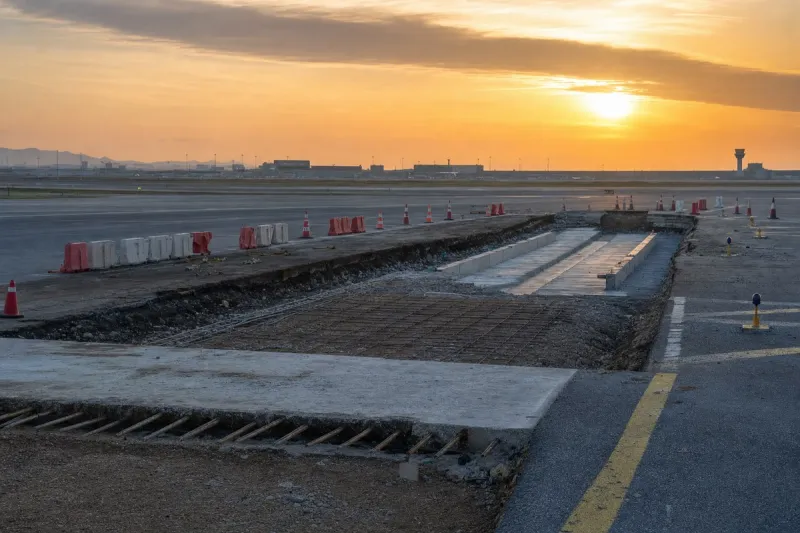
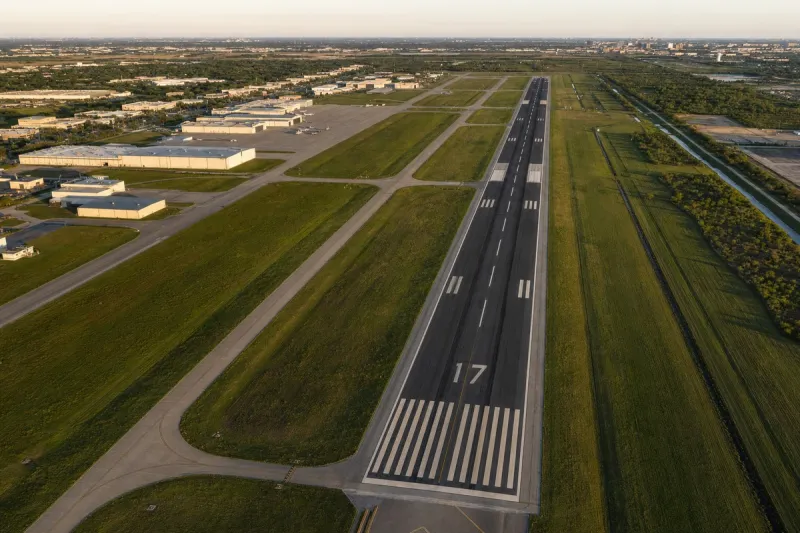
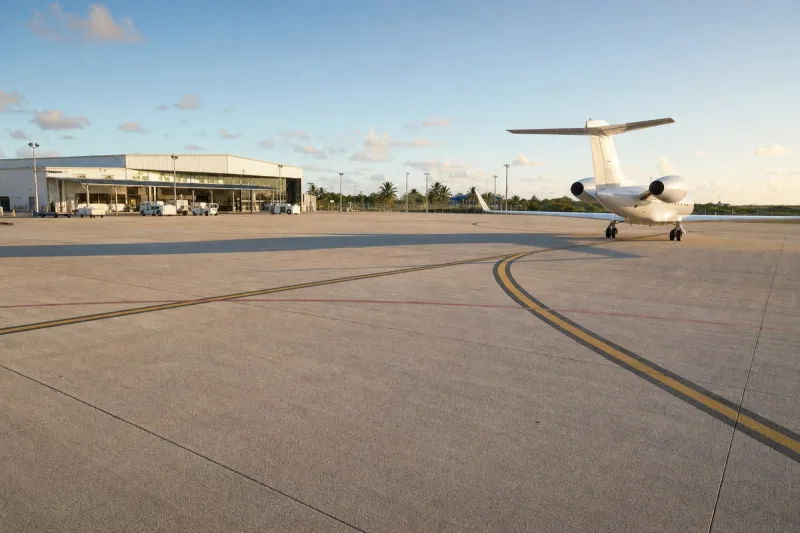
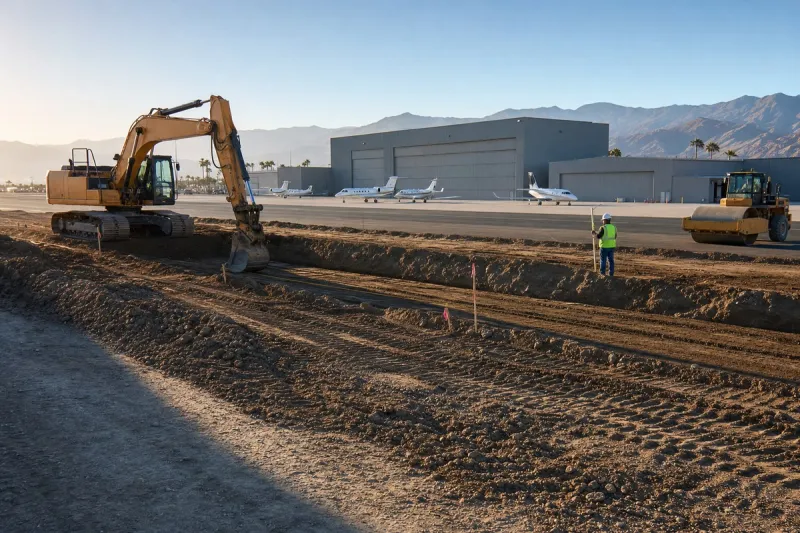
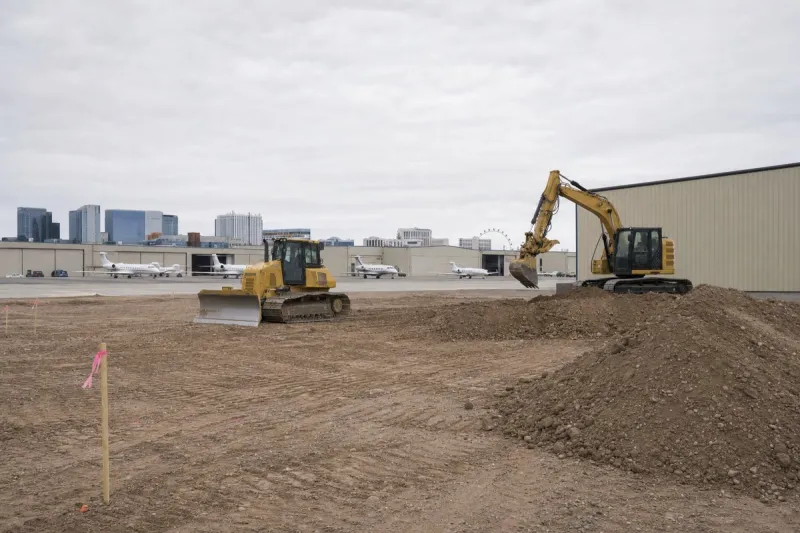
Airside, LAX is reconfiguring high-speed taxiway exits and expanding dual-taxiway corridors to create additional clearance margins for large widebody aircraft such as the Airbus A350 and Boeing 777, alongside landside work on elevated pedestrian bridges, consolidated ground transportation islands, and roadways connecting concourses to regional transit networks. All construction across LAX's 3,500-acre (1,416-hectare) campus is carried out in live operational conditions, using temporary partition walls, dust containment barriers, and overnight construction windows, with heavy structural work restricted to nighttime hours and Foreign Object Debris sweeps enforced along apron boundaries.
Twenty miles (32 km) south of downtown Los Angeles, Long Beach Airport broke ground in April 2026 on a $37 million concourse enhancement project covering shade structures, modern gate podiums, expanded passenger hold rooms, and upgraded restrooms and concession spaces. Construction is scheduled for completion by summer 2027, giving one year of operational testing before peak Olympic passenger volumes arrive. Long Beach Airport operates under strict noise limits and a slot-controlled framework, with carriers including Southwest Airlines using the facility.
Industry impact & what to watch
A fixed global event date compresses what would normally be years of phased terminal work into a hard construction window, forcing airports to run heavy renovation programs alongside live flight schedules rather than through extended closures. LAX's approach of overnight structural work, temporary partitions, and dust containment behind active gates illustrates how large hub airports manage this trade-off: operations continue, but contractors absorb schedule risk by limiting themselves to narrow nighttime hours.
The two projects also show how airports of different sizes plan differently for the same deadline. LAX is undertaking terminal-wide systems changes, including a passenger connector meant to reduce security re-clearance across three terminals, while Long Beach's smaller, slot-controlled operation is pursuing a more contained concourse upgrade with a full year of buffer before peak Olympic traffic. That buffer at Long Beach, finishing by summer 2027 for a July 2028 event, stands in contrast to LAX's Terminal 4 work, which was only entering interior fit-out in 2026.
Whether LAX's terminal and airside projects, including the taxiway reconfigurations for widebody aircraft, are complete and tested well ahead of the Games will be the clearest signal of how much schedule margin remains once construction shifts from steelwork to finishing and systems integration.