CU Boulder Researcher Develops Phononic Subsurfaces to Reduce Aircraft Drag and Improve Fuel Efficiency
Why It MattersThe findings point toward a passive, shape-preserving drag-reduction approach that could eventually inform fuel-efficiency research across aerospace, marine and industrial turbomachinery applications.
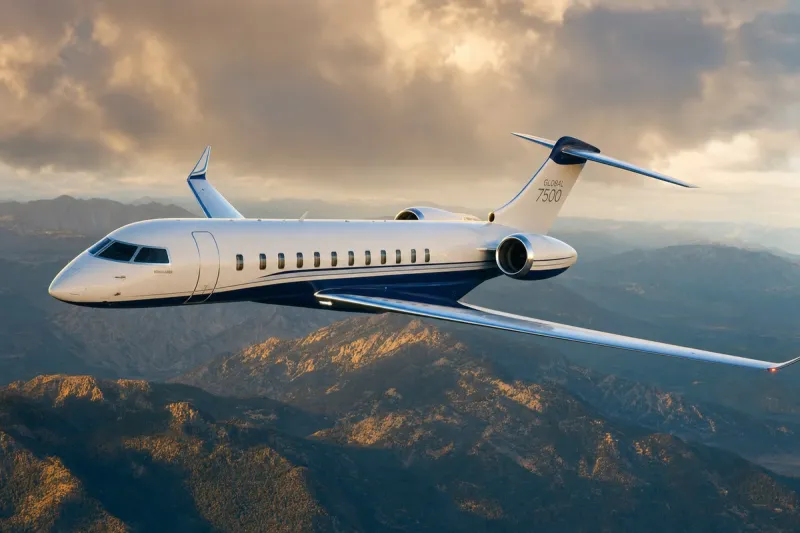
Researchers at the University of Colorado Boulder have identified two new developments in phononic subsurface technology that could reduce boundary layer turbulence on aircraft surfaces, cutting drag and improving fuel efficiency. The work is led by Mahmoud I. Hussein, a professor in the Ann and H.J. Smead Department of Aerospace Engineering Sciences, whose approach uses phononic subsurfaces (PSubs) — engineered materials placed beneath a vehicle's outer surface that generate microscopic internal vibrations, called phonons, to passively influence airflow without altering the vehicle's external shape.

The two advances, described in papers published in Physical Review X and Proceedings of the Royal Society A, are called super resonance and scatterless interference. Super resonance is achieved by coiling PSub structures, extending their effect across a broad range of frequencies rather than a single one, addressing a long-standing limitation since real-world turbulence spans many frequencies. Scatterless interference allows multiple PSubs arranged in a grid or lattice to extend their stabilising effect downstream across a larger surface area, such as an entire aircraft wing or the fuselage of a hypersonic vehicle, solving a second limitation tied to spatial reach.
Adam Harris, a materials science and engineering PhD student and co-author on both papers, said the two findings complement each other: super resonance broadens frequency coverage while scatterless interference extends spatial control downstream. The current results are computational, though research groups worldwide have already built physical PSub prototypes and are moving toward wind-tunnel testing.
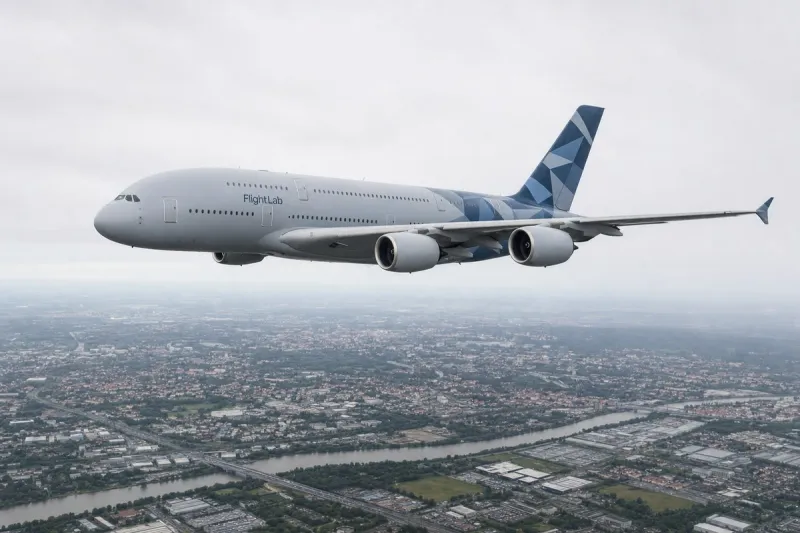
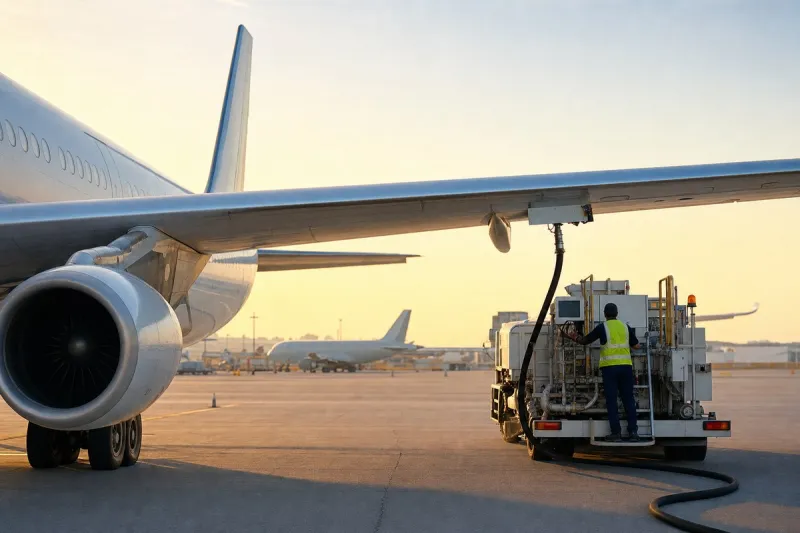
Hussein noted that a commercial aircraft can burn more than 10,000 gallons of jet fuel on a single cross-country flight, and even modest efficiency gains could represent substantial savings for airlines. At cruising speed, a passenger jet travels roughly 640 mph while its wings contend with turbulent boundary layer air that increases drag. Beyond aerospace, Hussein said the concepts could apply to marine vessels, pipelines, and turbomachinery wherever turbulence affects performance.