Airbus repurposes former Malaysia Airlines A380 MSN114 as FlightLab testbed for next-generation propulsion
Why It MattersThe program shows large-jet testbeds becoming shared infrastructure for next-generation propulsion decisions, letting OEMs and engine makers de-risk radical architectures like Open Fan before committing to a new airframe.
What happened
Airbus has repainted a former Malaysia Airlines Airbus A380, manufacturer serial number MSN114, in a new FlightLab livery at Shannon, Ireland, and flown it back to France earlier in August, including a low pass over Toulouse before it continued to Tarbes. The flights followed the aircraft's return to the air in July, when it was ferried from Tarbes to Shannon after several years out of service.
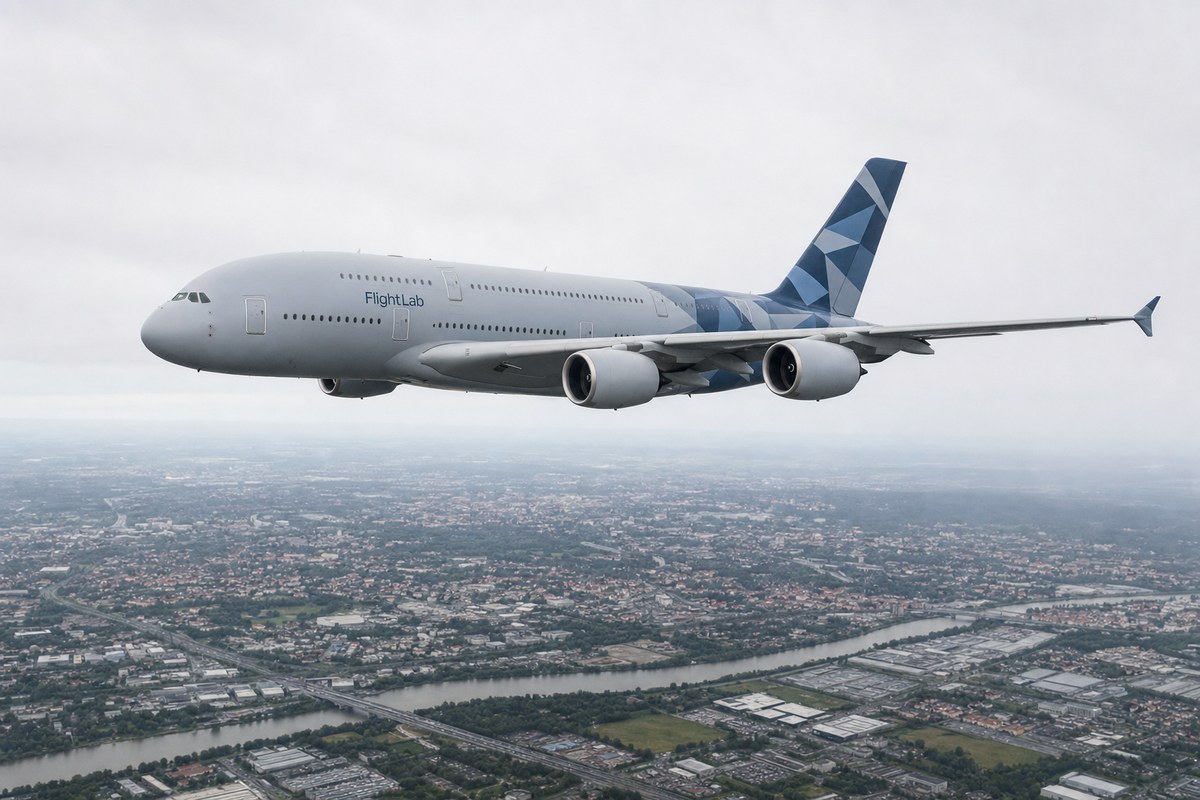
MSN114 first flew in October 2012 and was delivered to Malaysia Airlines in 2013 as 9M-MNF, the 100th A380 built. It was withdrawn from service as Malaysia Airlines progressively disposed of its six A380s and spent several years stored in France before Airbus recovered it as a testbed. Airbus intends to use the four-engine aircraft as a propulsion test platform, with major modifications scheduled to begin in 2027 and flight testing targeted for 2029.
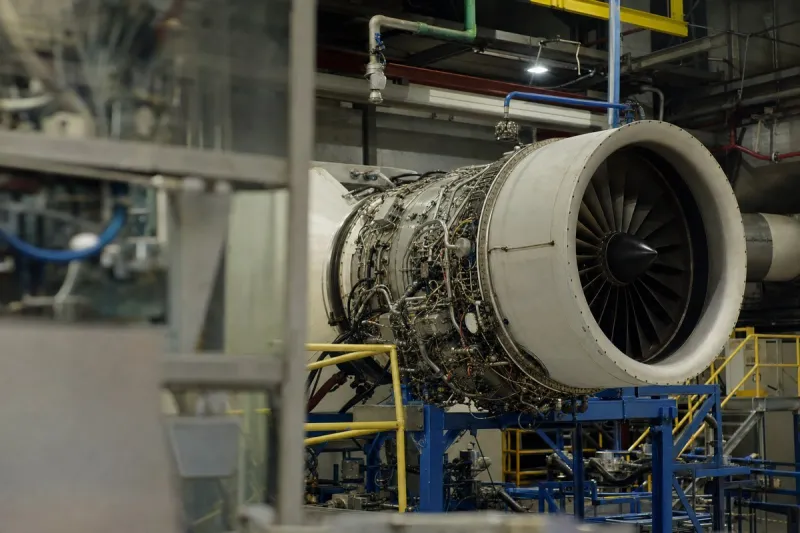
One planned role for MSN114 is supporting development of the CFM International RISE Open Fan propulsion demonstrator. CFM International, the 50-50 joint venture between GE Aerospace and Safran Aircraft Engines, launched the RISE program in 2021 to develop engine technologies targeting entry into service in the mid-2030s, with a stated goal of more than 20% lower fuel consumption compared with current-generation engines. Current plans call for the Open Fan demonstrator to be installed in the No. 2 engine position on MSN114, replacing the inboard Rolls-Royce Trent 900 on the left wing. GE Aerospace has completed preliminary design reviews covering the compact core, Open Fan and outlet guide vanes, allowing manufacturing of demonstrator components to proceed, with ground testing to precede installation on the FlightLab.
Airbus has not yet selected a propulsion architecture for the aircraft expected to succeed the A320neo family, and a conventional high-bypass ducted turbofan remains an alternative under consideration. Airbus has indicated its next single-aisle aircraft could enter service in the second half of the 2030s. Airbus Chief Executive Guillaume Faury has previously cited the A380's size and four-engine configuration as advantages for engine testing, while also acknowledging the cost of operating such a large aircraft as a testbed.
Industry impact & what to watch
Repurposing a retired widebody as a flying propulsion lab reflects how manufacturers de-risk unconventional engine architectures before locking in a new airframe program: a four-engine platform lets one nacelle carry an experimental design while the other three keep the aircraft flying on proven power, isolating risk that a single-engine testbed cannot. The approach also recycles an asset that would otherwise sit stored or be scrapped, turning years of storage in France into a second working life ahead of an expensive, multi-year test campaign.
The Open Fan architecture's central bet is that removing the nacelle to enlarge the fan can deliver double-digit fuel savings, but committing an OEM's next single-aisle family to that design against a conventional ducted turbofan is a decision Airbus has explicitly not yet made. That keeps the FlightLab program as an evaluation exercise rather than a confirmed production pathway, with the ducted alternative still live.
The next markers worth tracking are the start of major aircraft modifications in 2027, the completion of GE Aerospace's Open Fan ground testing before installation, and the 2029 flight-test target — each a checkpoint at which Airbus's propulsion choice for its next-generation single-aisle, expected to enter service in the second half of the 2030s, could narrow.