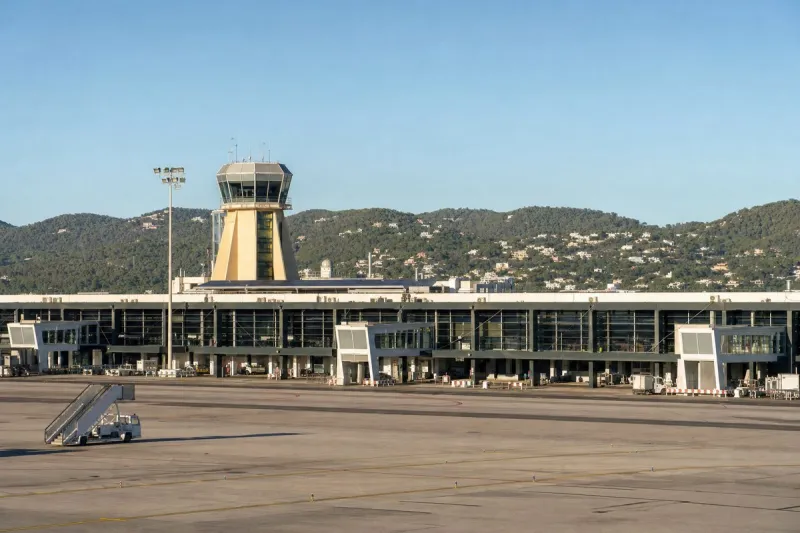
Lima's SPJC Records Only 29 International Business Jet Arrivals in 30 Days; Per-Flight DGAC and CIQ Coordination Remains Required
Why It MattersWithout an airport-level unified charter permit, cross-border business aviation access into markets like Lima stays dependent on case-by-case regulatory approval rather than standardized clearance infrastructure.
What happened
Jorge Chávez International Airport in Lima (SPJC) recorded 29 international business-jet arrivals between 22 August and 20 September 2026, according to business-jet flight-activity records. The count covers flights arriving from airports outside Peru, with each landing counted once.

The United States contributed the highest number of arrivals at six, followed by Ecuador with five. The Dominican Republic, Uruguay, and Chile each accounted for two arrivals. The top ten source countries combined for 24 arrivals, representing 82.76 percent of the 29-arrival total, with the remaining five arrivals originating from other countries.
A service provider page dated 17 September 2026 lists Johnson Aviation Services as offering business-jet FBO services with customs and immigration coordination in Peru at SPJC, though the page does not indicate these services were newly established or disclose a start date for any new dedicated facility. A secondary airport guide dated 12 September 2026 states that SPJC has FBO support and customs, immigration and quarantine (CIQ) conditions, notes that the airport's new passenger terminal opened in 2025, and states that relevant permits typically take several days to process.
As of 31 August 2026, Peru's Directorate General of Civil Aviation (DGAC), under the Ministry of Transport and Communications, continued issuing civil aviation operating permits to applicants on a case-by-case basis through ministerial decisions. No airport-level unified permit applicable to all cross-border business charter flights at SPJC was identified.
Industry impact & what to watch
This pattern reflects how cross-border business aviation access often works in markets without a consolidated regulatory framework: FBO and CIQ coordination exist at the airport level, but the permitting layer above them stays fragmented and case-by-case. For SPJC, that means every inbound charter still runs through the same sequence — DGAC landing and operating permit, slot and parking stand assignment, and customs and immigration pre-notification — regardless of how routine the arrival volume becomes.
With the top ten source countries already accounting for 82.76 percent of arrivals, demand is concentrated enough that a unified charter permit could meaningfully cut per-flight processing time if one were adopted. Whether that happens depends on the DGAC and the Ministry of Transport and Communications, not on the FBO or CIQ providers already operating at the field.
Operators and schedulers planning flights into SPJC should track any future ministerial decision establishing an airport-level permit, since until one is confirmed, the per-flight DGAC and CIQ coordination path remains the only route in.