Maximum on Ground (MOG) Tool Brings Occupancy Planning to Military Airfields
Why It MattersThe addition shows airfield capacity software increasingly separating decision support, which flags conflicts, from approval authority, which stays with human staff coordinating each reservation.
What happened
Glidepath Ops has released Maximum on Ground (MOG), a planning tool built for military airfield operations that generates a daily occupancy chart tracking concurrent aircraft counts, PPR (Prior Permission Required) parking reservations, timed on-station moves, and capacity warnings.
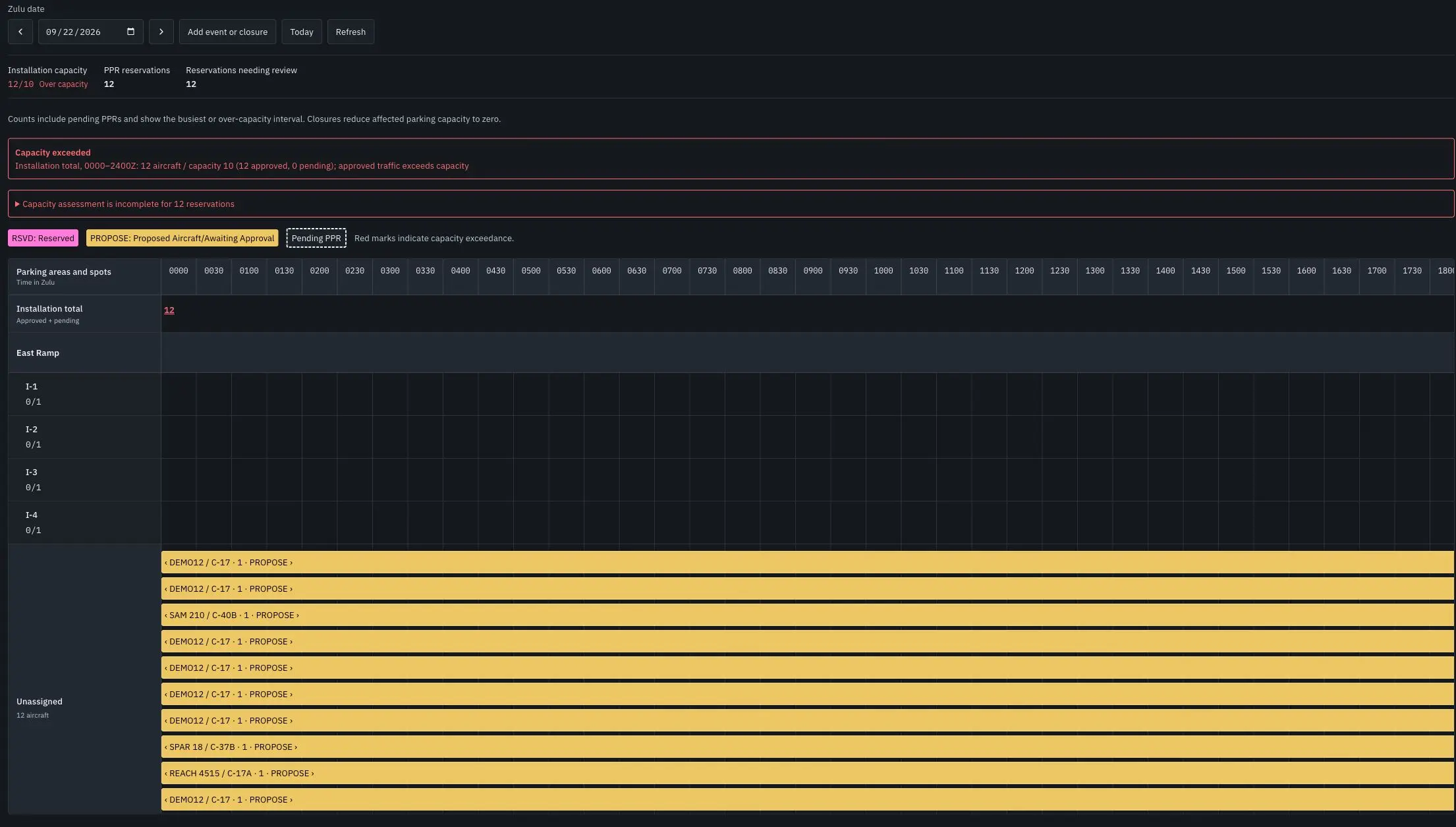
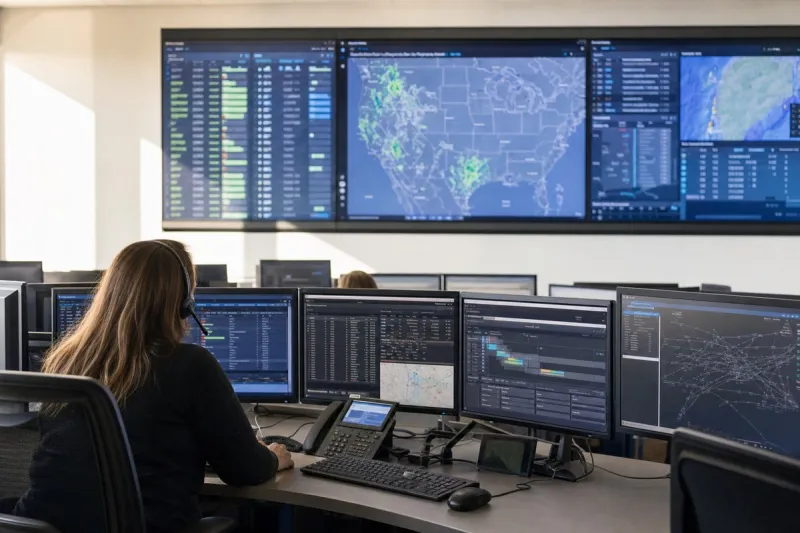
The tool addresses a specific conflict: exercise arrivals and transient aircraft can compete for the same parking at different points in the day, something a simple total aircraft count cannot reveal. MOG brings PPR stays, parking assignments, and shared planning notices into one daily occupancy chart, with arrival and departure times feeding the chart in half-hour Zulu columns. Staff can open the source PPR directly from its reservation, allocate aircraft to specific parking areas or individual spots, and assign on-station moves their own time intervals so the chart follows an aircraft through multiple locations during a single stay. Pending requests stay visually distinct from approved stays, and missing planning details remain visible. Capacity warnings inform the planning decision but do not automatically approve or reject a PPR, leaving staff to coordinate and record each request's disposition. Restrictions and closures are shared across the PPR calendar and MOG with affected locations and exact time intervals, including notices that continue across several days.
MOG connects to two companion modules: Parking Plans, which provides a to-scale ramp layout with wingtip and taxilane clearance envelopes computed automatically, and the Traffic Log, a live flight log that compares filed flight plans against actual times and alerts staff to any aircraft that has not landed as expected.
Industry impact & what to watch
This release belongs to a broader shift in airfield and ramp management toward tools that visualize concurrent occupancy rather than cumulative counts, since a daily total of aircraft movements can mask the moment-by-moment parking conflicts that actually disrupt operations. Military airfields handling mixed exercise and transient traffic are especially exposed to this gap, because PPR requests, on-station moves, and shared restrictions each carry their own timing that a single tally cannot represent.
The design choice to keep approval authority with staff, while automating the warnings and the cross-referencing of PPR calendars, restrictions, and parking assignments, reflects how this segment tends to adopt automation: as a layer that surfaces conflicts earlier, not one that removes human judgment from the final call. Pairing MOG with Parking Plans and the Traffic Log extends that same logic from parking into ramp geometry and flight-plan verification, tying occupancy, space, and arrival timing into one connected planning picture.
Whether this changes day-to-day coordination will depend on how quickly airfield staff integrate the tool into existing PPR workflows and whether the capacity warnings reduce the kind of last-minute parking conflicts the tool was built to catch.