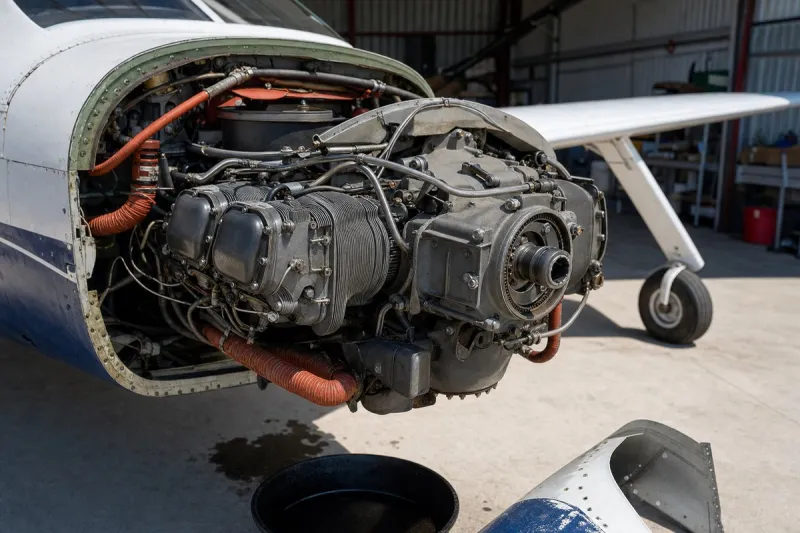
Rotax Mandates Turbocharger Valve Housing Replacement on 915i and 916i Engines Before Next Flight
Why It MattersRecurring Rotax component bulletins show engine makers increasingly rely on serial-number traceability and logbook checks to isolate supplier defects without grounding entire fleets.
What happened
Rotax has issued a mandatory service bulletin, dated September 3, requiring replacement of the turbocharger valve housing on certain 915 i and 916 i series engines before the next flight. The bulletin applies to engines and spare turbocharger assemblies identified by serial number, with the affected valve housing carrying part number 956492 and certain spare turbocharger assemblies carrying part number 893102 also affected and requiring housing replacement before installation.
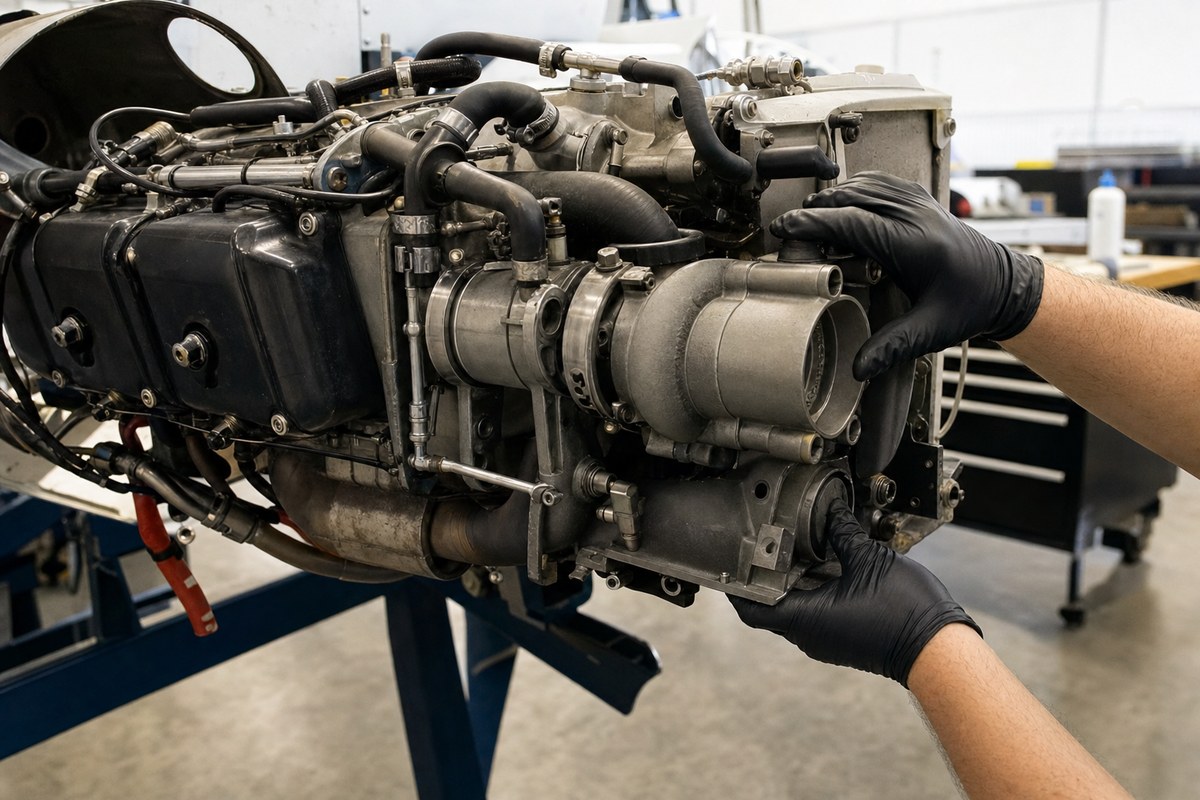
Rotax discovered oil leakage around the turbocharger valve housing during end-of-line testing. Further investigation revealed cracks and insufficient wall thickness in some housings, which the company attributed to a supplier manufacturing defect. Rotax classified the condition as unsafe because leaking oil could contact hot exhaust components, potentially causing smoke or, in the worst case, an engine-compartment fire. The company noted that later-production engines received additional assembly-line checks and that the affected housing has already been replaced on those units.
Owners and maintainers must compare engine and turbocharger serial numbers against lists included in the bulletin and check the engine logbook to confirm whether a housing has previously been replaced. Stored engines and spare parts must be corrected before delivery, and uninstalled components must be corrected before initial installation. The work must be carried out by authorized personnel holding the applicable iRMT heavy-maintenance qualification, and Rotax will provide labor credit for qualifying work through its authorized distributors or service centers.
The bulletin follows a separate Rotax issue addressed by the U.S. Federal Aviation Administration last month. An airworthiness directive effective August 28 requires inspections of approximately 180 U.S.-registered aircraft equipped with certain 912- and 914-series engines, after Rotax found that some recently manufactured propeller gearboxes were assembled without an oil spray nozzle and screws used to secure the propeller shaft bearing. Gearboxes missing those components were required to be replaced before further flight.
Industry impact & what to watch
Two Rotax actions inside a matter of weeks — the propeller gearbox airworthiness directive effective August 28 and now the September 3 turbocharger valve housing bulletin — point to a pattern of supplier-driven quality escapes surfacing on the same engine family in quick succession. Both cases trace to manufacturing defects caught after engines had already left the production line, one through in-service discovery and the other through end-of-line testing.
The light-sport and experimental-aircraft segment served by Rotax's 912, 914, 915 i, and 916 i engines relies heavily on serial-number tracking and logbook review to scope these actions precisely, letting the manufacturer target specific units rather than grounding whole engine families. That mechanism only works if owners and maintainers actually cross-check the serial lists and logbooks as instructed, and if authorized personnel with the iRMT heavy-maintenance qualification are available to perform the corrective work before further flight.
What happens next depends on whether additional affected serial numbers surface as more owners check their logbooks and stored inventory against the published lists, and on how quickly authorized distributors and service centers can process the labor-credit claims Rotax has offered for qualifying replacement work.