FADEC: How a Full Authority Digital Engine Controller Runs a Modern Jet Engine
Why It MattersCertification authorities now treat common-mode software faults, not individual sensor or channel failures, as the toughest reliability question for fully computer-run engine control architectures.
What happened
On a modern jet aircraft the throttle lever sends an electrical signal to an electronic engine controller, a system known as FADEC, or Full Authority Digital Engine Control, which decides fuel flow, compressor vane angles and bleed valve positions and runs the engine outright instead of merely advising the pilot. The system reads throttle position as a thrust request, samples air density, inlet temperature, compressor and turbine temperatures and pressures, and spool speeds, then calculates settings, drives the actuators and re-reads the sensors to correct, at up to 70 times per second according to Wikipedia. Because the system enforces engine limits automatically, a pilot cannot over-temperature or over-speed the engine no matter how hard the lever is pushed.
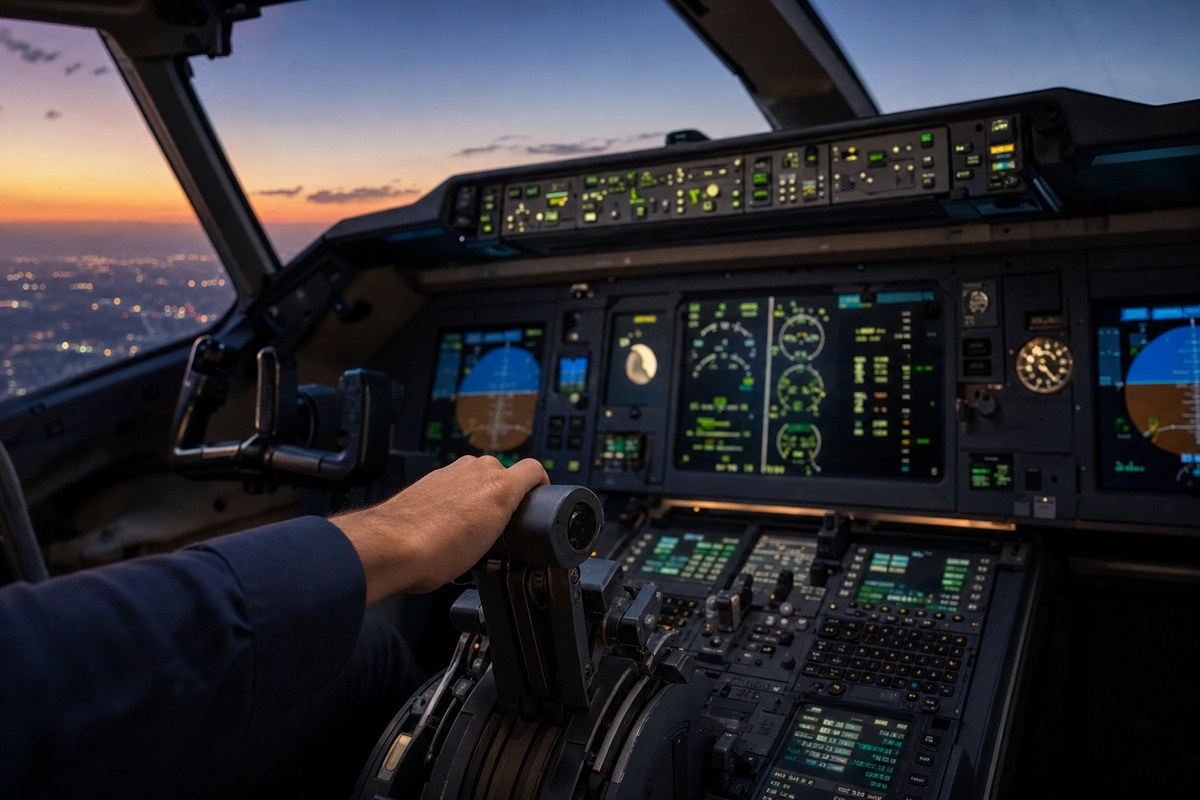
The FAA states explicitly that on a true FADEC there is no direct pilot control over the engine and no manual control mode; if the computer fails completely, the engine stops. Engineers address that risk with redundancy: every FADEC carries two or more identical channels, each capable of running the engine alone and each monitoring the other. The FAA has argued this architecture makes a complete FADEC failure statistically less likely than a double magneto failure on a conventional piston engine. Identical channels can still fail together if the fault lies in shared software or data instead of a single hardware component, a scenario known as common-mode failure and the one certification authorities consider most serious.
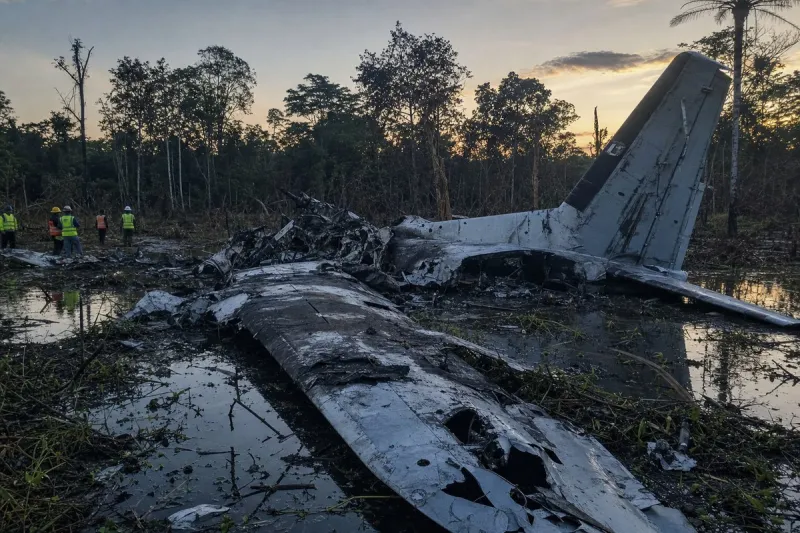
On 9 May 2015 an Airbus A400M, serial MSN023, took off from Seville, Spain, on its first pre-delivery test flight for the Turkish Air Force. Shortly after lift-off, three of its four TP400 turboprops stopped responding to throttle inputs, and the aircraft struck an electricity pylon during an attempted emergency landing near the airport, killing four of the six Airbus employees on board. The leading scenario reported at the time was that torque calibration parameter data had been accidentally erased from three engine control units during a software installation.
The technology traces back to 1968, when Rolls-Royce, Elliott Automation and the National Gas Turbine Establishment ran a digital control system for several hundred hours on a Rolls-Royce Olympus Mk 320. In the 1970s NASA and Pratt & Whitney flew an experimental digital control on the modified left TF30 engine of an F-111, work that led to the Pratt & Whitney F100, which Wikipedia lists as the first military FADEC engine, and the PW2000, listed as the first civil one. NASA later flight-tested a Digital Electronic Engine Control on an F100.
Carefree handling and its cost
For combat aircraft, FADEC delivers what designers call carefree handling: because the computer manages internal engine schedules, a pilot can move the throttle as fast as a fight demands without triggering compressor stalls, surges or over-temperature events, failures that regularly afflicted early jet engines during aggressive manoeuvring. Additional benefits include reduced cockpit workload, automatic recording of engine health data for maintenance crews, and the ability for a manufacturer to offer one engine at several certified thrust ratings simply by changing software.
The trade-off is total dependence on electricity and software. The throttle is no longer mechanically linked to a fuel valve; it is a request to a computer that enforces its own understanding of the engine's limits.
Industry impact & what to watch
FADEC belongs to a broader shift in aviation engineering in which a mechanical link is replaced by a computed intermediary that enforces its own model of safe operating limits. The approach mirrors fly-by-wire flight controls: full authority is handed to software because the computer, sampling and correcting many times per second, can hold tighter limits than a human operator ever could, and dual or multiple redundant channels are built in so a single hardware fault does not stop the engine.
The A400M accident shows where the architecture's real vulnerability sits: not in losing one channel, but in a single erroneous dataset or software action propagating across channels that were designed to be independent. Certification bodies weigh that common-mode risk against the FAA's own comparison to a double magneto failure on a piston engine, a framing that favors FADEC on pure statistics while still requiring separate safeguards against shared-data and shared-software faults.
What remains to be watched is how manufacturers and regulators harden the software-loading and data-verification steps that the 2015 accident scenario implicated, since those procedural controls, not the redundant-channel hardware itself, are what stand between an isolated fault and a simultaneous loss of thrust control across multiple engines.