Cessna 421C misfueled with Jet-A in Blytheville, Arkansas; forced landing injures four occupants
Why It MattersThe case underscores that piston-fleet misfueling risk sits at the intersection of line-service procedure and pilot verification, and that either checkpoint failing can defeat the other.
What happened
A Cessna 421C (N28RH) was fueled with approximately 145 gallons of Jet-A instead of 100LL avgas during a stop in Blytheville, Arkansas, on August 21, before departing for Lima, Ohio. The fueler put roughly 70 gallons into one tank and 75 into the other.

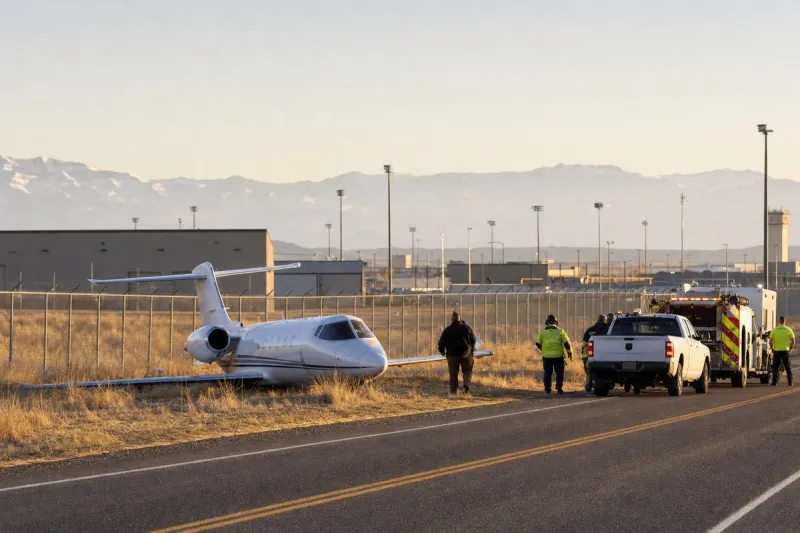
During climb-out, a cylinder on the right engine ran hot, and the pilot feathered the propeller and shut that engine down. Attempting to divert to Fulton Airport (1M7) in Kentucky, the pilot found the left engine also deteriorating and, unable to maintain altitude, carried out a forced landing in a cornfield about two miles from the airport. The aircraft sustained substantial damage to the right engine mount, fuselage, and empennage. Two of the four occupants were seriously injured; the other two sustained minor injuries.
First responders found fuel recovered from the tanks was colorless and smelled like diesel, consistent with Jet-A rather than the blue-dyed 100LL. Investigators said the pilot had requested only a "top off" without specifying fuel type, and the fueler assumed Jet-A was needed because avgas customers at that airport typically used a nearby self-service pump instead.
The fuel receipt signed by the pilot clearly indicated Jet-A had been dispensed. The pilot told investigators he read the receipt, recognized Jet-A had been loaded, but departed anyway because the group wanted to get home, without inspecting or sampling the fuel.
What investigators found
The NTSB determined the probable cause was the misfueling by the refueler, with the pilot's failure to verify the correct fuel type before departure cited as a contributing factor. The airport has since introduced a form requiring pilots to specify both fuel type and quantity, and the airport manager told investigators the fueler involved no longer works at the facility.
Industry impact & what to watch
Misfueling incidents in piston twins typically trace to the same two-step failure seen here: an ambiguous fuel request at the pump, followed by a missed or disregarded check before departure. Both steps are meant to be independent safeguards, which is why this case involves two separate findings rather than one.
Line-service procedure at mixed-fuel airports generally relies on pilots stating fuel type explicitly, on fuelers confirming it against the aircraft's placarded requirement, and on the signed receipt serving as a final paper check before engine start. Here, the receipt correctly recorded what had been loaded, but the verification step that the receipt exists to support did not happen before the aircraft left the ramp.
The new fuel-type-and-quantity form at the Blytheville airport, and the fueler no longer working there, are the concrete operational changes that followed the NTSB's findings. Whether other FBOs serving mixed avgas and Jet-A traffic adopt similar explicit-confirmation steps is the next thing to watch.