KlasJet: 2026 FIFA World Cup and Fuel Volatility Reshaped Summer Private Jet Market
Why It MattersCharter demand tracks where disruption concentrates, so operators positioned near tournament hubs and fuel-driven schedule risk capture volume that would otherwise flow to commercial carriers.
What happened
The 2026 FIFA World Cup, staged across the United States, Canada and Mexico through June and July, redirected charter traffic toward North America and delayed Europe's typical summer season rhythm, according to Marton Modis, CCO of VIP Operations at KlasJet.
Market intelligence firm WINGX recorded sharp traffic surges at host-city airports during the tournament: Seattle roughly doubled its normal daily private jet traffic around its opening group match, while Mexico City ran roughly 1.7 times its baseline for the tournament opener. North American business-aviation activity rose 2.2 per cent year-on-year in June and was forecast to climb 4.3 per cent in July. Europe was essentially flat, up just 0.1 per cent in June according to ARGUS TRAQPak data, as European football clubs rescheduled pre-season camps around the tournament.
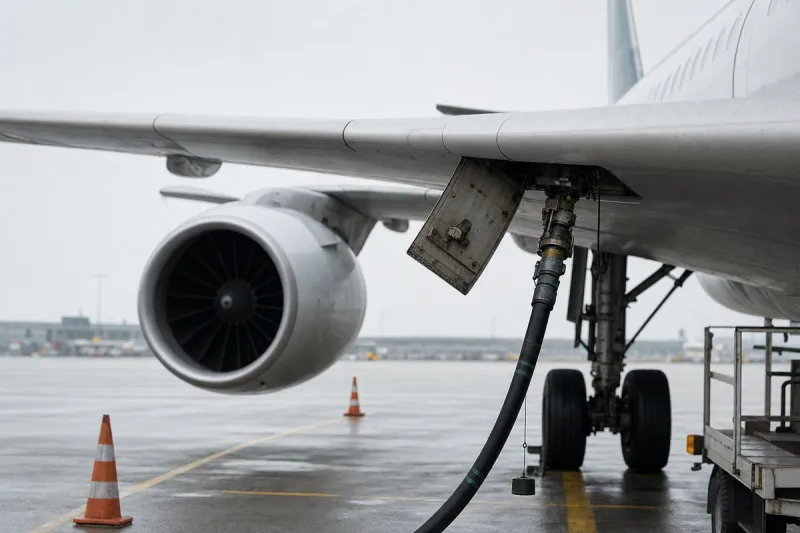
Following the closure of the Strait of Hormuz early in 2026, jet fuel climbed above $200 a barrel, according to IATA data. Commercial carriers cut routes and warned of widespread cancellations across Europe, and organisations that would normally fly commercial turned to private charter for schedule certainty, Modis said.
The market saw fewer last-minute bookings compared to 2025, which Modis attributed to greater aircraft availability and slightly softer demand. Sports charters were an exception, with football clubs paying a premium to reach qualifier fixtures rested and on time. Modis noted a surge of first-time private flyers alongside returning customers, and said repeat clients became more price-conscious, with a trend toward competitive pricing, though most continued to fly similar aircraft types. WINGX recorded Middle East private flight activity falling by close to a third year-on-year at the height of regional conflict, with the region remaining well below its pre-conflict baseline, while Central and Eastern Europe, particularly Poland, emerged as a growth area for KlasJet this summer.
Industry impact & what to watch
This is a case of demand following disruption: a single scheduled mega-event and an unrelated fuel shock both pushed traffic in the same direction, toward operators who could offer certainty when commercial capacity thinned out. Charter's core value proposition in such windows is not comfort but reliability of schedule, and Modis's account of clubs paying a premium for qualifier logistics, alongside first-time flyers drawn in by canceled commercial routes, illustrates how quickly that switch happens when fuel costs and route cuts collide.
Geographic reallocation is the other structural signal here: Middle East activity fell sharply against its own pre-conflict baseline while Central and Eastern Europe, particularly Poland, gained share for KlasJet. That kind of shift shows how charter capacity moves toward wherever political or logistical risk is lowest and demand is freshest, rather than staying tied to traditional summer markets.
What happens next hinges on whether Modis's forecast holds: KlasJet expects Q3 and Q4 2026 to outpace the same period in 2025 as deferred travel, music tours and group charters resume, and it is repositioning one aircraft to Asia-Pacific from September to test a market it has not historically served. Whether that repositioning finds sustained demand, or simply confirms a short-lived opportunity, will be the clearest test of how durable this year's demand shifts turn out to be.