Airlink Jets Fly as Low as 41–46 Feet Over DHL Stadium During Cape Town Rugby Match, Sparking Safety Debate
Why It MattersThe episode shows how a regulator-sanctioned flyover can still draw expert scrutiny once video of the actual altitude reaches a mass audience, testing the gap between approved parameters and public risk perception.
What happened
Airlink aircraft performed a low flyover of DHL Stadium in Cape Town, South Africa, during a Saturday rugby match between the Springboks and New Zealand's All Blacks. Videos filmed by attendees showed the jets clearing the packed stadium at an estimated altitude of 41 to 46 feet, and the footage drew millions of views after spreading across social media platforms.
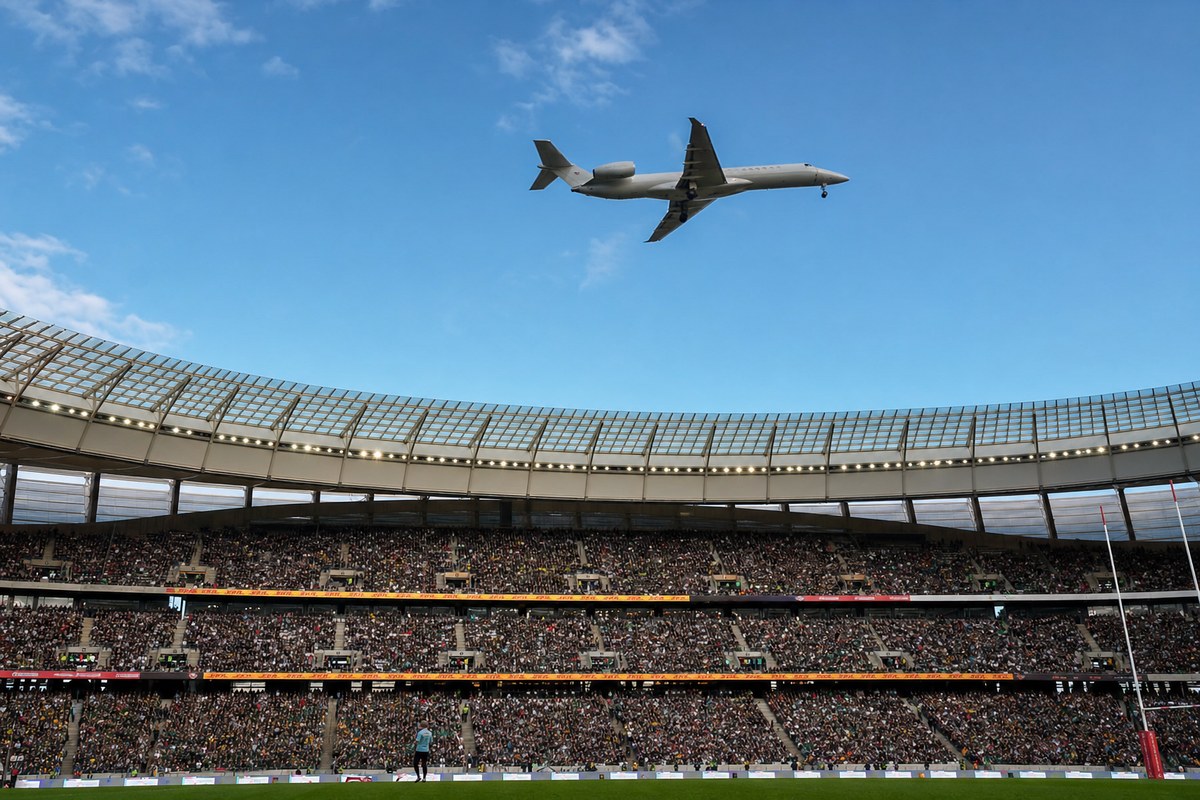
Airlink said the maneuver was meticulously planned and rehearsed, and stated it was carried out with approval from the South African Civil Aviation Authority (SACAA) and Air Traffic & Navigation Services, within sanctioned safety altitude and speed parameters. Aviation experts pushed back publicly, criticizing the altitude as excessive and describing the airline's statements as vague, while also raising concerns that officially approved low flyovers could normalize unsafe practices. Some South African officials took the opposite position, dismissing the safety concerns, praising the pilots' skill, and joking about encouraging even more extreme flyovers in the future, framing the event as a point of national pride.
Industry impact & what to watch
This case sits at the intersection of sanctioned aviation displays and viral public scrutiny: an operator can secure regulator and air traffic authority sign-off for a maneuver and still face a credibility fight once footage circulates outside aviation circles. Low flyovers over populated venues are typically approved with specific altitude and speed limits set in advance by the civil aviation authority, precisely because the margin for error narrows sharply near the ground and over crowds.
The divide in reaction here is itself notable: aviation experts focused on the precedent of publicly normalizing very low passes even when officially sanctioned, while some officials treated pilot skill and national pride as the more relevant frame. Whether this becomes a policy question depends on what SACAA or Air Traffic & Navigation Services say next about the specific altitude and speed parameters they approved for this flight, since Airlink's own characterization of those limits has been called vague by critics. Absent a detailed disclosure of the approved envelope, the dispute stays at the level of public opinion rather than regulatory review.