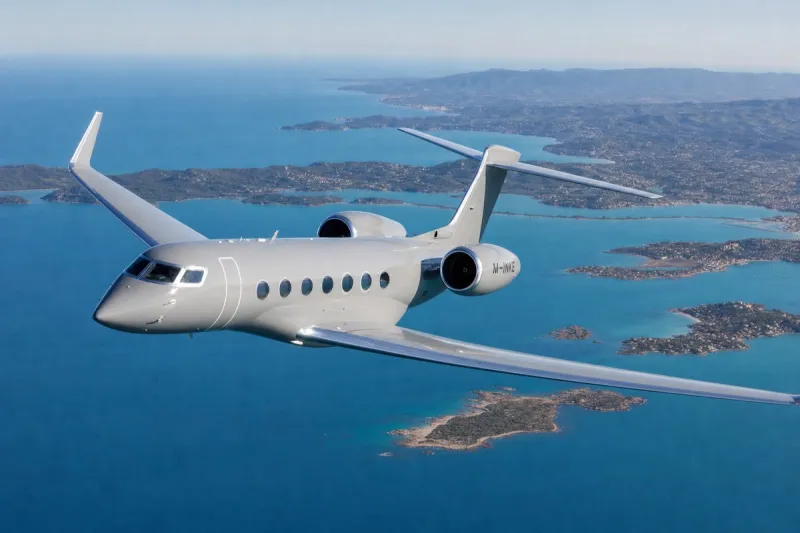
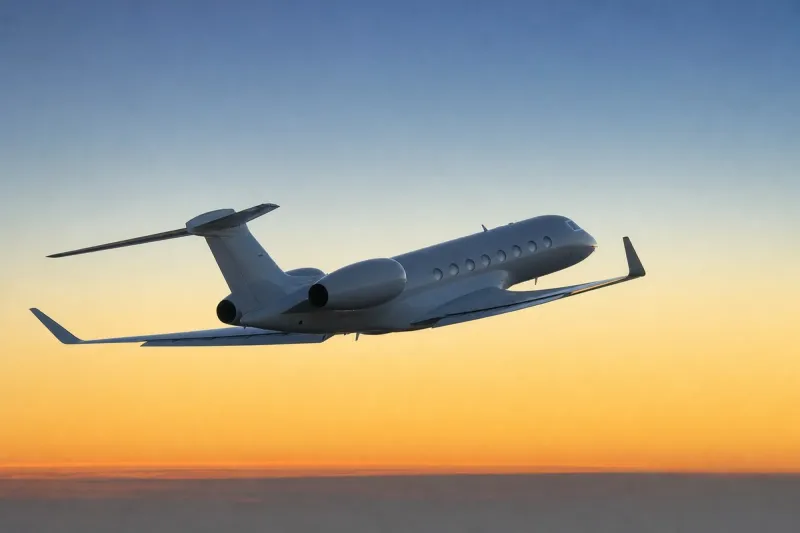
James Dolan's Gulfstream G550 N5465M flies 29 nautical miles from East Farmingdale to Teterboro in 39 minutes
Why It MattersA 29-nautical-mile hop by an aircraft rated for 6,750 nautical miles shows how short-sector business jet use around New York is driven by airport access and fleet positioning, not range.
What happened
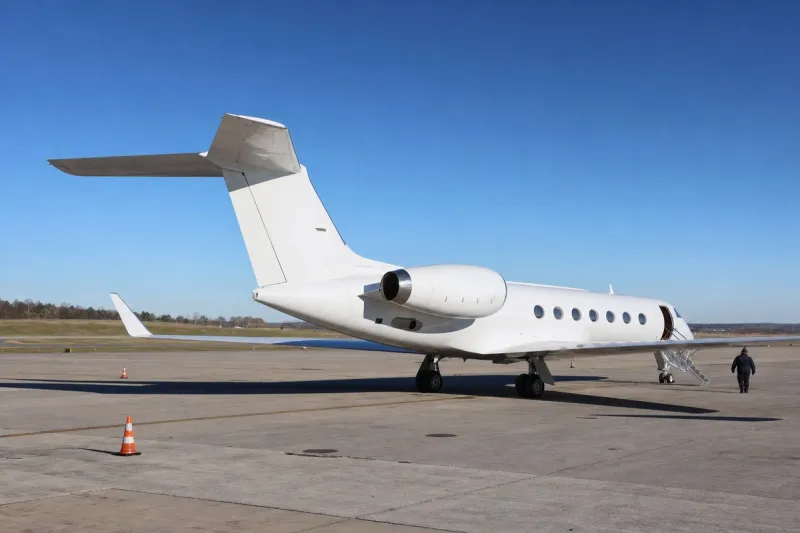
James Dolan's Gulfstream G550, tail number N5465M, landed at Teterboro Airport on Sunday, November 1, 2026, at 17:46 UTC. It had departed Republic Airport in East Farmingdale at 17:07 UTC and spent 39 minutes in the air. The great-circle distance between the two airports is 29 nautical miles (33 miles).

The aircraft reached a top ground speed of 285 knots and a highest altitude of 5,450 feet. Estimated fuel burn was about 281 US gallons, producing about 2.7 metric tons of CO2. N5465M had been on the ground at East Farmingdale for about six days, since arriving from Las Vegas on October 26.
In the 30 days before this flight, Dolan's three tracked aircraft made 40 landings in total but landed at Teterboro only twice. The previous Teterboro landing was on October 11, 22 days earlier, by the Gulfstream G650ER N176KH. The fleet's most common destination in that window was East Farmingdale with 15 landings, followed by Newark with 8.
On October 31, another Dolan Gulfstream G550, N107VS, flew from Saranac Lake to East Farmingdale in 29 minutes (185 nautical miles) and, the same day, from East Farmingdale back to East Farmingdale in 35 minutes (183 nautical miles). On October 26, the G650ER N176KH flew from East Farmingdale to Westfield in 30 minutes (91 nautical miles). The longest leg by any tracked aircraft in the 30 days was N176KH's October 23 trip from East Farmingdale to Palma de Mallorca, 3,382 nautical miles; on October 26 it flew back, 3,379 nautical miles in 7 hours 22 minutes.
Dolan is executive chairman of Madison Square Garden and owner of the New York Knicks. No public appearance or event tied to him was found for the arrival date.
Aircraft and airport data
The Gulfstream G550 is a GV-SP type with a top speed of Mach 0.885 (488 knots), a maximum range of 6,750 nautical miles, a service ceiling of 51,000 feet and seating for up to 19 passengers. The 29-nautical-mile flight covered less than 1 percent of that maximum range.
Republic Airport's longest runway is 6,833 feet at an elevation of 82 feet. Teterboro's longest runway is 6,997 feet at an elevation of 9 feet.
Industry impact & what to watch
A 39-minute positioning leg between two New York-area airports, flown by a large-cabin jet rated for transoceanic range, illustrates how ultra-long-range aircraft are often used for short sectors. Their utilisation reflects where the owner's base, crews and handling are located and which airport suits the next departure, not the performance envelope of the type.
The fuel and emissions figures make the same point from the sustainability side. About 281 US gallons and 2.7 metric tons of CO2 for 29 nautical miles is a per-flight footprint that comes from the aircraft class and its short-hop use, and positioning flights of this kind are a recurring item in discussions of business aviation's emissions accounting.
The tracked fleet's pattern, 40 landings in 30 days with only two at Teterboro and 15 at the home-area airport, shows that the New York hub is one of several operating points rather than the default. Where the aircraft goes next, and whether Teterboro lands on the schedule again, will show how this fleet splits its traffic between Republic, Teterboro and Newark.