New Airport Traffic Decree caps Amsterdam Schiphol at 478,000 annual flight movements and 27,000 at night
Why It MattersA statutory movement cap converts slot scarcity into a network-allocation problem, pushing hub carriers to rank routes by yield and feeder value while the decree's legal durability remains in question.
What happened
A new Airport Traffic Decree (LVB) for Amsterdam Schiphol Airport took effect on Sunday, after more than a decade of debate. The legislation has been in the works since 2022. It caps annual flight movements at 478,000, with a possible expansion to 500,000 if noise and emissions targets are met. Night-time movements, defined as 23:00-07:00, are limited to 27,000.
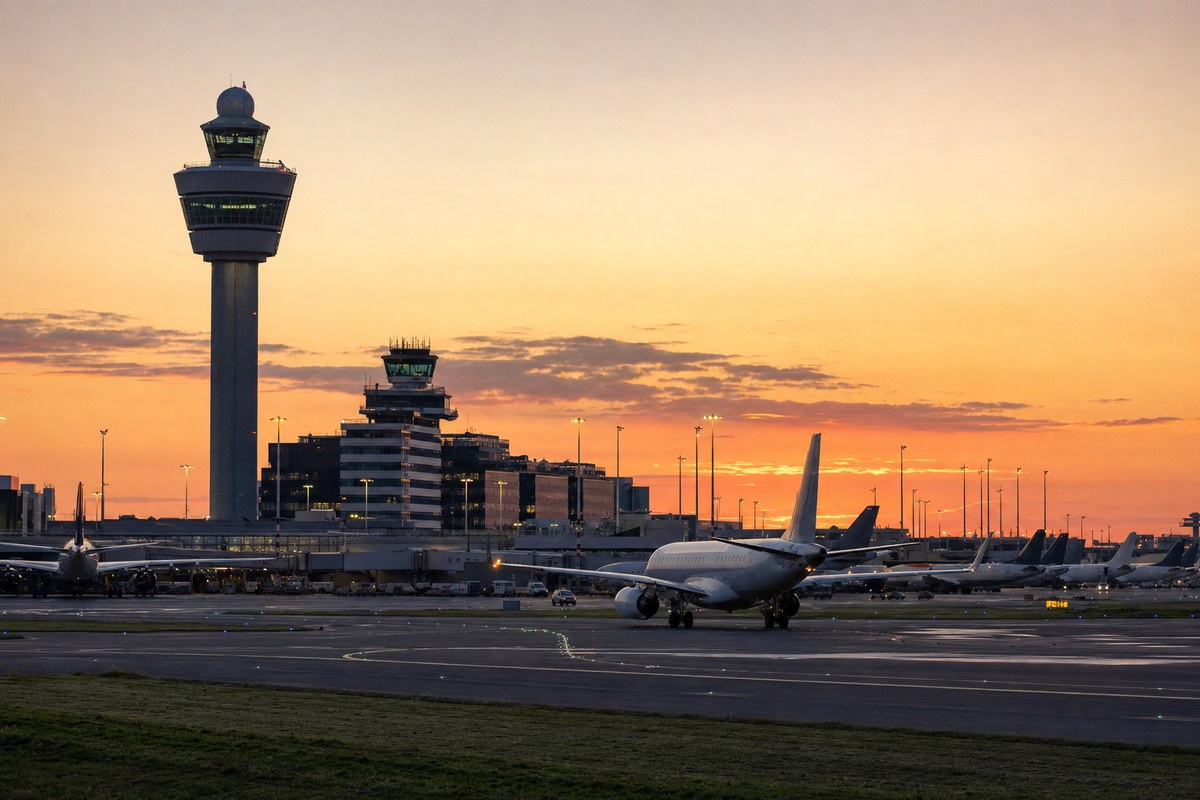
Before COVID, the airport handled approximately 500,000 movements, of which 32,000 were at night. Airport CEO Pieter van Oord said clear rules are important for the Netherlands, local residents and airlines, and that the decree provides a legal basis after years of uncertainty. Environmental groups claim the law effectively legalises years of unlawful noise and health damage, and they are contesting it before the Council of State.
According to Cirium data, about 290,000 of this year's 460,000 scheduled movements are operated by KLM and its low-cost arm Transavia. Partners Air France and Delta account for a further 15,000 movements, newly acquired SAS for about 6,000, and easyJet plans roughly 32,000 this year.
Wouter Dewulf, Dean of the Antwerp Management School, expects airlines to optimise their networks, with marginally profitable routes, overlapping destinations and low-yield frequencies the first candidates for rationalisation. Some short-haul routes where rail alternatives exist, such as Amsterdam-Brussels, could disappear; KLM will fly four daily Embraer services on that route in November, operated almost exclusively for feeder traffic. He expects Transavia to prioritise higher-yielding leisure destinations.
Industry impact & what to watch
A hard annual ceiling changes the question an airport-based airline asks. With 460,000 movements already scheduled this year against a 478,000 cap, the headroom is narrow, and each additional frequency now displaces another one. In that setting a route is judged less on its own margin than on what it contributes to the hub, which is why feeder services such as the Amsterdam-Brussels Embraer flights sit in a different category from a low-yield leisure frequency.
The concentration of movements matters for how the cap is felt. When KLM and Transavia hold about 290,000 of the scheduled movements and partners and other carriers share much of the rest, pruning decisions made at the home carrier shape what is left for everyone else. Growth by newer entrants and partners therefore depends on what the largest operator chooses to give up, and that tends to favour higher-yielding traffic over marginal volume.
The night limit of 27,000 sits below the pre-COVID figure of 32,000, so early-morning and late-evening banks are the part of the schedule under most pressure, and carriers that build their rotations around those hours have the least room to adjust.
The nearest open point is legal: the environmental groups' challenge before the Council of State is pending, and its outcome would determine how stable the framework is. The 500,000 figure also hinges on noise and emissions targets being met, so that is where a change in the ceiling would come from.