Balearic Government Prepares €351.9 Million, 15-Year Medical Air Transport Contract Running to 2043
Why It MattersFifteen-year, single-package air ambulance contracts show how island health authorities lock in capacity, bundling aircraft, pilots and maintenance, which concentrates long-term revenue and handover risk on whichever operator wins.
What happened
The Balearic Government is preparing a €351.9 million procurement programme to strengthen emergency medical air transport across the islands. The proposed contract would run for 15 years, starting in 2028 and ending in 2043. The plan was reported on Friday, 30 October 2026, and the estimated value is €351,945,600. The Council of Government was still expected to authorise the procurement later that Friday, so the figure is a proposed contract, not one already awarded to an operator.
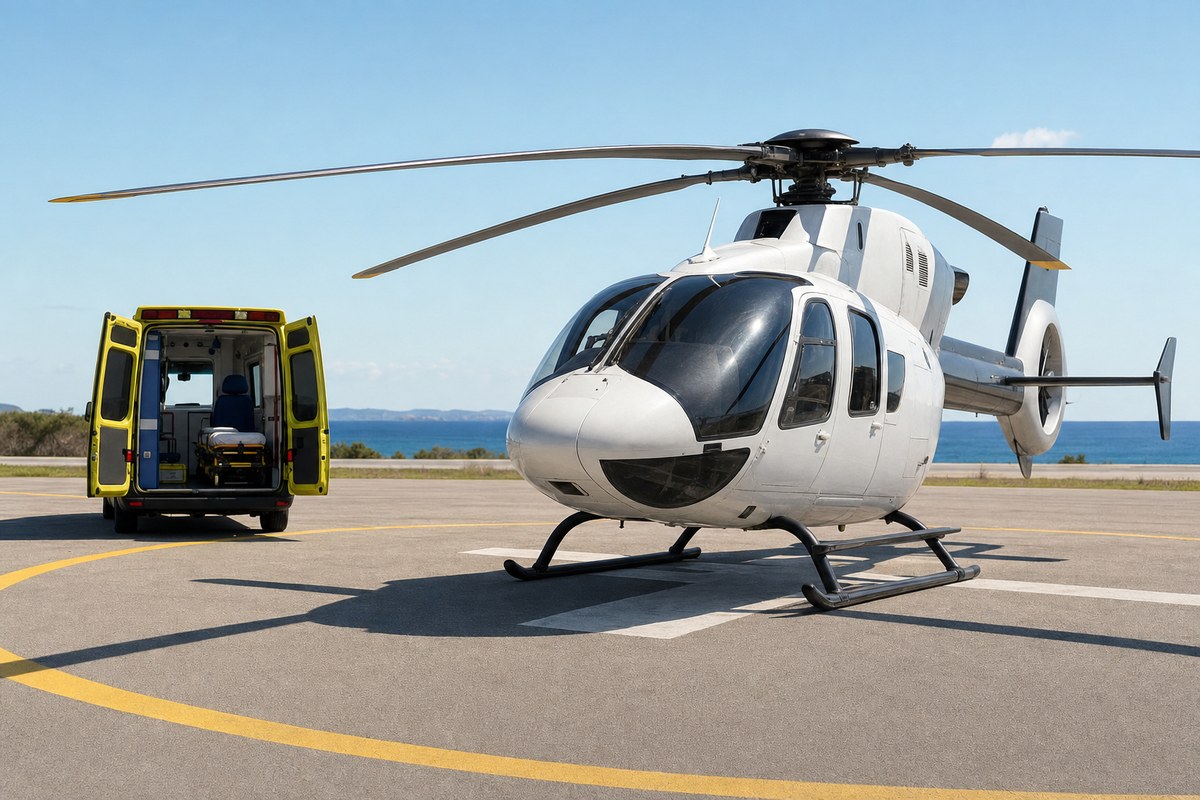
The proposed fleet comprises four medical helicopters and one medical aircraft. Three helicopters would provide operational coverage from bases in Mallorca, Menorca and Ibiza, while a fourth would serve as a support and backup resource. The medical aircraft would be based in either Mallorca or Menorca and would support longer-distance transfers and complex medical operations.
The service is expected to run with 24-hour availability, made up of 12 hours of physical availability with two pilots followed by 12 hours of on-call availability through a rotating duty system. The procurement estimates about 1,800 flight hours a year for the main fleet, with a further 300 hours available if demand exceeds the initial allocation, subject to separately established rates. These estimates draw on previous service activity and projected healthcare needs, and actual requirements may vary. The contractor would supply the aircraft, pilots and maintenance.
The current service is run by a joint venture of Avincis España and Avincis Scandinavian. Its arrangement has been extended until 10 March 2028 and covers two B250 aircraft and two Bell 412EP helicopters. The new procurement is intended to take over when that extension expires.
For Ibiza and Formentera, helicopter transfers move critically ill patients to hospitals in Mallorca or other destinations when the required treatment is not available locally. The proposed fleet would keep a dedicated helicopter base in Ibiza.
Industry impact & what to watch
Government air ambulance work of this kind is sold as a bundled availability service, not as flight hours alone. The contractor carries aircraft supply, crewing and maintenance, while the health service supplies the medical and healthcare side. A 15-year term pushes fleet financing and asset-renewal risk onto the operator, and it explains why the tender is being prepared well before the current arrangement ends in March 2028.
The change in fleet shape is notable. The incumbent arrangement covers four aircraft, two B250s and two Bell 412EPs, while the proposal calls for five, with a fourth helicopter held as backup and one aircraft for longer transfers. A dedicated backup airframe is the kind of provision that separates an availability contract from a pay-per-hour one, and the separately rated 300-hour allowance shows how demand overruns are priced outside the core fee.
The next milestone is the Council of Government's authorisation, which was expected the same day as the report. After that, the tender documents and the operator selection will show who takes the contract and how the transition from the extended incumbent arrangement is handled.