Xpeng's Aridge Says Chinese Flying Cars Are More Commercially Viable Than Tesla's Roadster, Citing 20-Minute Flight Time
Why It MattersThe exchange shows eVTOL competition resolving into a contest between propulsion architectures and flight endurance, with certification speed, not demonstration spectacle, deciding who can sell in practice.
What happened
Wang Tan, co-founder of Aridge, the affiliate of Chinese electric vehicle maker Xpeng, said flying cars developed by Chinese companies are by design more feasible for commercial use than Tesla's Roadster. He made the remarks in an interview with the South China Morning Post on Thursday, after a recent Tesla demonstration sparked discussion in mainland China about technology leadership.

Wang called the Roadster's mid-air flip and successful landing, seen in a live stream earlier this month, impressive. He said its jet-like configuration requires high-pressure storage tanks, which severely limit cabin seating and application environments. The Roadster's flight time is limited to a few seconds because the cold-gas pressure in the tanks depletes rapidly, whereas an Xpeng aircraft can stay airborne for about 20 minutes.
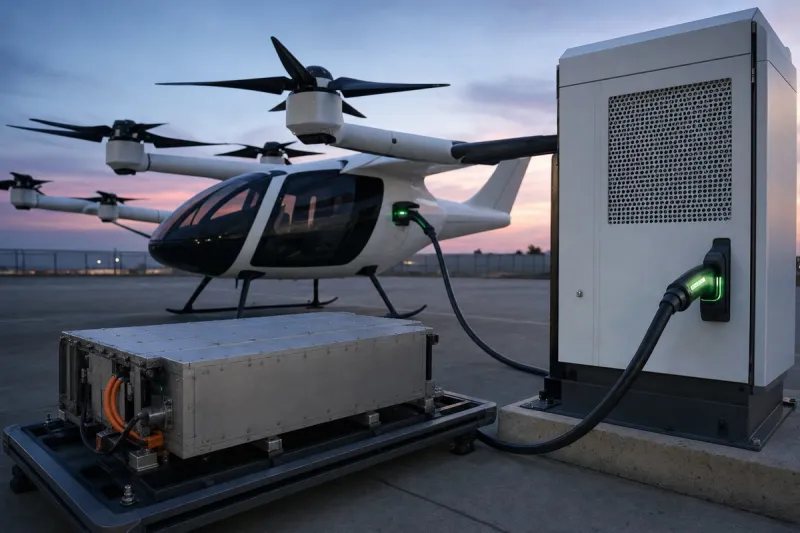
Aridge, formerly known as AeroHT, uses multiple rotors in its flying car, which allow it to hover, while a high-density battery supports longer flight, Wang said. He added that Xpeng's Land Aircraft Carrier, which combines an aircraft and an off-road vehicle that acts as a power bank, could expand use beyond sightseeing to emergency rescue and industrial maintenance at offshore wind farms or oil platforms. Wang expects longer flight times as battery energy density increases and lightweight materials improve.
The Roadster flight triggered a debate on Chinese social media over whether Tesla was ahead of Chinese rivals, with state media including the People's Daily calling for confidence in the country's EV industry. Xpeng chairman and CEO He Xiaopeng said in a post on his personal WeChat account that, although the Roadster offered a new solution, the feasibility of all flying cars remains subject to safety, security, flying time and regulatory certification.
Orders, price and certification
The aircraft is priced at 2 million yuan (US$300,000), and Xpeng has received more than 7,000 orders worldwide since presales began in December 2024. Aridge delivered its first Land Aircraft Carrier to the United Arab Emirates earlier this month, according to an October 20 announcement.
Wang acknowledged that Xpeng's application for a safety approval certificate from the Civil Aviation Administration of China is proceeding slower than expected, but said the company would double down on proving the product's safety.
Rival configurations in China
Other Chinese developers use different configurations. Shanghai Volant Aerotech uses compound wings, and Aerofugia, a sister company of Geely Auto Group, uses a tilt-rotor, which can provide higher speeds or longer flight times at the commercialisation stage.
Industry impact & what to watch
The dispute is less about Tesla versus Xpeng than about which propulsion architecture can support a sellable service. Cold-gas thrust delivers a spectacular few seconds; multirotor or tilt-rotor electric designs trade spectacle for minutes of endurance, and endurance is what separates a demonstration from sightseeing, rescue or offshore maintenance work. Aridge's own list of use cases shows how an operator-facing business case is built around duration and payload, not manoeuvres.
The competitive field is also visibly diverging by design: compound wings, tilt-rotors and multirotors are all being pitched as the route to commercialisation, with speed and endurance traded differently in each. Battery energy density and lightweight materials, which Wang names as the drivers of longer flights, set the ceiling for all of them.
The pacing item is regulatory. Aridge's safety approval from the Civil Aviation Administration of China is moving slower than expected, and Chinese certification is also required for overseas sales, so the order book of more than 7,000 converts into deliveries only as that approval clears. Its progress, more than any further live-stream demonstration, is the measure to follow.