FAA Issues Final Rule Requiring Turbocharger Valve Housing Replacement on Certain BRP-Rotax 915 iS and 916 iS Engines
Why It MattersEmergency directives that begin at a production-line test escape and pass from EASA into FAA rules show how engine-supplier process faults reach the certified piston fleet through paired regulators.
What happened
The U.S. Federal Aviation Administration issued an airworthiness directive as a final rule with request for comments, covering certain BRP-Rotax 915 iS and 916 iS series engines. It appears in the Federal Register as document 2026-22307 (91 FR 68882) under docket FAA-2026-11820. The AD takes effect November 4, 2026, and the FAA must receive comments by December 17, 2026.
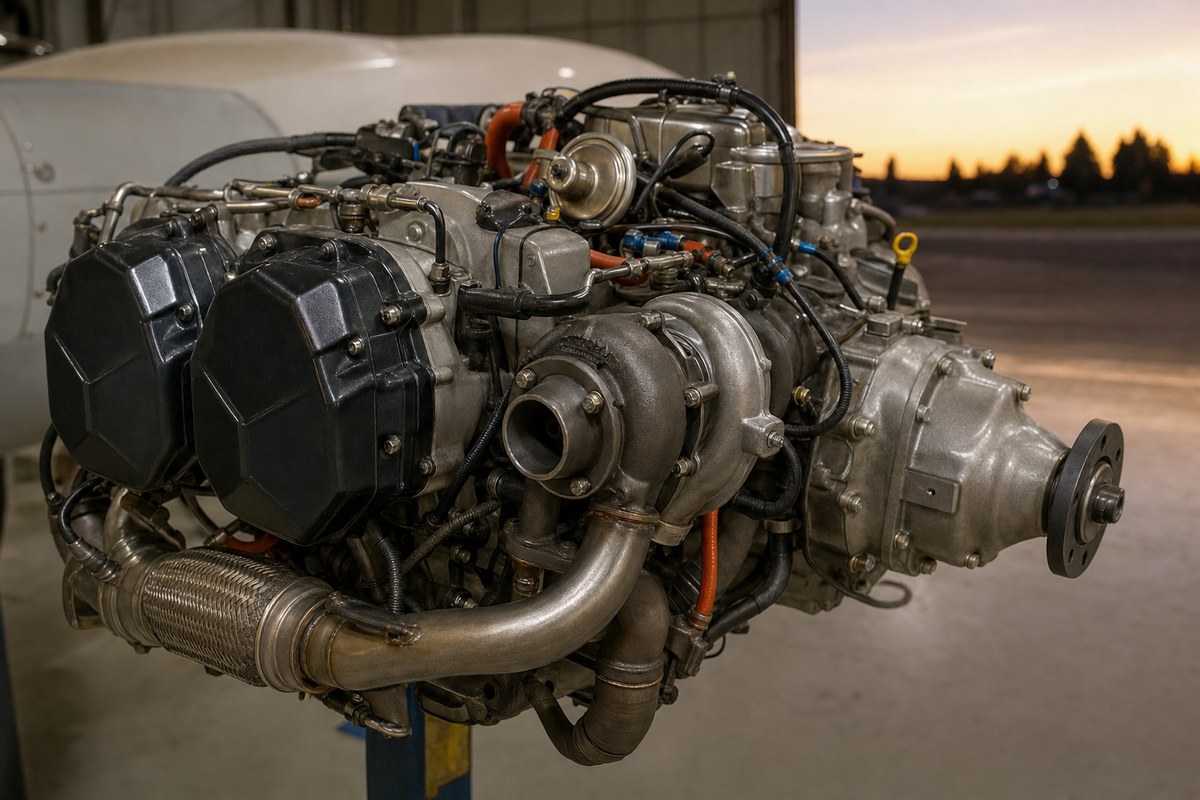
The directive was prompted by oil leakage from cracks in the wall of the turbocharger valve housing, which had insufficient thickness. The mandatory continuing airworthiness information is EASA Emergency AD 2026-0178-E, dated September 14, 2026. The leak was found during final testing of a BRP-Rotax 916i engine on the production line, and a manufacturer investigation traced the cracks to a non-conforming manufacturing process used to produce the valve housing.
The AD requires replacement of the turbocharger valve housing and reidentification of the turbocharger, following procedures in the EASA emergency AD, which the FAA has incorporated by reference. BRP-Rotax has published service material identifying turbochargers with the affected valve housing and giving instructions for the replacement and reidentification.
The EASA information also lists Model 915 iSc2 A, 915 iSc3 A and 916 iSc3 B engines. These three models do not have an FAA type certificate, so they fall outside the scope of this AD. Comments may be submitted through the Federal eRulemaking Portal at regulations.gov.
Industry impact & what to watch
The sequence here is a familiar one for certified engines: a defect surfaces in factory testing, the manufacturer traces it to a process fault, EASA issues an emergency directive, and the FAA follows with its own rule covering the engines that hold a U.S. type certificate. The FAA's stated concern is that the condition, if left uncorrected, could lead to oil leakage, smoke, an engine compartment fire, an in-flight engine shutdown and possible loss of control. Because the FAA determined the unsafe condition is likely to exist or develop on other products of the same type design, the directive treats the fault as a type-design matter and not as a one-off.
For owners and maintenance providers, the practical gating item is the manufacturer's service material, which identifies which turbochargers carry the affected valve housing. Compliance work therefore starts from that identification step, with parts availability and shop capacity setting how quickly replacements can be done.
The next dated milestone is the December 17, 2026 comment deadline, after which the FAA can consider any submitted input on the rule.