Private Aviation Safety Programs Shift to Data-Driven Monitoring of Flights, Fatigue, Maintenance and Training
Why It MattersSafety performance in business aviation is being defined by trend data pooled across flights and operators, which favors those who can aggregate information over operators relying on periodic checks alone.
What happened
Safety programs in private aviation increasingly combine flight data monitoring, crew alertness analysis, predictive maintenance and scenario-based simulator training. Programs are judged by measurable indicators: exceedance rates, fatigue scores and voluntary reports.
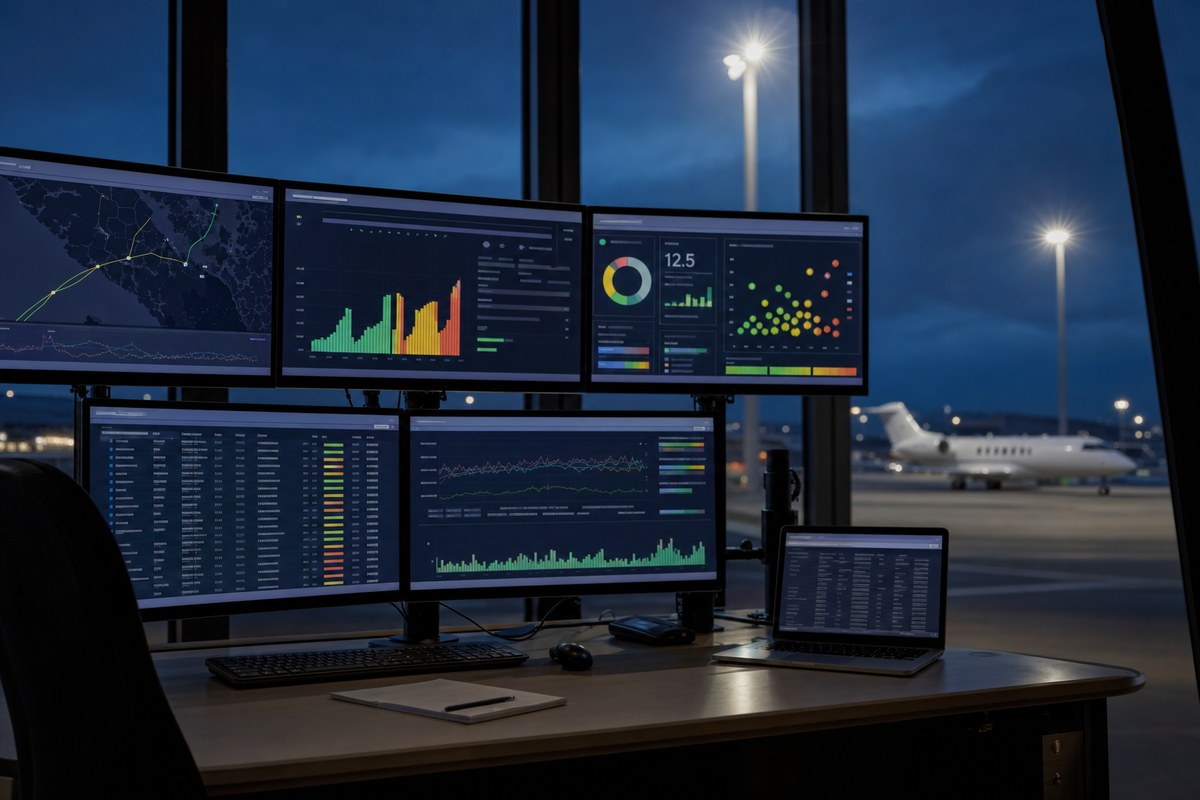
Flight data monitoring, known as FOQA (Flight Operations Quality Assurance) in the United States, collects data automatically on every flight from onboard GPS, ADS-B positioning, aircraft sensors and electronic flight bag logs. The data is de-identified, aggregated and analyzed to flag exceedances such as unstable approaches, excessive descent rates, hard landings, long landings, or prop strikes on turboprops. The aim is pattern recognition rather than punishing individual crews.
On fatigue, IATA is cited as saying the strongest hazard-identification approach combines roster and duty-time metrics, voluntary fatigue reports, subjective alertness scales, sleep and wake diaries, objective performance tests, wearable sleep-tracking data and biomathematical fatigue-model outputs. Transport Canada lists sleepiness ratings, alertness-test scores and layover sleep duration as safety-performance indicators that can be compared against thresholds to trigger a review or schedule change.
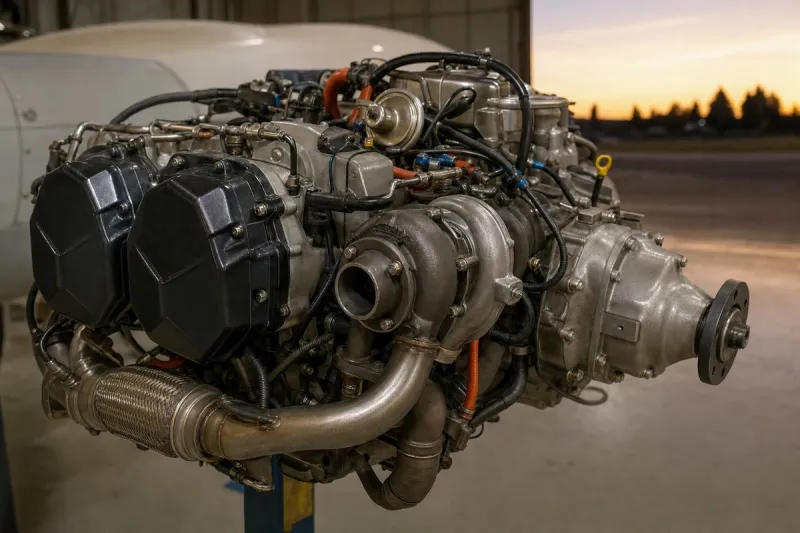
Aircraft health monitoring now runs continuously. Sensors track engine performance trends, structural stress, avionics health and cabin conditions in near real time, so anomalies such as engine vibration drift or temperature spikes can be flagged early and unscheduled maintenance delays reduced.
Training has moved beyond a once-a-year checkbox. Elements cited include type-specific qualification, recurrent full-motion simulator sessions, upset-prevention and recovery training (UPRT), scenario-based instruction such as weather diversions and system failures, and stabilized-approach practice tied to the parameters flight data monitoring systems watch. Flexjet documents multiple sessions per year with check rides every six months for first officers.
Safety management and small operators
A Safety Management System formalizes hazard finding and risk assessment. Its parts are voluntary reporting under a just-culture policy, hazard identification and risk assessment, safety-performance indicators such as exceedance rates, fatigue alerts and report volume, and tracking of corrective actions through to closure. Human factors, including workload management, automation dependence and threat-and-error management, are tracked through the same cycle.
Smaller charter operators, owner-flown aircraft and mixed-fleet companies face limited flight-hour data, older aircraft and mixed avionics, cost and connectivity hurdles, and data-ownership and privacy concerns. The industry response has been aggregation, as in the ACSF small-operator initiative, which pools anonymized data across many operators.
Leading indicators suggested for evaluating a safety program include the unstable-approach rate, exceedance frequency and fatigue-alert volume. The text was published by Swift Jet Aviation, which says it applies route-aware planning and passenger-fit considerations.
Industry impact & what to watch
The common thread across these elements is that safety is increasingly expressed as a trend line rather than a compliance event. A single hard landing may be noise, whereas repeated unstable approaches into one airport point to a procedural or environmental cause. That logic only works with enough flights behind it, which is why fleet size and data volume matter more than they once did.
For the many small operators with few flight hours, the economics of safety monitoring depend on pooling. Aggregated, anonymized data of the kind ACSF's small-operator initiative collects lets a one-aircraft or mixed-fleet operator benchmark against peers it could not otherwise match. Data ownership and privacy terms become the practical gate on how far that pooling goes.
The measurable indicators named here, unstable-approach rate, exceedance frequency and fatigue-alert volume, give customers and brokers concrete figures to ask about instead of relying on general assurances. The next milestone is whether operators of different sizes begin to report such figures in comparable form.