FAA Orders Door Inspections on 987 US Diamond DA40 Airplanes After In-Flight Door Separations
Why It MattersAn interim directive issued before a root cause is found shows regulators will impose inspection burdens on whole piston fleets ahead of manufacturer findings, leaving further rulemaking dependent on Diamond's investigation.
What happened
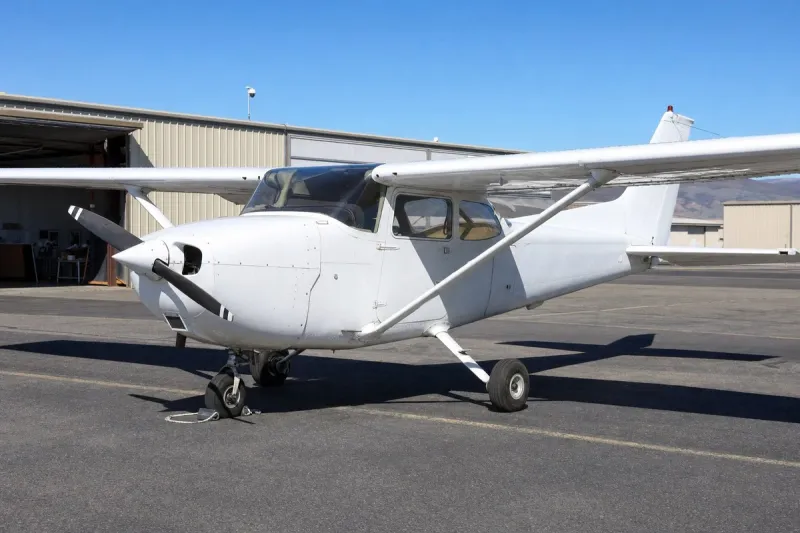
The Federal Aviation Administration has issued Airworthiness Directive 2026-22-06 for Diamond Model DA 40, DA 40 F and DA 40 NG airplanes after several reports of passenger doors separating in flight. It is scheduled for Federal Register publication on Nov. 2, 2026 and takes effect Dec. 7. The FAA estimates 987 affected airplanes on the US register and warns that a lost door could damage the airplane's structure, lead to loss of control and injure people on the ground.

Within 100 hours time in service or 100 days after the effective date, whichever comes first, each flight manual must receive a temporary revision titled "Door Latching and Locking," which changes the operating limitations, emergency procedures and normal procedures. The first inspection and new cabin placards fall under the same deadline. An owner or operator holding at least a private pilot certificate may insert the revision and log the work.
Airplanes with 100 or more total hours get a full inspection covering the safety hook and its mechanism, latching bolts, front and rear door guide blocks, carbon hinges, gas spring, door frame and the canopy and passenger door warning light, plus a measurement of the force needed to work the door handle. Airplanes under 100 total hours get a shorter check of the safety hook, latching bolts and door guide blocks. Findings defined in the work instruction must be corrected before further flight.
The gas spring follows its own decision path based on two force readings in Diamond's work instruction. If step 20(f) reads below about 4 pounds (1.8 kg) and step 20(c) reads between about 4.4 and 13 pounds (2 to 6 kg), the spring must be replaced within 12 months of the effective date, with step 20(c) repeated every 100 hours until then. If step 20(f) is low and step 20(c) falls outside that range, the spring must be replaced before further flight.
The FAA prices the manual revision at $85 and the first inspection at $331 per airplane, about $410,600 across the US fleet. Replacements add more, from $100 for door sealant to $824 for a hook assembly, and the manufacturer says warranty may cover some costs. The documents named are AD 2026-22-06 and flight manual temporary revisions TR-MAM-40-1203 for the DA 40 and DA 40 F and TR-MAM-40-1203/a for the DA 40 NG. Work done before the effective date under Revision 0 or 1 of the bulletin earns credit.
The comments and the Canadian origin
The FAA proposed the rule in May and received comments from four people. Three asked it to exclude newer serial numbers, arguing the problem belongs to early door locks and that a secondary safety latch on later airplanes eliminates it. Citing Diamond, the FAA says both door handle configurations have a red safety hook that was not designed to hold the door closed during takeoff, and that the DA 40 NG, the latest model, has had several separations of its own.
The rule stems from Transport Canada directive CF-2025-30, effective in Canada since July 7, 2025. Diamond Aircraft attributed certain events to doors that were not properly latched, followed by attempts to latch them in flight, but could not find a definitive root cause for the rest. The FAA therefore calls the directive an interim action and says further rulemaking may follow, depending on the manufacturer's investigation. The Canadian rule also covers the DA 40 D, which the US rule leaves out because that model has no FAA type certificate.
Earlier concern sheet and the DA 42 rule
The new rule gives no count of events, but an FAA concern sheet dated October 2024 listed at least 20 in-flight door separations and more than 30 aborted flights from door malfunctions across the DA 40 and DA 42 fleets, all after earlier directives required an improved door retaining bracket. It also advised owners and operators not to try closing the passenger door in flight, because the safety latch may disengage and the door could open and separate, and to land as soon as practicable if the door is found unlatched.
The DA 42 twin received its own door rule first: AD 2025-24-07, published in January and estimated to affect 222 US airplanes, is also labeled interim and sets a first-inspection deadline of 50 hours or 50 days. It also imposes repeat door inspections on a fixed schedule, while the DA 40 rule's text requires a repeat check only on the gas spring path described above.
Industry impact & what to watch
The directive shows how regulators handle a defect whose cause is only partly understood. With no definitive root cause for some events, the FAA chose an interim action covering the whole DA 40 family, including newer serial numbers that commenters wanted excluded, instead of waiting for a finished investigation. For owners of training and private piston aircraft, that means paying for inspection and procedure changes across a type before the failure mechanism is fully mapped.
The cost structure is modest per airplane, $85 for the manual revision and $331 for the first inspection, but the open-ended part is what replacement parts add and whether repeat checks are imposed later. The DA 42 rule already carries a fixed repeat-inspection schedule, so the DA 40 directive's lighter repeat requirement is the piece most exposed to change.
The next milestone is the outcome of Diamond's investigation, since the FAA says further rulemaking may follow depending on it. A confirmed root cause would let the agency replace the interim action with a targeted fix, while an unresolved one keeps the inspection regime in place.