Europe's Business Aviation Fleet Forecast to Near 5,500 Aircraft by 2036, With 1,750+ Deliveries Projected
Why It MattersEurope's projected fleet growth, at more than double the world average pace, points to a market skewed toward turboprops and light jets, with maintenance demand expanding faster than the global rate.
What happened
The 2027 Aviation Week Business Aviation Fleet & MRO Forecast projects more than 1,750 business aircraft will be delivered to European customers over the 10 years from 2027 to 2036. The figure covers Eastern and Western Europe and breaks down into 1,320 jets and 478 turboprops.

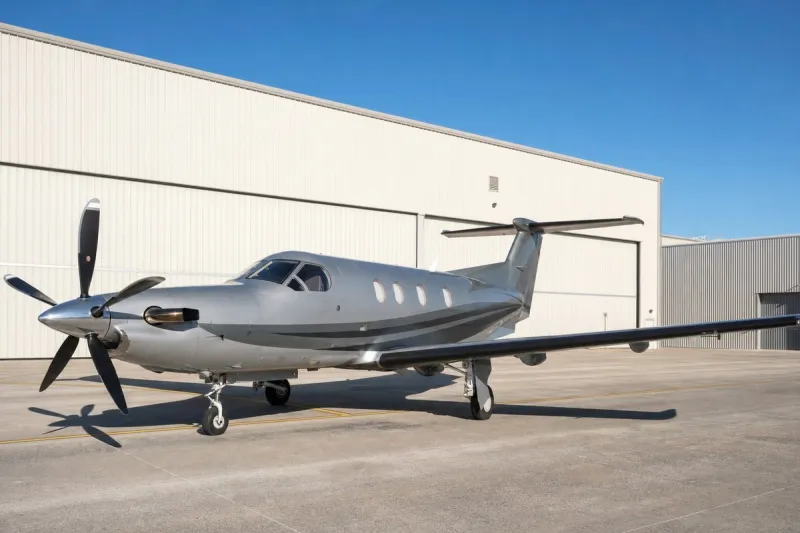
By segment, single-engine turboprops are expected to account for 25% of deliveries to Europe, the largest share. Light business jets follow at 21% and ultra-long-range jets at 20%. In new-build deliveries to the region, the forecast puts the Pilatus PC-12 first, followed by Daher's TBM series, Embraer's Phenom 300 and Textron Aviation's Citation Latitude.
The in-service fleet in Europe is expected to rise from just over 4,200 aircraft in 2027 to nearly 5,500 by the end of 2036. That is a 2.8% compound annual growth rate, against a world average of 1.3%.
On the manufacturer side, Textron Aviation, Gulfstream and Pilatus Aircraft are projected to be the most popular new deliveries into the region, worth $27.9 billion at retail rates out of a $48.7 billion total. Textron Aviation is expected to deliver the most aircraft over the period, with 25% of total deliveries, while Gulfstream, Pilatus and Bombardier are each expected to hold more than a 10% share of overall deliveries in the region.
Maintenance, repair and overhaul dollar demand for business aircraft in the region is projected to grow at a 3.9% annual rate before inflation, compared with 3.2% globally.
Industry impact & what to watch
A fleet growth rate of 2.8% against a world average of 1.3% makes Europe one of the faster-expanding regions in this forecast. The delivery mix helps explain why: the largest single segment is single-engine turboprops, with light jets next, so a good share of the region's growth comes from smaller aircraft rather than from the large-cabin end alone. Single-engine turboprops and light jets are typically owner-flown or used on short regional sectors, and that profile shapes what the added fleet will ask of airports, handlers and crews.
The maintenance numbers point the same way. MRO dollar demand growing at 3.9% annually, ahead of the 3.2% global rate, means workload at European facilities is projected to rise faster than in the average region, even before any inflation effect is counted. A fleet of nearly 5,500 aircraft by the end of 2036 also implies more airframes to be supported across a wider range of types, from PC-12 and TBM turboprops to Phenom 300 and Citation Latitude jets.
The forecast concentrates value in a few names: Textron Aviation, Gulfstream and Pilatus account for $27.9 billion of the $48.7 billion total in projected retail deliveries, and Textron's 25% share of deliveries is the largest of any manufacturer. Because every figure here is a forecast, the pace of actual deliveries from 2027 onward is what would confirm or revise the 2.8% growth path.