Polymarket Odds of Iranian General Airspace Closure by 30 November Fall to 18%
Why It MattersThinly traded event contracts give flight planners a rough, fast-moving gauge of airspace-closure sentiment, but a closure still turns on Tehran's own order and on whether talks hold or fighting resumes.
What happened
On Polymarket, a crypto-based prediction market, the price of a "Yes" on a general closure of Iranian airspace by 30 November stood at 18.0% on 4 November. That was down 14.0 points in 24 hours and 11.0 points in seven days. About US$62,800 was traded on that contract in the past 24 hours.

The 31 December contract was at about 28.5%, down 8 points in 24 hours and 9 points over seven days, with about US$13,700 traded in 24 hours. Across the whole question, about US$11.0 million has traded in all and about US$77,000 in the past 24 hours. Kalshi, the US exchange regulated by the CFTC, lists no matching Iran airspace contract.
The question resolves "Yes" only if Iran itself suspends commercial flights across all of its airspace or the Tehran flight region. Partial closures do not count, and the rules cite Iran's total closure of 28 February 2026, when the US and Israel struck the country, as a qualifying example.
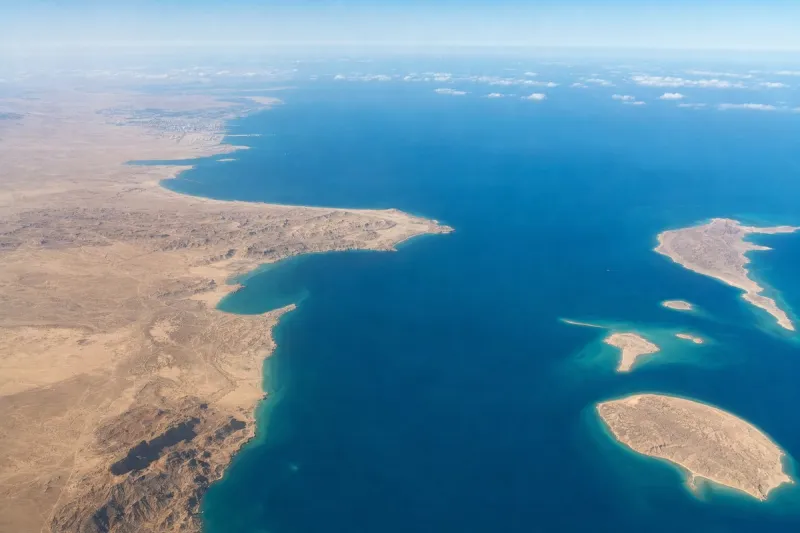
The fall coincided with President Donald Trump saying he saw no rush for further strikes, and with Qatar-mediated talks. On 31 October, Iranian negotiators met Qatari mediators in Doha, and US Secretary of State Marco Rubio said Trump had not yet decided whether to resume attacks. Iran's Supreme Leader, Mojtaba Khamenei, ordered the armed forces to prepare for any attack, and US officials described strikes on Qeshm Island in the Strait of Hormuz as defensive. No single event was reported as the cause of the price move.
The EU Aviation Safety Agency advises airlines not to operate in the Tehran flight region at any altitude, in a bulletin valid until 16 November 2026. That advice is not an Iranian closure order and does not trigger a payout on the market.
What the contract does and does not measure
The resolution wording is narrow. Only an Iranian suspension covering all of its airspace or the Tehran flight region pays out, so a partial closure, a regional restriction or a foreign advisory leaves the contract unchanged. The EASA bulletin is the clearest example: it steers carriers away from the Tehran flight region without being an Iranian order.
The 31 December price sitting above the 30 November price is consistent with a longer window leaving more room for the situation to deteriorate, though the price alone does not show why traders priced it that way.
Industry impact & what to watch
For operators and trip planners, a prediction-market price is a sentiment gauge, not a routing input. Airspace decisions for Iran-adjacent flights rest on state notices, EASA and other authority bulletins, and insurer positions. A contract with modest volume can move 14 points in a day on a handful of trades, so the figure says more about how traders read the diplomatic news than about operational risk.
The structural point is how fast the picture can change. The February closure shows that a general shutdown can follow military action without a long warning period, and the market's own caveat is that the price can reverse quickly if fighting resumes. Planners who treat a falling probability as permission to relax contingency routing are reading more into it than a thin market can bear.
The dated marker already on the calendar is the EASA bulletin, valid until 16 November 2026. Whether it is renewed, and whether the Doha talks produce a Trump decision on resuming attacks, are the developments most likely to move both contracts.