NTSB Preliminary Report: Pilot Reported Icing and Radio Problems Before Fatal Sauk County Crash That Killed Six
Why It MattersThe report shows how icing exposure at altitude, a lost radio link and loss of attitude awareness can combine inside minutes, a sequence that tests single-pilot crews flying light turbine aircraft.
What happened
The National Transportation Safety Board has released preliminary findings on the Oct. 13 crash near Reedsburg, in Sauk County, Wisconsin, which killed all six people aboard. The airplane had departed Kenosha Regional Airport at about 8:43 p.m., bound for Menomonie Municipal Airport. The pilot was transporting friends to a sporting event and back home.
While in contact with the Chicago Air Route Traffic Control Center, the pilot reported icing conditions and requested a lower altitude. He was approved to descend from flight level 240 to 11,000 feet. He then told controllers the plane was experiencing radio problems and that he was unsure of its heading, altitude and airspeed. Controllers lost communication as the aircraft descended through 15,000 feet.
Flight track data showed the plane initially continued west, then entered a right-hand descending turn with upward pitch changes and a rapid increase in airspeed, reaching as high as 339 knots before decreasing. The aircraft briefly ended up on a track about 180 degrees opposite its earlier heading before the track data was lost at around 9:30 p.m. Weather information showed a 50 percent probability of icing conditions at flight level 240 near the accident site at the time.
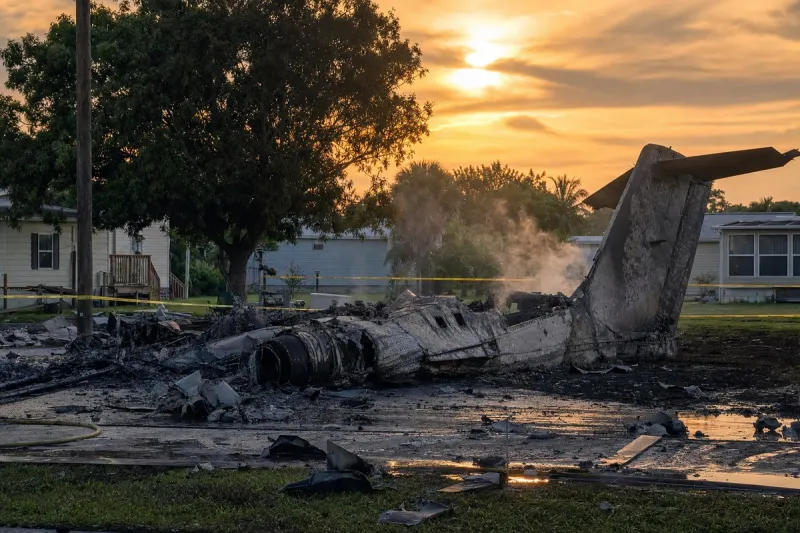
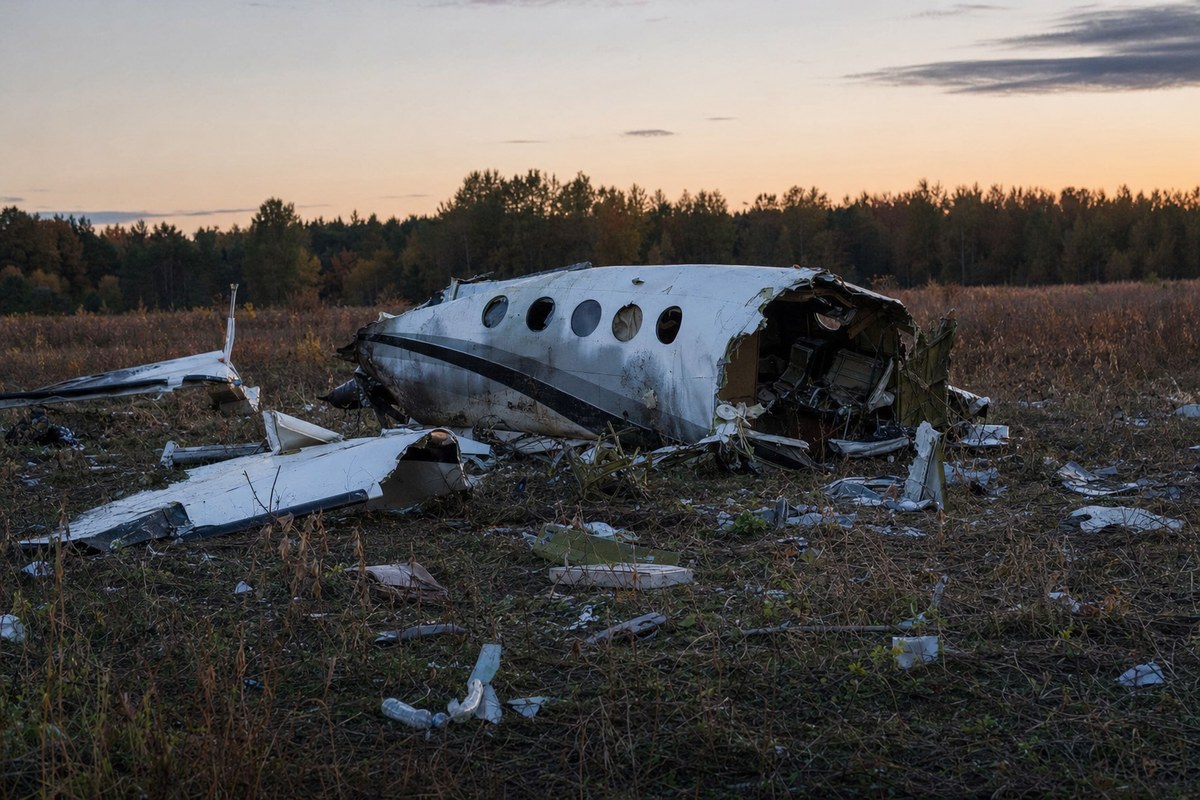
Debris was scattered across a rural residential area and the Mirror Lake Pine Oak Forest State Natural Area; there were no ground injuries or property damage. Both wings were found separated from the fuselage, and both horizontal stabilizers and elevators were found separated from the empennage. The wreckage was recovered and moved to a secure location for further examination, and multiple damaged avionics units were sent to the NTSB Vehicle Recorders Laboratory.
The aircraft and the people aboard
The pilot held an airline transport pilot certificate and completed a pilot-in-command proficiency check on Sept. 17 in an Embraer EMB-500 Phenom 100. The pilot-rated passenger held a commercial pilot certificate and a flight instructor certificate.
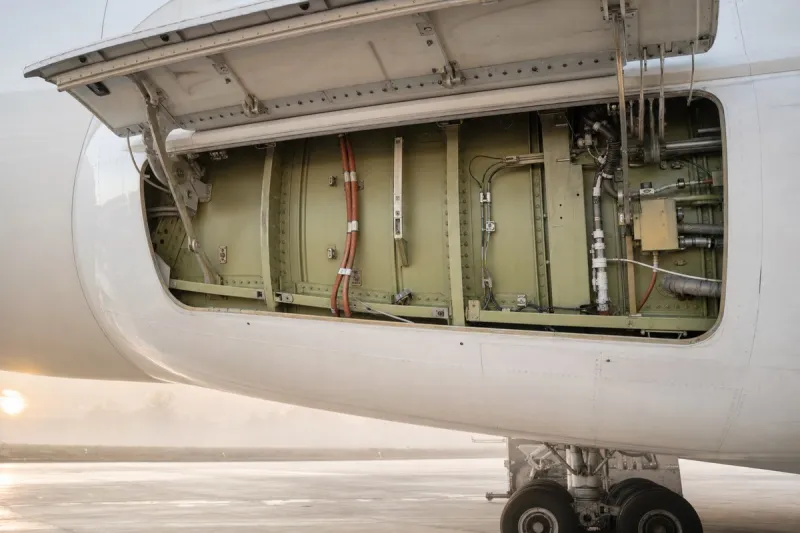
The airplane was manufactured in 2008 and converted to a JetProp DLX model in November 2019. Its airframe, engine and propeller received an annual inspection on Nov. 13, 2025.
Industry impact & what to watch
Preliminary reports of this kind record sequence, not cause, and the NTSB has not issued a probable cause. What the report does establish is a chain of events compressed into a short span: an icing report, a descent request, a communications problem and a pilot stating he was unsure of basic flight parameters. For light turbine aircraft flown by a small crew, that combination leaves little margin, because the same person is managing weather, communication and aircraft control.
The airframe history in the report is also part of how the segment reads it. A 2008 airframe converted to a JetProp DLX in 2019 belongs to the group of older, modified turbine aircraft that sit between piston singles and light jets in private operations. Whether that conversion history or the aircraft's ice protection plays any role is not addressed in the preliminary findings.
The next substantive step is the examination of the recovered wreckage and the damaged avionics units sent to the NTSB Vehicle Recorders Laboratory. Their results would be the first evidence on what the instruments and recorders captured during the descent.