AMREF Flying Doctors Captain Details How Pilots Weigh Patient Urgency Against Safety in African Air Ambulance Missions
Why It MattersAir ambulance safety in Africa rests on pilot-held margins that sit above regulatory minimums, so aircraft selection and a willingness to delay or reroute shape mission reliability as much as speed does.
What happened
Patricia Mulinge, a Captain at AMREF Flying Doctors, described to ITIJ how aeromedical missions across Africa are planned and flown. The interview appears in ITIJ 310 (November 2026) and is sponsored by AMREF Flying Doctors.
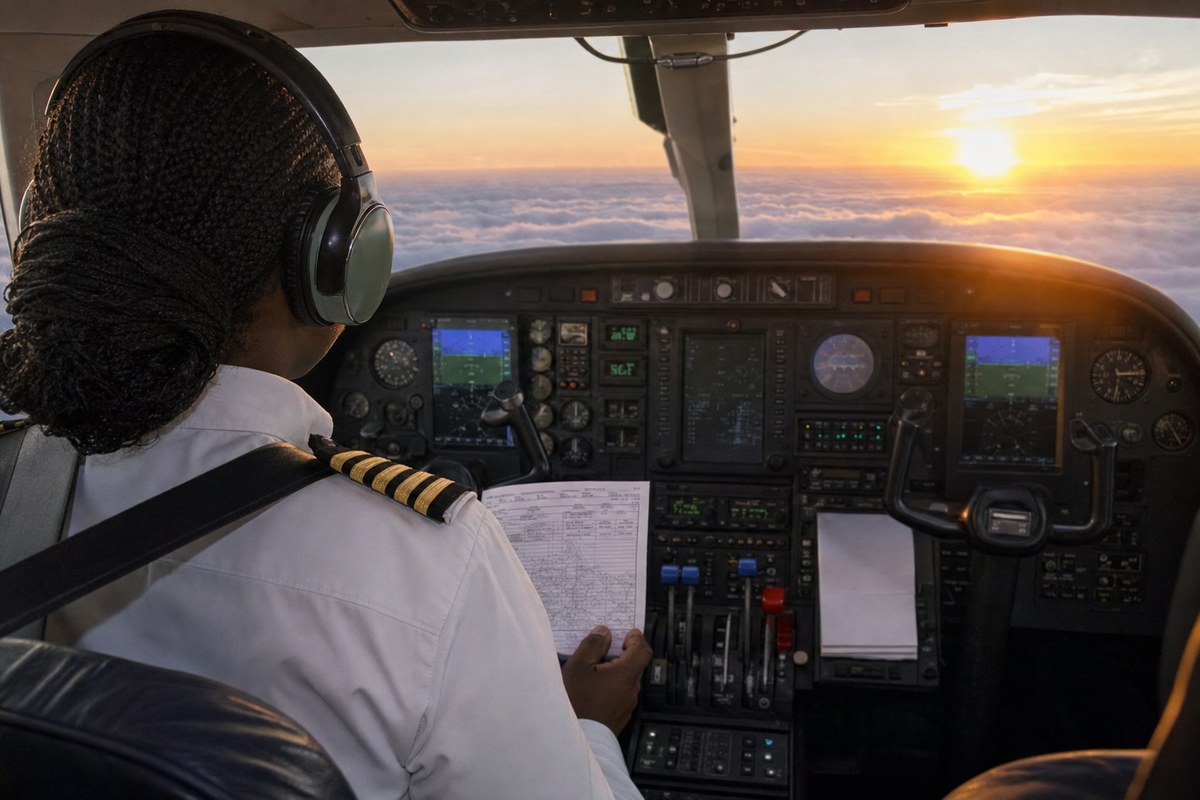
Once Flight Operations passes on the medical brief, she reviews weather, NOTAMs, airfield information and routing options. The patient's condition influences the choice of aircraft, the urgency, the fuel stops and the route. Flight Operations handles the logistics, while the Captain makes the final operational decision. Together they select the aircraft, route, alternates, fuel requirements and crew.
Mulinge said clinical urgency sets the priority but never changes safety limits. She weighs urgency, weather, terrain, daylight, airfield conditions, aircraft performance and alternatives. If margins are too narrow, she looks for another airstrip or aircraft, a different route, or a delay. She noted that regulations provide only a baseline and that a legal option is not always a wise one.
She recounted a mission to a remote airstrip that was legal to use but had a marginal surface, rising terrain, closing weather and daylight-only operations. She delayed the flight and rerouted to a larger international airport, with the patient transferred by road to meet the aircraft. This added ground time, but the patient reached the receiving hospital in good time, and the patient, crew and aircraft avoided unnecessary risk.
Mulinge commands the Pilatus PC-12 and flies as First Officer on AMREF Flying Doctors' jets. The PC-12 can operate into short, unpaved and remote airstrips and get closer to patients, while the jets provide the speed, altitude and range for longer-distance and international missions. Choosing the right aircraft is among the earliest and most important planning decisions.
Short strips and cross-border planning
For short, unpaved or remote airstrips, Mulinge seeks current data on length, slope, surface, terrain and obstacles, and calculates aircraft performance for the expected conditions, including density altitude. She keeps personal minimums that may be more conservative than regulations. Crews brief the approach, rejected takeoff considerations and go-around points, and any crew member should be able to call "stop" without hesitation.
On international missions, planning must cover overflight and landing permits, customs and immigration, airspace restrictions, fuel availability, airport operating hours and differing air traffic control procedures. She plans fuel conservatively and confirms critical clearances in writing.
Pilots in the medical team
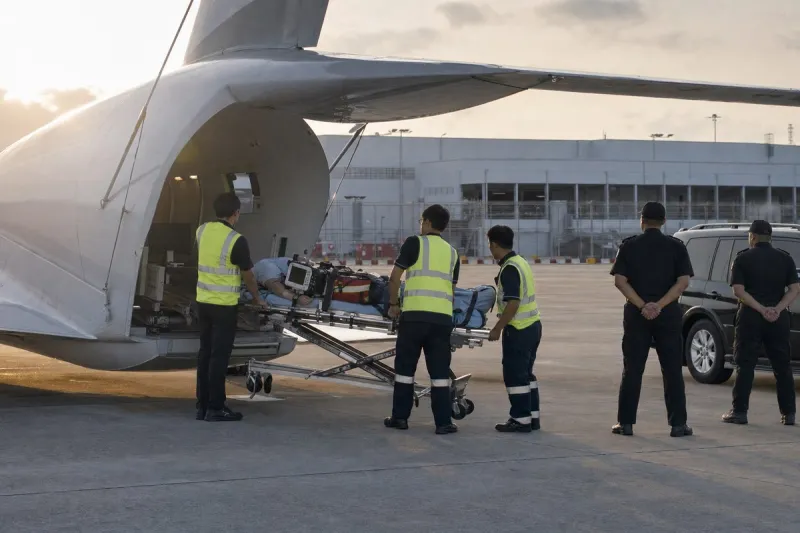
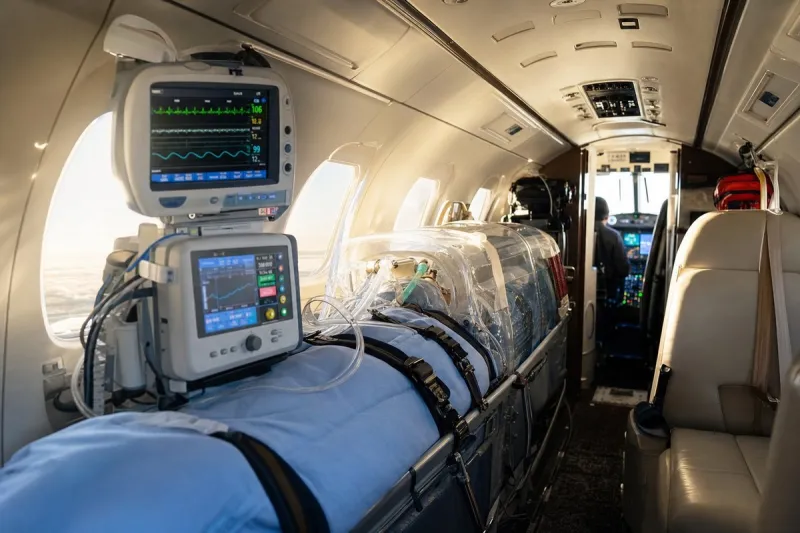
Pilots also support medical crews, helping position the stretcher, manage aircraft doors and equipment, and watch for hazards around the aircraft. Depending on the patient's condition, Mulinge may use a shallower climb, a smoother altitude or an adjusted descent profile, and she gives clinicians advance notice of changes in flight conditions.
Industry impact & what to watch
The structure Mulinge describes separates two decisions that outsiders often merge. The medical side defines how urgent a transfer is; the Captain, working with Flight Operations, decides what the aircraft and airstrip can safely support. In air ambulance work this split is what keeps time pressure from eroding margins, and her stated personal minimums, set more conservatively than regulations, show that the real safety envelope is often set by operator practice rather than by the legal baseline.
The road-transfer mission also shows how air ambulance providers trade ground time against risk. Meeting the aircraft at a larger international airport lengthens the patient's journey on the ground but widens the available margins for the flight itself. For a segment that serves remote communities, that trade is a routine part of operating where infrastructure is thin, and it explains why providers value fleets that mix a short-field turboprop with longer-range jets.
The interview is a first-person account from one operator's pilot and is sponsored by that operator, so it describes AMREF Flying Doctors' stated practice rather than any independent measurement of outcomes. The detail worth following in later coverage is how such operators document personal minimums and crew "stop" authority in their own procedures.