Paused Gulf Conflict and Record El Niño Strain Charter Planning: EASA Gulf Bulletin Runs to Nov 16, Jordan Airspace Advised Against
Why It MattersCharter planning in the region now runs on tight margins from long routings, scarce alternates and conflict-linked fuel costs, with risk judgements shifting from blanket closures to operator-level assessments.
What happened
EASA's UAE–Gulf conflict zone bulletin has been extended to November 16, 2026, meaning flights in Gulf airspace remain permitted subject to each operator's own risk assessment. For Jordan, EASA's latest bulletin recommends that aircraft not operate in Jordanian airspace at any altitude, which has already affected Amman services.

The US–Iran war has been largely dormant for several months, but reporting from Washington and the region points to an expectation that hostilities could resume shortly after the US midterm elections, with Gulf states told to prepare for a short, intense campaign. Iran's leadership has ordered a response without geographical limitations to any new threat, and a senior Iranian security official indicated that infrastructure beyond oil facilities would be targeted. Attacks on shipping in the Strait of Hormuz reached their highest level in October since the war began.
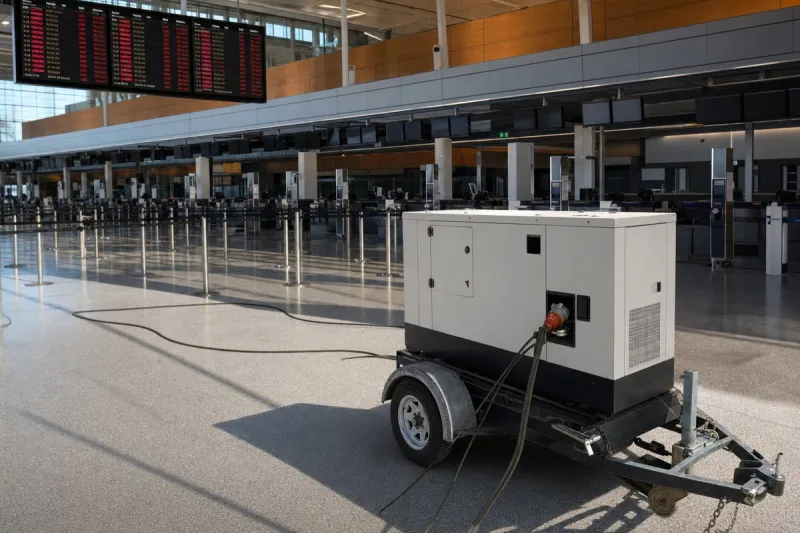
King Khalid International in Riyadh gradually resumed operations on October 27 after an interruption of roughly two weeks, though many flights remain cancelled. The UK FCDO issued a coordinated warning covering sixteen nations.
Scheduled carriers have pulled back. IndiGo cancelled Riyadh, Jeddah, Dammam and Madinah until November 14. Air India and Air India Express suspended Riyadh and Dammam until November 7. Air France suspended Riyadh until November 14. British Airways restored one daily Riyadh rotation from November 3 and discontinued Jeddah. Cathay Pacific suspended Riyadh until January 31, 2027. Singapore Airlines cancelled SQ494/SQ495 Singapore–Dubai until February 28, 2027, and the Latvian flag carrier dropped Riga–Dubai for winter 2026/2027. IATA projects Middle East passenger traffic contracting 11.4 percent.
Extended routings are making some narrowbody sectors commercially unviable and eroding charter range, pushing marginal missions into tech stops. Brent for December was quoted at $117.15, up 1.98 percent, with crude on track for a fourth consecutive monthly gain. Brokers are advised to build diversion fuel to alternates outside the threatened area and to warn passengers of short-notice closures.
Weather and regulatory changes elsewhere
The El Niño that began in spring has reached levels not recorded since the late twentieth century and has not yet peaked. It is driving months-long megafires in Indonesia with toxic smoke across Southeast Asia, historic drought in French Guiana and hurricanes in Mexico.
The polar vortex is showing signs of splitting, with a possible record-early split and sudden stratospheric warming in November that would raise the odds of winter storm disruption in the US, Canada and Europe. Typhoon Champi shut down Taiwan with winds of 191 kph, killing one.
Pakistan briefly barred China Airlines and EVA Air from its airspace from October 25 before restoring permissions through March 27, 2027. India notified the Bharatiya Vayuyan Niyam, 2026, replacing the Aircraft Rules, 1937, effective January 1, 2027. Western Sydney International was cleared for 24-hour operations from November 1.
Industry impact & what to watch
The pattern here is a split between hard closures and judgement calls. Jordan carries an advisory against operating at any altitude, while the Gulf stays open on the operator's own risk assessment. That moves responsibility from the regulator to the flight department and the broker, who must document why a routing is acceptable. When a bulletin carries an end date, the date works as a planning horizon rather than a forecast.
Charter economics tighten in a predictable sequence. Longer routings consume range, range loss forces tech stops, and tech stops add duty-time and slot exposure, all while fuel prices climb. Winter weather adds to the squeeze: a disrupted northern winter means fewer usable alternates and longer sector times just as crew duty margins narrow.
Several dated markers will show which way this goes. EASA's decision on whether to extend its Gulf bulletin beyond November 16 or change the Jordan recommendation is the clearest. The carrier resumption dates of November 7 and 14 indicate whether scheduled airlines see the situation easing. The post-midterm period is the window in which renewed strikes are expected, and a vortex split verifying in November would raise winter disruption odds in the US, Canada and Europe.