NTSB Safety Alert Warns of Stuck Valves in Piston Engines After 42 Accidents in 2015–2025
Why It MattersStuck-valve events concentrate in aircraft types and operations with high thermal stress or irregular use, which makes routine maintenance discipline and engine monitoring, not component failure, the main safeguard for piston fleets.
What happened
A safety alert on stuck engine valves in piston aircraft states that, from 2015 to 2025, investigators examined 42 accidents in which a stuck valve led to a loss of power and an accident. Those accidents resulted in five fatalities and 12 serious injuries.
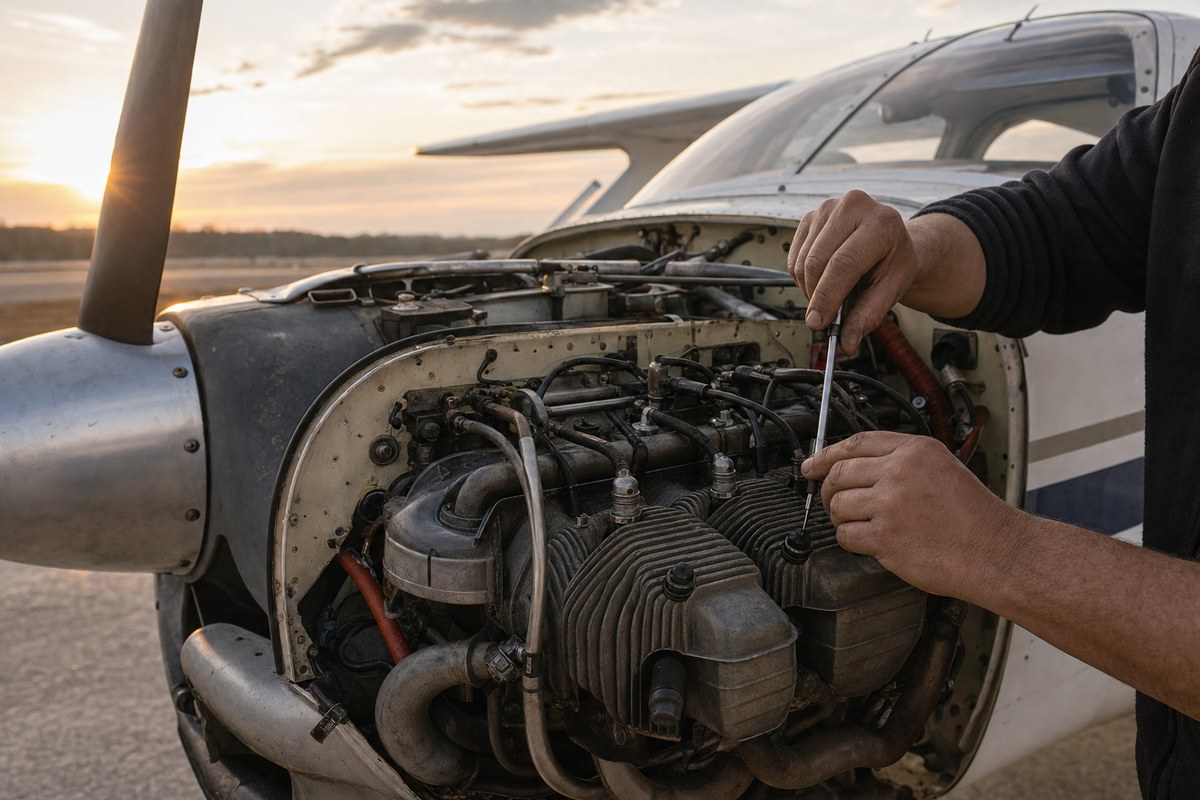
The alert explains that valves stick when deposits accumulate on the valve stem and/or valve guide. Contributing factors listed are localized overheating within the engine cowling, infrequent flying, sudden engine cooling, incorrect air/fuel mixture, operation in high ambient temperatures, low-airspeed flight with reduced cooling, and the use of fuel with high lead content. Depending on where the valve sticks within the guide, pushrods can also bend. The conditions are frequently seen in piston-powered helicopters, because of their higher operating temperatures, and in flight school aircraft.
Symptoms include a rough-running engine, particularly when cold, low exhaust gas temperatures (EGTs), and abnormal cylinder head temperatures, typically in one cylinder. The alert notes that these symptoms are often misdiagnosed in flight and can be especially alarming during takeoff and landing, although the airplane may still be capable of sustaining flight. It says the safest time to deal with a sticking or stuck valve is before takeoff.
Recommended actions include changing oil and air filters at the original equipment manufacturer's recommended intervals, using proper leaning techniques per the pilot operating handbook or engine operator's manual, educating pilots and owners about oil change intervals, using engine-monitoring data to troubleshoot rough running, keeping cooling air baffles and baffle strips in good condition, and following engine manufacturer service instructions to diagnose, measure, or clear stuck valves.
Three representative accidents are summarized. On June 29, 2019 (CEN19LA199), a Zenair CH750 STOL lost all engine power in a descent near Paducah, Kentucky; the pilot could not restart the engine and the airplane landed hard and nosed over in a forced landing. A stuck exhaust valve likely adversely affected cylinder compression, engine timing, and fuel delivery. On May 25, 2022 (WPR22FA188), a Cessna 172F was substantially damaged during a second attempted takeoff near Show Low Regional Airport, Arizona; the No. 4 cylinder exhaust valve was stuck due to a buildup on the valve stem.
Industry impact & what to watch
Stuck valves are a deposit-and-heat problem rather than a sudden hardware defect, and the factors the alert lists are largely operational: how the engine is leaned, how often it flies, how quickly it cools, how well the baffles seal. That places most of the prevention burden on maintenance routines and pilot technique, which is why the recommended actions centre on oil and filter intervals, leaning practice and cooling-air hygiene.
The alert singles out piston helicopters and flight school aircraft, two segments that combine high utilization or high operating temperatures with many hands on the controls. For training operators and rotorcraft owners, the pattern suggests that engine-monitoring data and consistent leaning procedures carry more weight than the airframe or engine model alone.
Because the symptoms are easy to misread in flight and the aircraft may still be able to keep flying, the practical window for intervention is on the ground. The recommendation to follow engine manufacturer service instructions for diagnosing, measuring or clearing stuck valves is the item most likely to translate into changes in shop practice.