VAI Urges Clear Safety Standards as FAA Weighs Rulemaking on Restricted Category Aircraft Transporting Firefighters
Why It MattersOpening restricted category aircraft to passenger-style firefighter transport would force regulators to reconcile differing airworthiness regimes, setting a template for how special-purpose fleets enter commercial-style carriage.
What happened
Vertical Aviation International (VAI) has submitted its response to the FAA's advance notice of proposed rulemaking (ANPRM) on using certain restricted category aircraft to transport firefighters to and from wildfire sites for ground suppression. The ANPRM was issued in response to Sec. 360 of the FAA Reauthorization Act of 2024 and seeks information on aircraft availability, operational needs, costs and potential benefits.
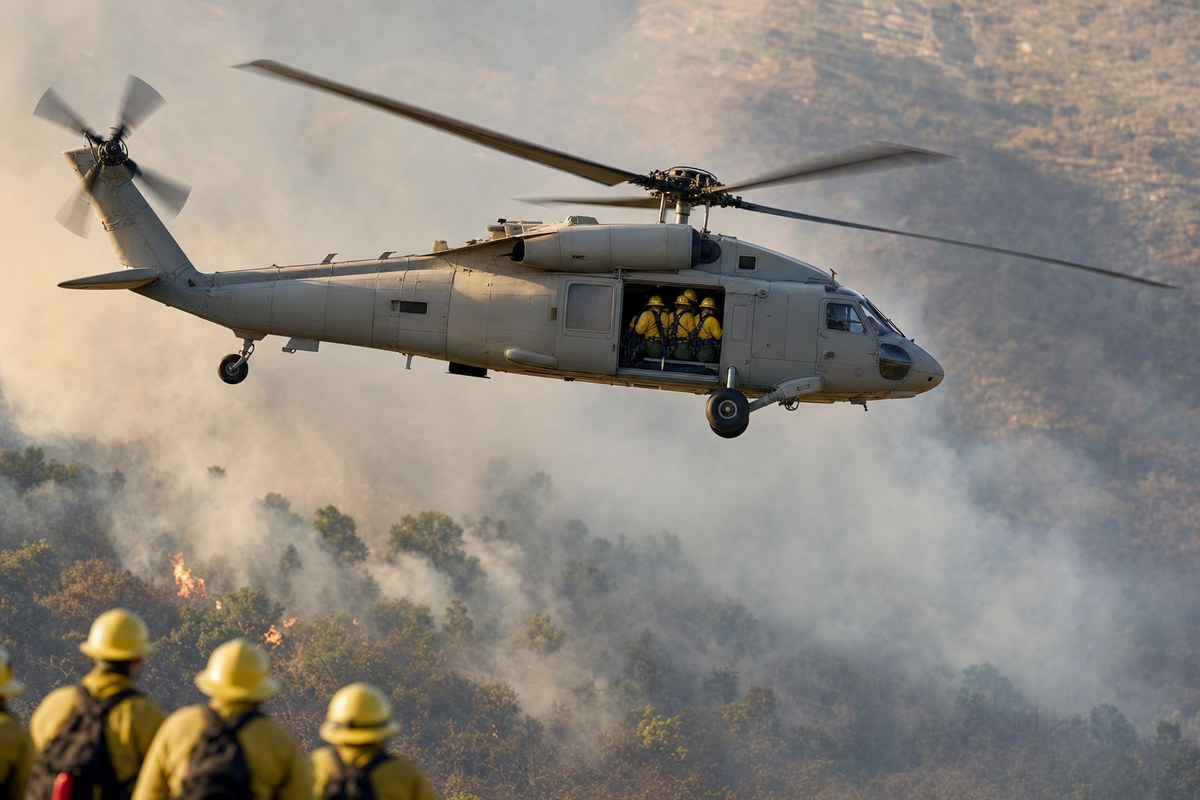
VAI said any authorization, should the FAA choose to expand current permissions, must provide a well-defined framework with enforceable safety protections. The association recommends using the relevant Part 135 or an equivalent framework for maintenance, inspection, pilot qualification, training and checking requirements as benchmarks, alongside an aircraft-specific assessment of suitability for carrying firefighters.
VAI also called for clear aircraft eligibility criteria, practical training and checking pathways, and defined mission boundaries covering staging locations, incident transfers and return transportation. It asked the FAA to clarify how Sec. 328 affects civilian-owned restricted category aircraft conducting public aircraft operations, and to coordinate with firefighting agencies to support consistent implementation.
VAI represents both restricted and standard category operators and urged the FAA to weigh potential operational benefits against compliance costs, effects on existing operators and industry investment. The ANPRM comment period closed Nov. 13.
Industry impact & what to watch
Restricted category aircraft are certificated for special purposes rather than for carrying passengers, so any move to let them transport firefighters raises the question of which standard they should meet. VAI's push to borrow Part 135 maintenance and training benchmarks reflects a common regulatory approach: rather than writing a new regime from scratch, anchor a novel use case to an existing, understood one, then add aircraft-specific suitability checks.
The association's position also shows a split of interests that sits inside a single trade body. Operators of restricted category fleets stand to gain new mission work, while standard category operators already working within full certification requirements have a stake in how compliance costs and competitive effects are balanced. How the FAA weighs those factors will indicate how readily other special-purpose fleets could be opened to adjacent roles.
The next milestone is the FAA's proposed rule, which it will develop using the ANPRM record. That document will carry the actual eligibility criteria, training pathways and mission boundaries, and will give stakeholders a further opportunity to comment on the details of any authorization.