Sentient Jet CEO Alan Walsh on Jet Cards, Safety Standards and 26 Years of Growth
Why It MattersJet card programs compete less on price than on guaranteed availability, which depends on data-driven pre-scheduling and safety screening tighter than baseline regulatory minimums.
What happened
Alan Walsh, CEO of Sentient Jet, discussed the company's founding rationale, safety framework and growth strategy in a wide-ranging interview. Sentient Jet was founded in 1999 and claims to have invented the jet card category, a product Walsh described as sitting between charter and fractional ownership, aimed at travellers flying 25 to 75 hours per year who want reliability and consistent pricing without the costs of aircraft ownership. The company says it now serves more than 7,000 card owners accumulated over 26 years.

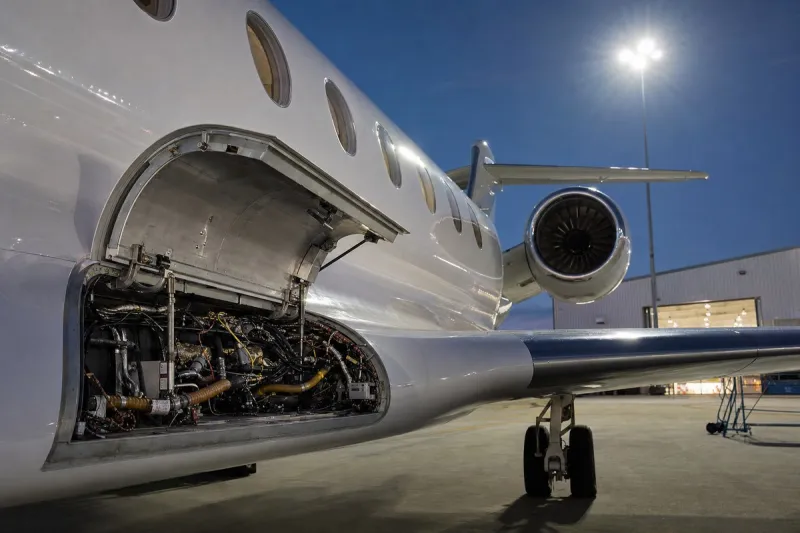
Walsh said Sentient underwrites guaranteed availability without owning aircraft by drawing on more than 100 million data points on client flying trends, which he said let the company pre-schedule aircraft with contracted operators. He said the company's safety certification process is overseen by a chief safety officer and an independent advisory board of former FAA and NTSB officials, is more stringent than FAA requirements in many cases, and that only approximately 35 percent of available lift in North America meets the standard. Aircraft in the operator network are inspected.
Walsh said digital bookings now account for approximately 35 percent of incoming workload and are growing, and that the company has processed more than $600 million through text-based bookings. He said all incoming calls have been answered within 15 seconds for nearly two years. He said current AI applications are focused on back-end analysis instead of customer-facing interactions.
Asked about the addressable market, Walsh referenced the 2026 Knight Frank Wealth Report, which projects North American ultra-high-net-worth individuals with $30 million or more in net worth will grow by 53 percent by 2031. He said Sentient's growth strategy prioritises referral-driven, controlled expansion built on four pillars: safety, service, innovation and sustainability. Sentient Jet operates within the Directional Aviation group of companies, which also includes FXAIR and has ties to Flexjet.
Industry impact & what to watch
Sentient's account of its own model illustrates how jet card programs manage a structural mismatch: selling guaranteed access to aircraft they do not own. That gap is closed with data — the 100 million data points cited for pre-scheduling — and with a safety filter narrower than the regulatory floor, here put at roughly 35 percent of available North American lift.
The segment's economics increasingly run through operational metrics as much as pricing: a 15-second call-answer standard sustained for nearly two years, and $600 million processed through text-based bookings out of a workload where digital now makes up about 35 percent. These figures function as service proof points for buyers choosing between card programs, fractional shares and on-demand charter.
The growth case leans on projected wealth expansion, with the Knight Frank Wealth Report cited for a 53 percent increase in North American ultra-high-net-worth individuals by 2031 — a forecast, not a realised trend. Whether Sentient's referral-driven expansion keeps pace with that projected demand, and whether its safety threshold holds as the operator network scales, are the points worth tracking as the company reports future growth figures.