DLR Opens MRO Living Lab in Hamburg With Converted Cessna Citation CJ Business Jet
Why It MattersA full-scale aircraft inside a research lab shows maintenance technology moving from simulation toward hands-on validation, with maintainability being pushed earlier into aircraft design through DLR's Design for Operation approach.
What happened
The German Aerospace Center (DLR) has inaugurated a new MRO Living Lab at its ZAL TechCenter in Hamburg. The facility sits within DLR's Institute of Maintenance, Repair and Overhaul and gives researchers a full-scale aircraft platform to research and validate advanced maintenance technologies, digital processes and repair methods.

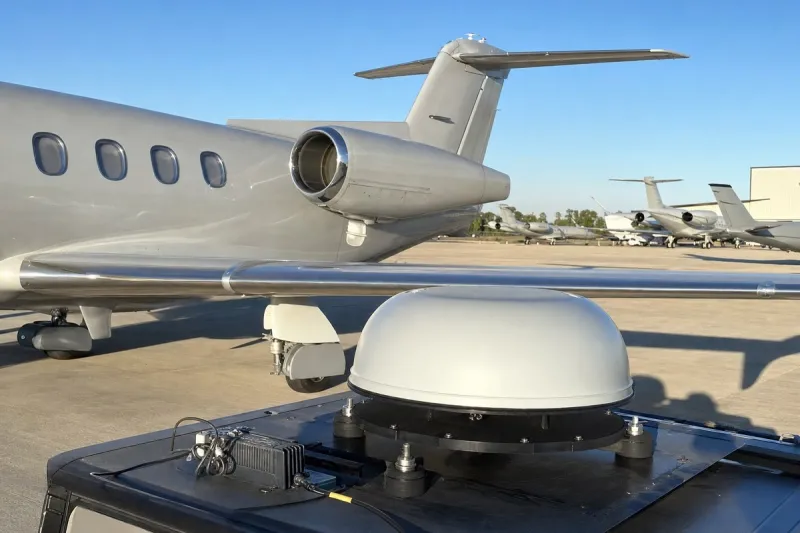
At its centre is a technically functional Cessna Citation CJ business jet, built in 1998, that has been converted into a research demonstrator. Researchers, students and industry partners will use it to test new technologies under realistic maintenance workshop conditions.
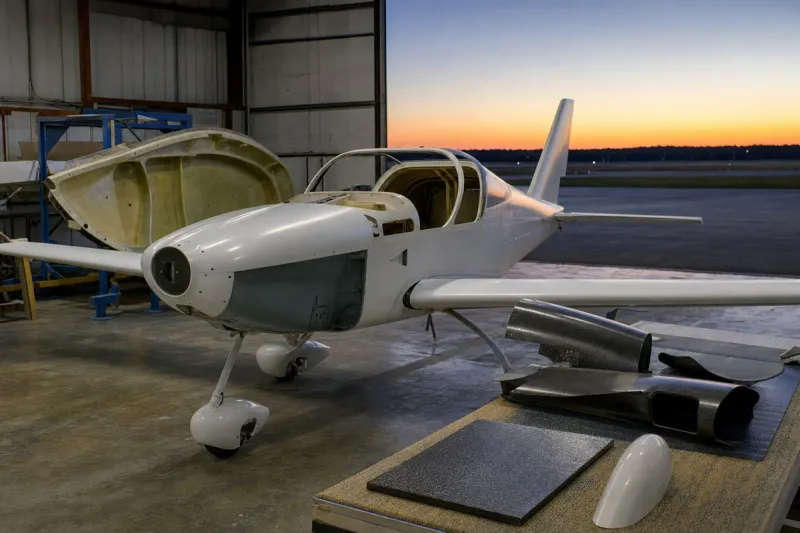
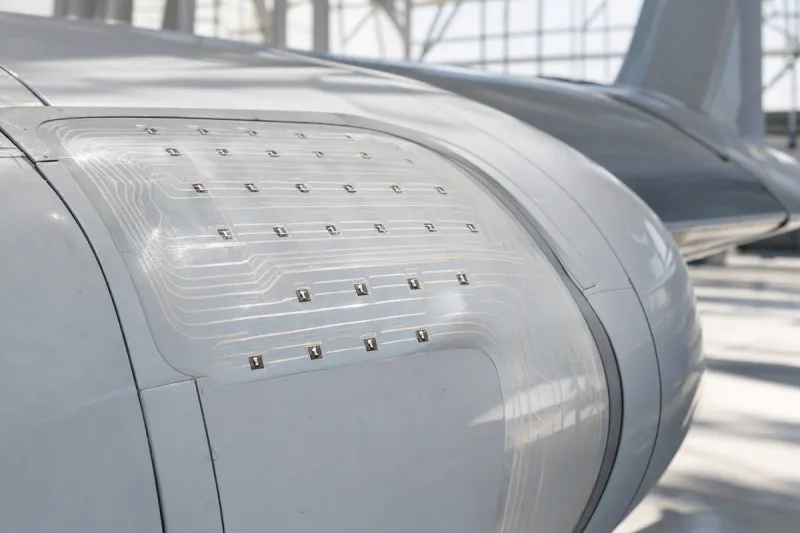
To fit the aircraft inside the laboratory, one wing and one horizontal stabiliser were removed, while its flap and aileron controls were adapted to remain fully functional. A dedicated measurement door on the right side of the fuselage gives researchers access to sensor data, including during pressurised testing. The fuselage also has a split surface treatment: one side keeps its conventional painted finish and the other is left untreated, allowing researchers to compare surface conditions and evaluate inspection and repair techniques, particularly in non-destructive testing.
The Living Lab concentrates on four areas: data-driven maintenance planning, human-centred digital MRO workshops, new maintenance and modification processes, and sustainable supply chains. Research will examine how artificial intelligence, robotics, visual assistance systems and sensor technologies can improve maintenance efficiency and support the digitalisation of aircraft servicing.
The lab is part of DLR's wider MRO Application Center, which also includes a Project Lab for robotic assistance systems, a Vision Lab for tracking and extended reality technologies, and a Measurement Lab equipped with 3D measurement systems and mobile sensor technology. According to DLR, the facility will support research and teaching and offer opportunities for collaboration with industrial partners.
Industry impact & what to watch
Maintenance research has often relied on component test rigs and software models. Placing a real, flight-configured airframe with working controls and a pressurised-test sensor door inside a lab lets inspection tools, robotic aids and repair methods be tried on a complete aircraft structure. The split paint treatment points at one practical target: telling coating condition and damage apart during non-destructive inspection, a routine task in every MRO hangar.
Business-aviation maintenance sits close to this work because light jets like the Citation CJ are serviced by small shops and independent providers where labour hours and diagnostic time weigh heavily on cost. Any assistance system proven on a platform of this size has a plausible path into that segment, since the aircraft is far closer to what such shops actually handle than a large airliner would be.
DLR also states that its Design for Operation approach aims to bring maintenance considerations into aircraft development, improving supportability and operational efficiency across an aircraft's service life. If industry partners come on board, the useful signal will be which of the four research areas attract joint projects first, and whether findings on AI-assisted planning or robotic inspection reach workshop practice, which is the transfer DLR says it wants to speed up.