Review in Research Outlines 'Fly-by-Feel' Flexible Smart Skins That Could Let Aircraft Sense Airflow and Adapt
Why It MattersThe review marks flexible sensing and onboard AI as a long-horizon path toward adaptive airframes, where manufacturing, durability and power budgets, not sensing itself, set the pace of any adoption.
What happened
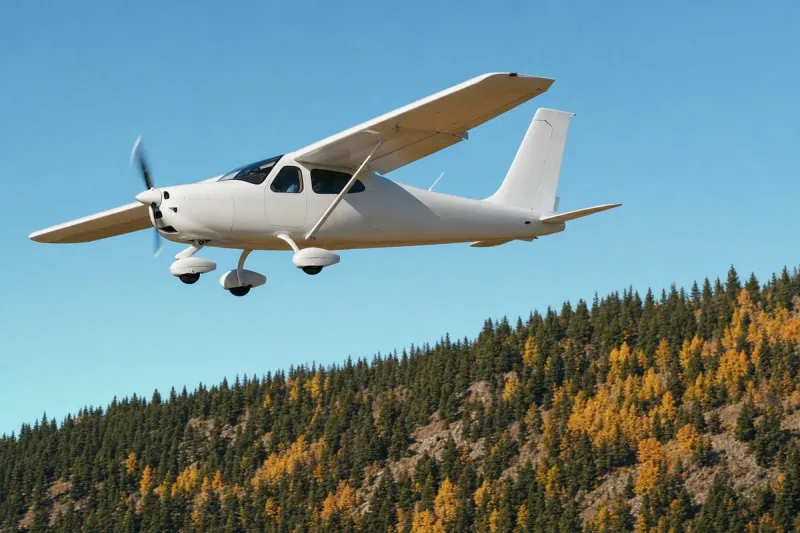
Researchers from Huazhong University of Science and Technology have published a review in Research examining how artificial intelligence and flexible sensing technologies could enable aircraft to perceive aerodynamic conditions, interpret their surroundings and actively adapt their surfaces. The authors call this emerging vision "Fly-by-Feel," a step toward embodied intelligence in aviation.
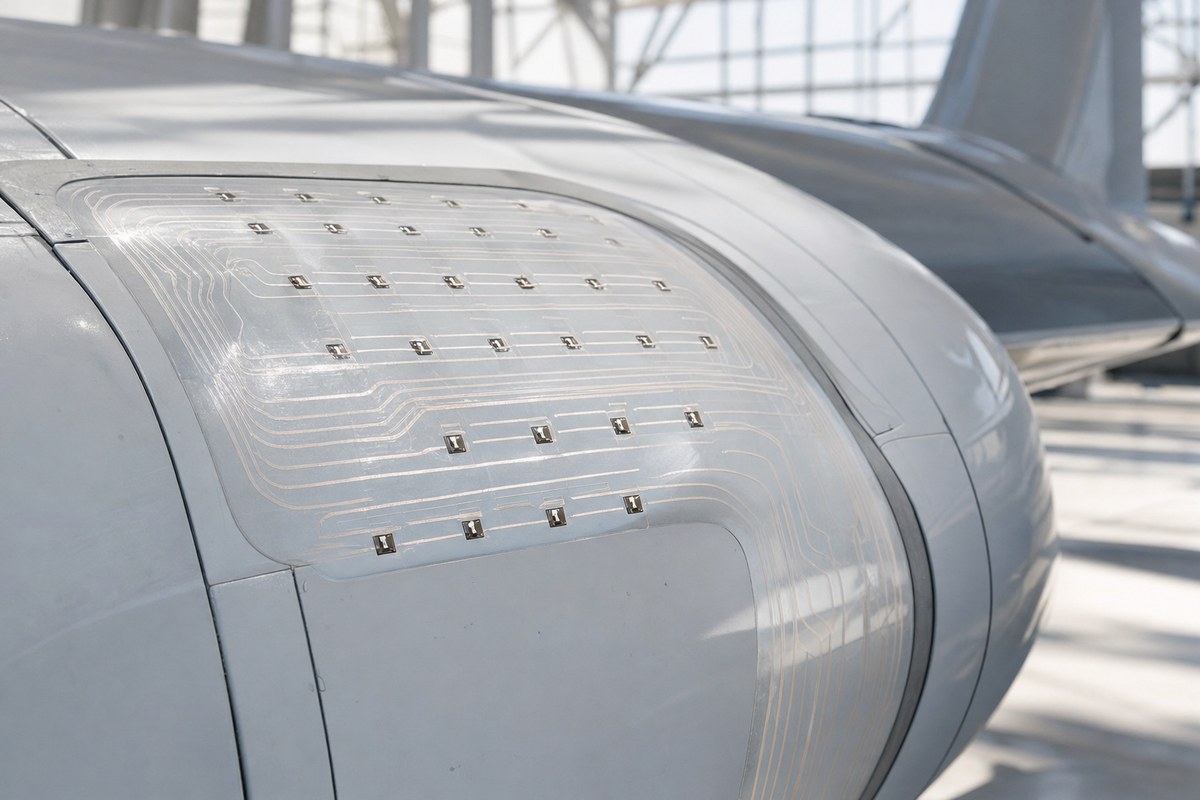
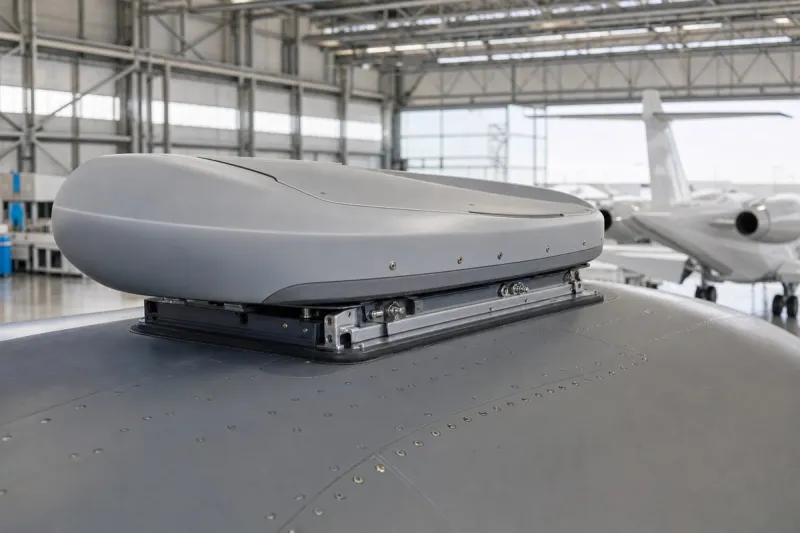
The approach centers on flexible sensing skins known as iFlexSense, which integrate miniature sensors, electronic interconnections and functional components into thin, conformable substrates that follow the curved surfaces of wings and fuselages. Unlike sensors installed at discrete locations, flexible skins could cover larger areas with minimal aerodynamic disturbance. By monitoring pressure, wall shear stress, strain, vibration and temperature, they can capture information about both the surrounding airflow and the aircraft's structural condition.
The review highlights AI-assisted flow-field reconstruction, in which data from a limited number of sensing points is used to estimate a much more detailed aerodynamic field. Combining data-driven models with physical constraints could help identify flow separation, shock-wave movement and conditions associated with stall. One previously reported approach reconstructed a high-resolution flow field from five measurement points in approximately two milliseconds. The reliability of AI predictions under unfamiliar flight conditions, noisy measurements and extreme turbulence remains a significant challenge.
For real-time decisions, the review emphasizes edge intelligence: lightweight AI models on onboard hardware could process sensor signals locally and identify abnormal conditions without continuous reliance on remote computing. Cloud computing would play a complementary role, analyzing historical flight records, structural monitoring data and maintenance information on the ground to improve health assessment, predict component degradation and guide maintenance planning.
Three application areas
The review identifies three application areas. In anti-icing and deicing, flexible skins could combine ice detection, water-repellent surfaces and localized heating, with AI prediction activating heat where and when icing risk is greatest. An icing wind-tunnel study cited in the review found that a combined superhydrophobic and electrothermal system reduced energy consumption by 72.3%; the authors note this reflects a specific experimental configuration, not a general performance guarantee.
In electromagnetic stealth, reconfigurable metasurfaces could manipulate the reflection and scattering of electromagnetic waves.
Industry impact & what to watch
The review describes a progression from individual sensing devices to distributed arrays, large-area multimodal sensing, AI-assisted perception and finally closed-loop embodied intelligence. That final stage remains a technological ambition and not an established aircraft capability, which places the work at the research end of the technology pipeline for anyone tracking airframe and avionics development.
The obstacles the authors list are mostly engineering and integration problems: reliable large-area manufacturing, durable integration with aircraft structures, resistance to extreme temperatures and radiation, and low-power onboard computing. Coordinating several adaptive functions adds a further constraint, since they may compete for weight, electrical power and surface area. In certified aircraft those trade-offs generally decide whether a sensing technology reaches service.
The next signals worth tracking are validation results beyond wind-tunnel configurations, particularly how AI flow-field predictions hold up under unfamiliar flight conditions, noisy measurements and extreme turbulence, since the review names those as the open reliability question.