Beyond Aero Unveils AeroAI Agentic Engineering System, Claims Over 200% Cut in Engineer-Hours per Certification Page
Why It MattersCertification paperwork, not airframe design alone, is where new-aircraft programmes spend scarce engineering time, so tools that compress documentation and change-impact work could reshape how small developers staff themselves.
What happened
Beyond Aero, the French developer of a hydrogen-electric business aircraft, has unveiled AeroAI, an agentic artificial intelligence engineering system it built in-house. The company says it reduces engineer-hours per page of certification documentation by more than 200%. AeroAI runs on Amazon Web Services and reaches foundation models through Amazon Bedrock, while Amazon Bedrock AgentCore hosts the agents and connects them to the company's engineering tools under each engineer's own access rights, with every step traced for audit. In European regions it runs entirely on Amazon Web Services.

According to the company, the agents run around the clock, connect knowledge across the programme, trace the impact of every change and draft analyses for engineers to review, shrinking analysis and iteration cycles from months to days. Co-founder and chief strategy officer Valentin Chomel said engineering authority does not change: every output is reviewed, approved and signed by a named, accountable engineer, and the AI proposes designs but never validates or releases anything by itself. Part of the tool is fully deterministic.
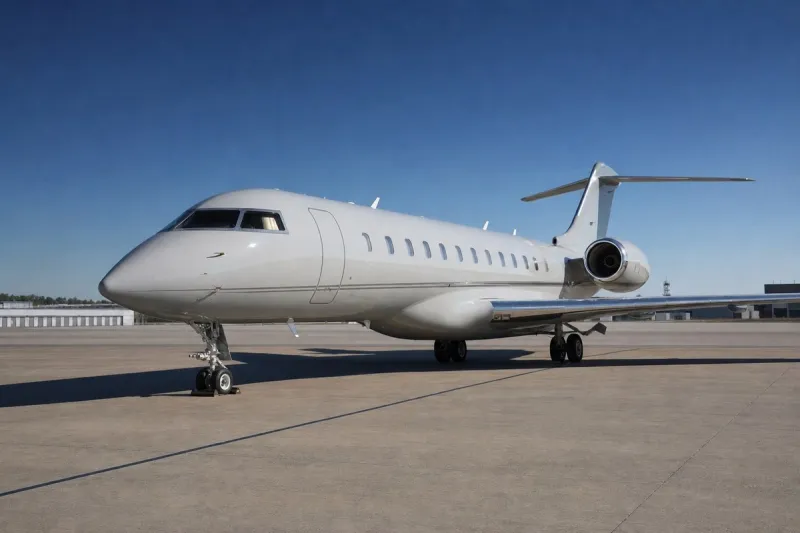
Beyond Aero's team of 80 engineers is developing One, a six-seat business aircraft with electric propulsion powered by hydrogen fuel cells, targeted for service entry in the early 2030s. AeroAI's compliance agents, called Sentinel, check every change to the 3D model, a requirement or a test result against the full indexed corpus and the EASA certification basis. The design target is an impact map and proposed action set in under 24 hours, compared with an industry average of 17 days for a medium engineering change, according to Chomel.
The company passed its preliminary design review with EASA in March 2026 with a review package of more than 3,000 validated pages. Fifty engineers produced and validated it in two months, spending about a quarter of their time on it. Chomel put that at roughly 1.3 engineer-hours per page, against an industry norm of 4 to 6 hours for aerospace-grade documentation. The company deliberately avoided a single headline efficiency figure, measuring the gain on one well-defined work package and comparing it with the time engineers who joined from other programmes said the same work had taken.
AeroAI can also generate a three-page, client-tailored projection study from a single request. In an example route study from Paris Le Bourget to Geneva, the agent pulled airports and real flight block times from an index of every flight since 2019, ran Beyond Aero's own aircraft performance model, added competitor figures and airport fees, and cited the source of every figure. The company also used AeroAI to compute more than 500,000 complete aircraft variants, covering wing geometry, fuel-cell sizing, battery capacity and propulsion layout.
The Universal Hydrogen archive
Beyond Aero acquired assets from defunct hydrogen propulsion developer Universal Hydrogen, which flew a test demonstrator nicknamed Lightning McClean in early 2023. The assets included 4.36 TB across 9,500 undocumented files that months of manual effort in 2025 had failed to make usable. This year AeroAI structured the entire archive in about two weeks, according to Chomel.
Asked whether AeroAI could be sold to other aircraft developers, Chomel called it an open question for now, saying the company is not spending energy on it today.
Industry impact & what to watch
For a clean-sheet developer, the cost of certification is largely a cost of paper: documentation volume, traceability between requirements, models and test results, and the cycle time of every change request. Those are the activities Beyond Aero is targeting, and they are the ones that consume engineers on small programmes where headcount is the binding constraint. A claim of 1.3 engineer-hours per page against a stated norm of 4 to 6 hours, if it holds up, bears directly on how large a team a new business-aircraft programme needs to reach design reviews.
The design of the system also shows where the regulatory line sits. Every output is signed by a named engineer and the AI releases nothing on its own, which is the arrangement a certification authority can audit; the audit trail and access-rights controls are built around that. The efficiency figures rest on one work package compared with recollections of engineers from other programmes, so they describe this team's experience rather than a controlled benchmark.
The next test is the same one every certification programme faces: whether EASA accepts documentation produced this way through the stages that follow the March 2026 preliminary design review. Chomel's comment that selling AeroAI to other developers is an open question leaves the system, for now, as an internal advantage rather than a product.