Q-CTRL Raises $290M Series C Led by Salesforce Ventures as Quantum Navigation Drives Early Revenue
Why It MattersThe round shows quantum sensing for GPS-independent navigation attracting capital as its own category, with nearer-term defense and aerospace buyers than fault-tolerant quantum computing offers.
What happened
Australian quantum technology company Q-CTRL has raised a US$290 million Series C round led by Salesforce Ventures. The round values the company at more than $1 billion. The investor list spans enterprise software, semiconductors, sovereign industrial policy and defense. EDGE Group disclosed a $50 million investment in Q-CTRL as part of the funding.
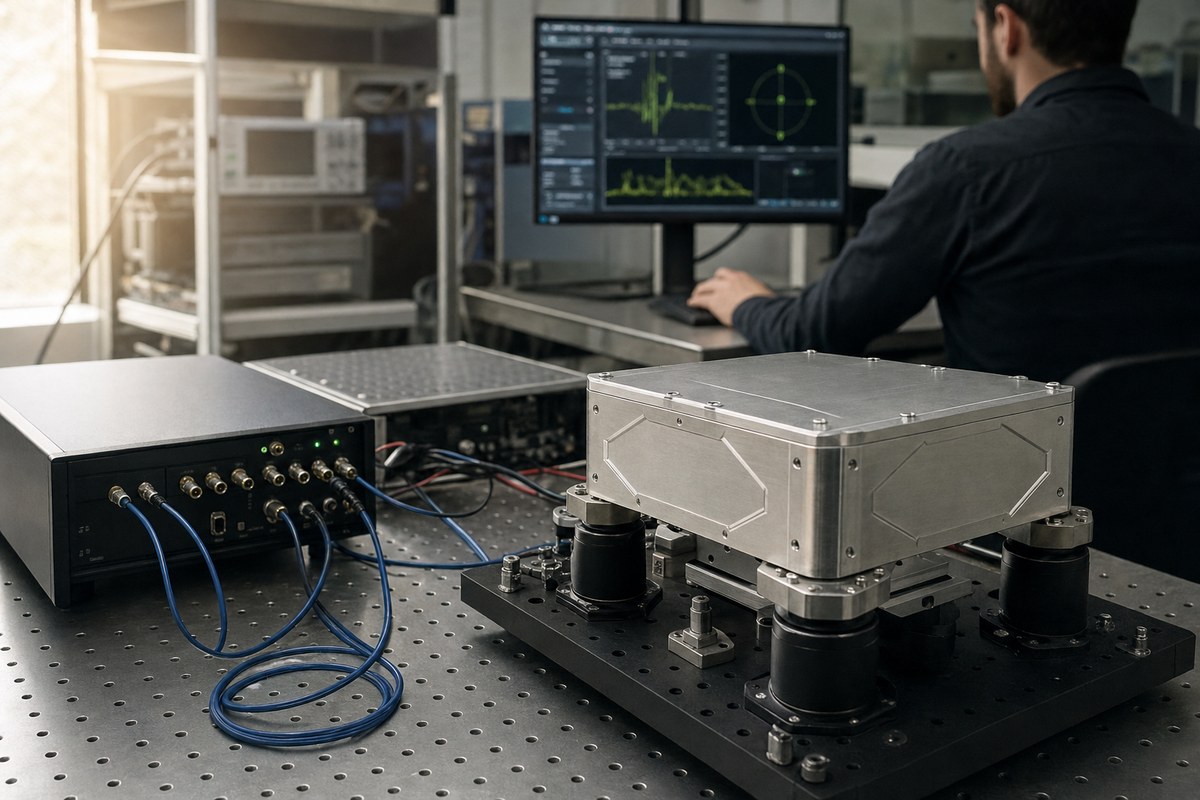
Q-CTRL sells control software intended to make quantum computers more reliable, and it is also commercializing quantum sensors for positioning, navigation and timing when satellite signals are unavailable or untrustworthy. Its navigation product, Ironstone Opal, combines quantum sensing with the company's control and error-suppression software. Q-CTRL describes it as unjammable, unspoofable and undetectable; those are company claims, not yet universal performance guarantees across operational conditions.
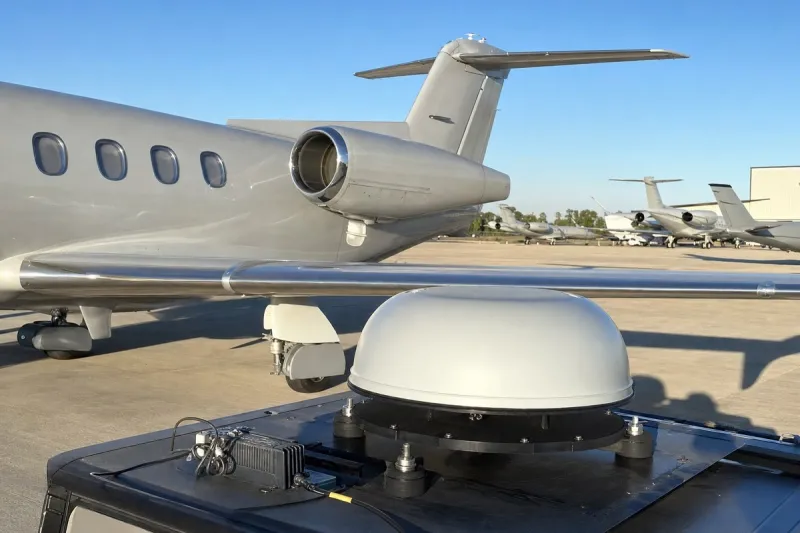
The company won a $24.4 million DARPA contract in 2025 and has worked with the US Defense Innovation Unit and Lockheed Martin. Salesforce Ventures says the navigation product is already generating revenue and notes that it achieved aviation environmental qualification under the RTCA DO-160 standard in July 2026. Q-CTRL has also reported maritime and airborne trials, and says its control techniques can improve sensor performance by up to 100 times, a company-reported comparison rather than an industry-wide benchmark.
Q-CTRL faces competition in alternative positioning, navigation and timing (PNT). SandboxAQ is developing AQNav around magnetic anomaly navigation; Infleqtion, Vector Atomic and AOSense work across atomic clocks, inertial sensing and other quantum modalities; Honeywell, Safran and Exail are established navigation suppliers; and Xona Space Systems is building a low-Earth-orbit navigation constellation.
Industry impact & what to watch
The central business question is whether Q-CTRL can carry two very different timelines at once. Fault-tolerant quantum computing is a long-horizon market with uncertain hardware roadmaps, while GPS-independent navigation addresses a current operational problem with identifiable defense and aerospace buyers. A round of this size, led by an enterprise software investor, signals that quantum sensing is becoming an investable geospatial category in its own right.
For aviation, the competitive field described above points to how resilient navigation is likely to be built: a stack that fuses GNSS, inertial sensors, terrain matching, magnetic maps, signals of opportunity and quantum measurements, rather than a single replacement for satellite positioning. Quantum sensing would then compete on what it adds to that fusion, against incumbents such as Honeywell, Safran and Exail.
The EDGE Group stake strengthens Q-CTRL's route into Middle Eastern defense markets, but it also carries a governance and procurement dimension, since the company sells sensitive dual-use capabilities. One of the participating investors has drawn scrutiny over questions about undisclosed investments reported by The Atlantic; that does not change the underlying navigation technology, though buyers in regulated markets will weigh it in procurement.