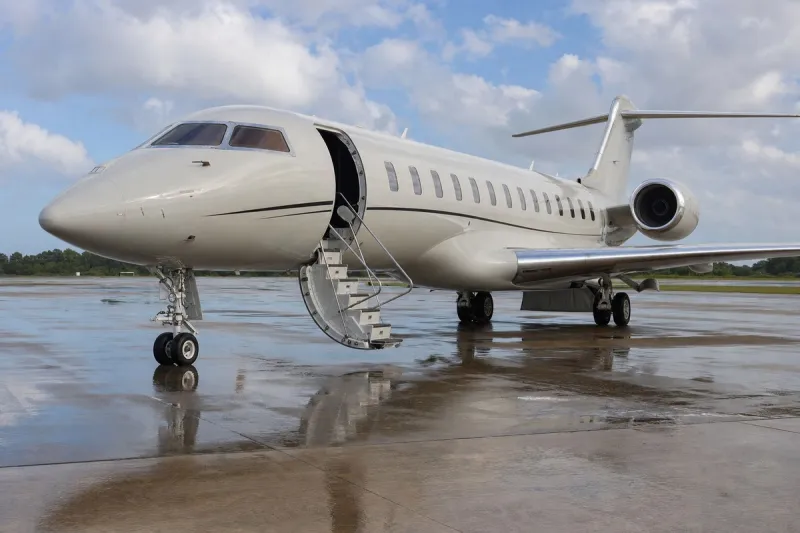
Challenger 650 Outperforms Falcon 900LX on Economics as 2026 Marks F900LX's Final Delivery Year
Why It MattersAs production wind-downs approach, capability edges like range and cabin size can be outweighed by depreciation and residual-value risk in charter and financing economics.
What happened
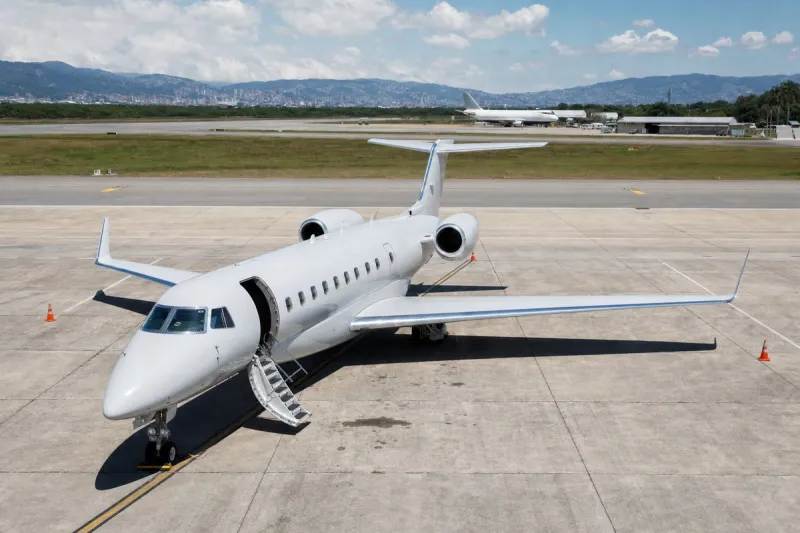
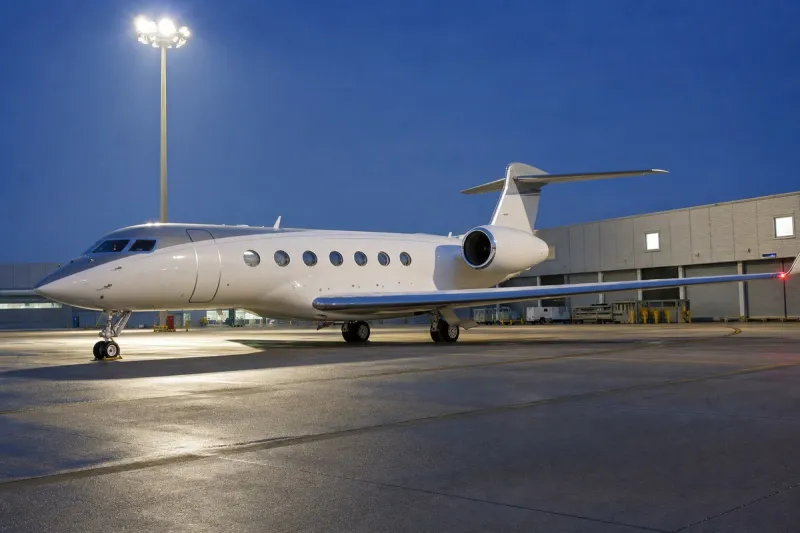
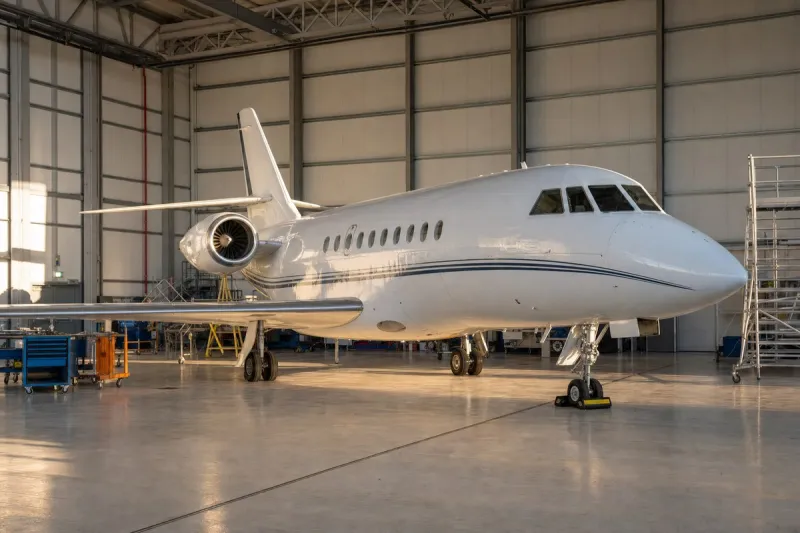
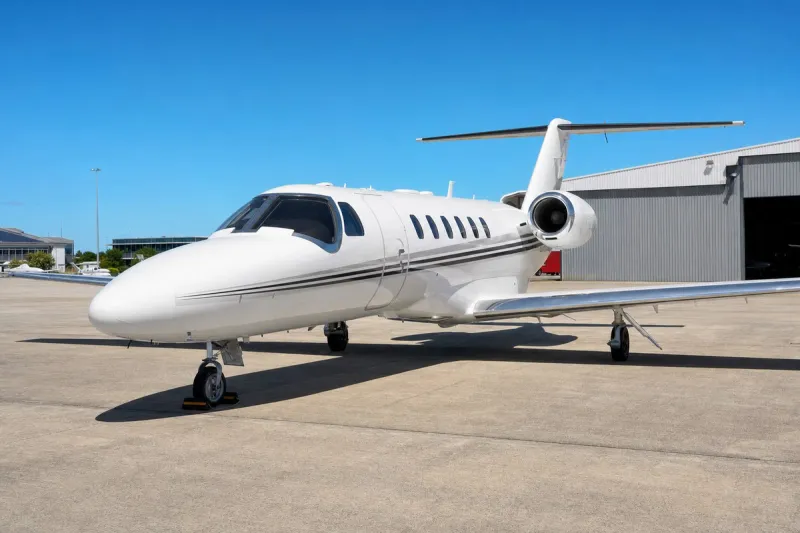
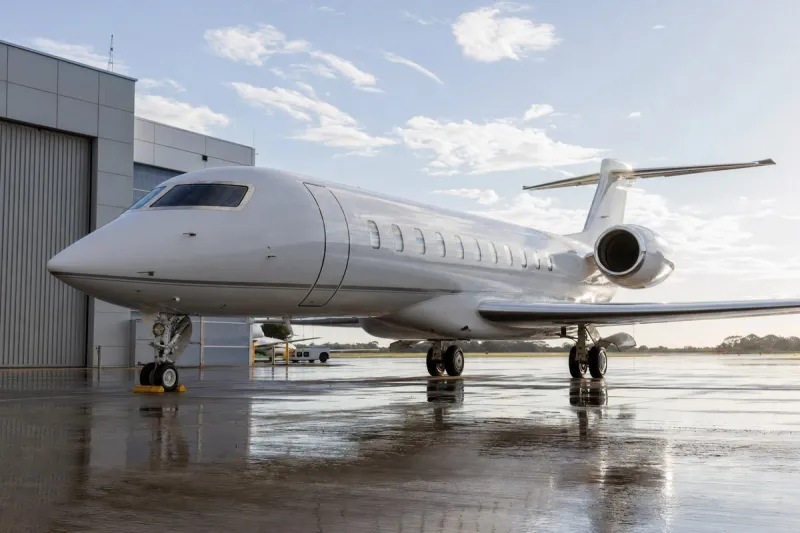
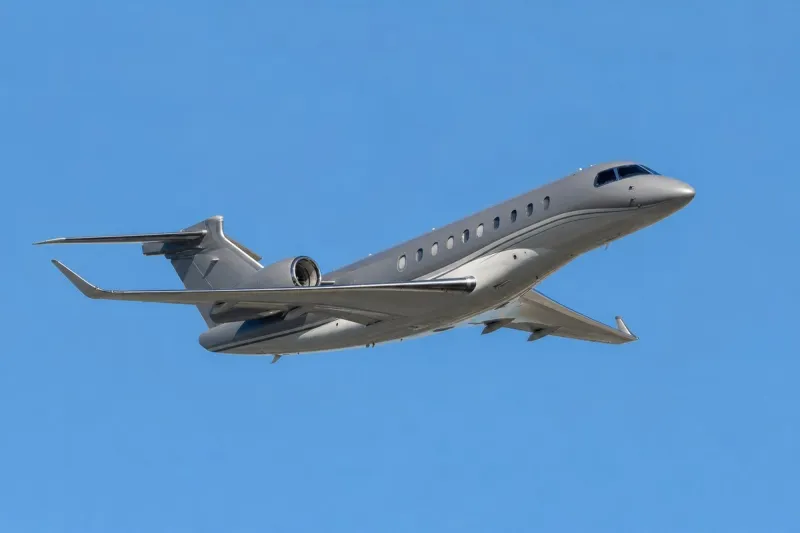
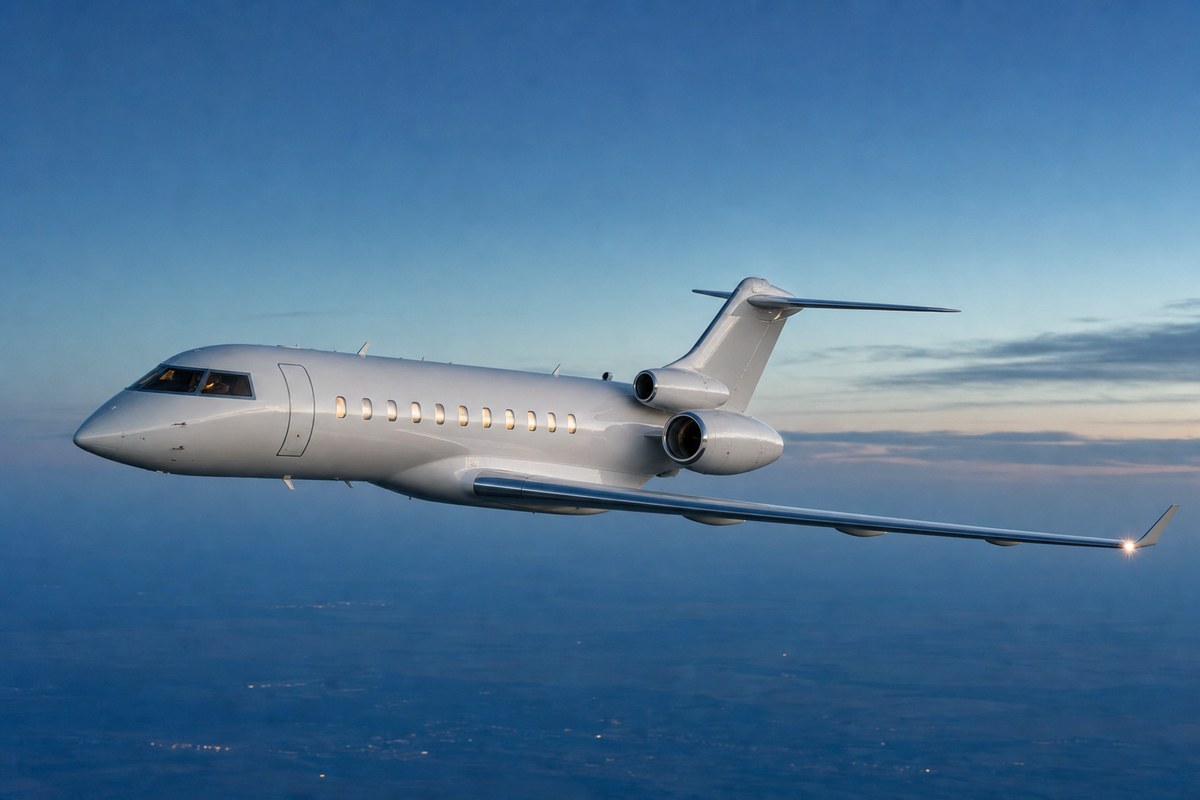
A comparative analysis of the Falcon 900LX and Challenger 650, weighing charter owner-operator economics, charter customer experience, buyer/seller dynamics, and financier risk, finds the Challenger 650 holding an advantage on most financially material measures even as the Falcon 900LX keeps a meaningful capability edge. The Challenger 650 lists at $35.5 million against $45.5 million for the Falcon 900LX, a 28% gap. On capability, the F900LX scores a Productivity Index of 2.59 versus 1.94 for the Challenger 650, a 33% advantage the analysis attributes to longer range and a larger cabin; a composite competitiveness score weighting Productivity Index (40%), range (25%), cabin volume (20%) and speed (15%) widens that gap further.
Records indicate the last new-build Falcon 900LX airframe entered production around July 2025, with no new units recorded in the thirteen months since. Dassault's marketing site no longer lists the F900LX in its primary lineup, and industry brokers now describe 2026 as the model's final delivery year.
Using AMSTAT data from July 2026 and a base case of 400 annual flight hours, the Challenger 650 generates a seven-year net operating cash flow with a present value of approximately $4.3 million, while the F900LX's equivalent figure is roughly negative $0.65 million, which the analysis attributes to higher fixed and variable costs tied to its three-engine configuration. At 550 hours per year, the Challenger 650's net present value turns slightly positive at approximately $0.84 million.
A seven-year model built on pre-owned acquisition at current average transaction prices, Part 135 charter revenue net of operating costs, a Year 1 tax shield from 100% bonus depreciation under 2025 tax legislation, a Year 7 disposal net of broker commission, and an 8% weighted average cost of capital, shows the Challenger 650 avoids roughly $6.84 million of incremental seven-year value destruction relative to the F900LX, composed of an estimated $5.0 million better net operating cash flow and a stronger residual position. In the pre-owned market the Challenger 650 retains approximately 68% of list price versus approximately 53% for the Falcon 900LX; as of August 15, 2026, AMSTAT data show 1.6% of in-service Challenger 650s listed for sale or lease compared with 2.0% for the Falcon 900LX. The model's depreciation assumptions are 4.5% annually for the Challenger 650 and 7.0% annually for the Falcon 900LX. At an illustrative 70% loan-to-value, the Challenger 650's year-seven residual value covers its loan balance at approximately 1.00 times, while the F900LX's collateral coverage is approximately 0.83 times. For charter customers buying capacity, the F900LX screens better on range per charter dollar and rate per passenger seat. Elsewhere in the large-cabin segment, the Falcon 2000LXS lists at $38.3 million with a Productivity Index of 1.80, and the Gulfstream G500 lists at $54.25 million.
Why the gap opens
The depreciation assumptions behind the model come from a blended-fleet approximation rather than a vintage-by-vintage curve, and the analysis flags directional uncertainty in both directions. It also notes that the Falcon 900LX's 2.0% active-fleet-for-sale figure is lower than might be expected for a discontinued platform, which could indicate owners have not yet repriced in response to the production news.
The F900LX's end-of-production risk could unfold as a gradual depreciation curve or as a steeper cliff effect if buyers price in discontinuation faster than a smooth annual rate implies, a distinction the model says it cannot resolve. Dassault has historically continued supporting out-of-production Falcons, including the Falcon 20 and Falcon 50 series.
Industry impact & what to watch
This case illustrates how a discontinued or discontinuing platform can still carry superior raw capability while losing on the financial measures that matter most to owner-operators and lenders: cash flow, residual value, and loan coverage. In charter and fractional economics, capability metrics like range and cabin volume matter to the customer buying a trip, but the entity owning or financing the aircraft is exposed instead to depreciation curves, utilization-driven cash flow, and disposal proceeds.
The segment's pre-owned pricing mechanism depends on how quickly the market reprices an aircraft once production ends; a 2.0% for-sale rate that lags the production news suggests that repricing has not yet fully occurred, leaving open whether the Falcon 900LX's eventual decline will be gradual or abrupt. Lenders assessing collateral at loan-to-value ratios such as 70% are the group most directly exposed to which of those two paths materializes.
What happens to Dassault's aftermarket support commitments for the F900LX, following its stated practice with the Falcon 20 and Falcon 50, will weigh heavily on whether the model's residual values stabilize or continue eroding faster than the blended 7.0% annual assumption implies.