17-Year-Old ATR 72-500F Undertakes 13,000-Mile Ferry Flight from Philippines to Canada to Join North Star Air Fleet
Why It MattersFor remote-region cargo carriers, aircraft economics can outweigh geography, making multi-leg ferry logistics a routine cost of matching aging but capable airframes to underserved networks.
What happened
A 17-year-old ATR 72-500F registered RP-C7253, formerly operated by Cebu Pacific on interisland passenger routes in the Philippines, is undertaking a 13,000-mile (21,000 km) ferry flight to Thunder Bay, Ontario, Canada, where it is destined to enter service with Canadian cargo carrier North Star Air.
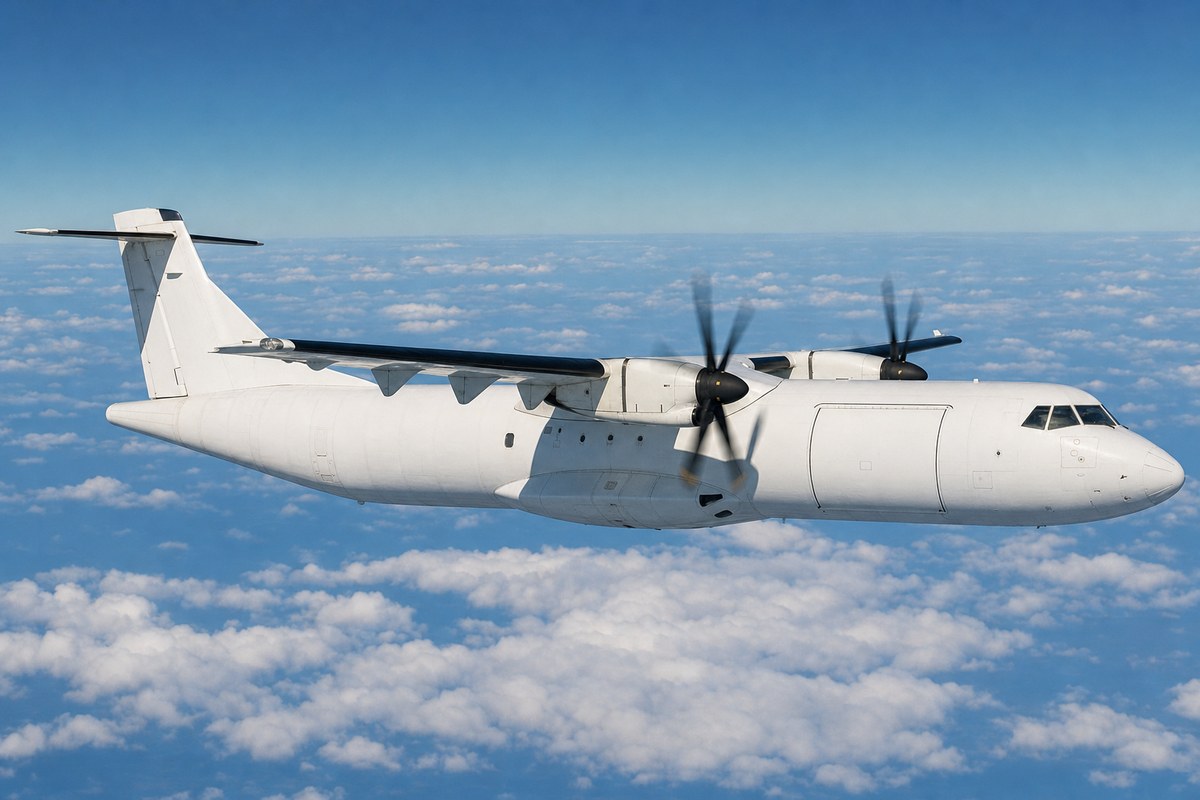
The airframe was originally delivered to Cebu Pacific in March 2008 and served tropical passenger routes for 12 years before being retrofitted with a large main-deck forward cargo door in 2020. The converted aircraft can carry up to 18,000 pounds (8,165 kg) of cargo and can accept standard AKE unit load device containers. Because the ATR 72-500 has a maximum range of approximately 890 nautical miles (1,648 km) under standard fuel loads, a direct flight was impossible, and the delivery required a 12-leg routing across Asia, the Middle East, Europe, and the North Atlantic, with refueling stops including Ho Chi Minh City, Kolkata, Al Ain, Larnaca, Malta, Dinard, and Reykjavik before reaching Goose Bay, Canada, and ultimately Thunder Bay, Ontario.
North Star Air operates cargo services connecting more than 50 remote First Nations communities and mining encampments across three Canadian provinces and territories. The airline selected the ATR 72-500F for its ability to operate from unpaved runways as short as 3,937 feet (1,200 meters), its fuel burn of approximately 214 gallons (810 liters) per hour compared to jet alternatives, and its payload capacity suited to remote northern logistics. Ferry crews navigating the North Atlantic corridor faced low-altitude icing conditions, sparse diversion options, and strict oceanic navigation safety requirements, necessitating survival suits, HF radio tracking, and careful monitoring of fuel burn rates over cold-water crossings.
Industry impact & what to watch
This delivery illustrates a broader pattern in remote-region air cargo: operators prize short-field capability and payload economics over speed or range, and are willing to accept complex logistics to acquire the right airframe rather than order new. A 12-leg, 13,000-mile routing for a single turboprop shows how far that calculus can stretch when the destination network itself cannot support larger or faster aircraft.
For carriers like North Star Air, the ATR 72-500F's value rests on unpaved runways as short as 3,937 feet, a fuel burn advantage over jets, and heavy payload capacity — attributes that matter more in serving over 50 remote communities than an aircraft's age or origin. The North Atlantic ferry corridor, with its icing risk and thin diversion options, is simply the price of positioning that kind of asset into a market with few substitutes.
What remains to be seen is how the aircraft performs operationally once integrated into North Star Air's network, and whether similar secondhand freighter conversions become a recurring route for operators serving Canada's remote provinces and territories.