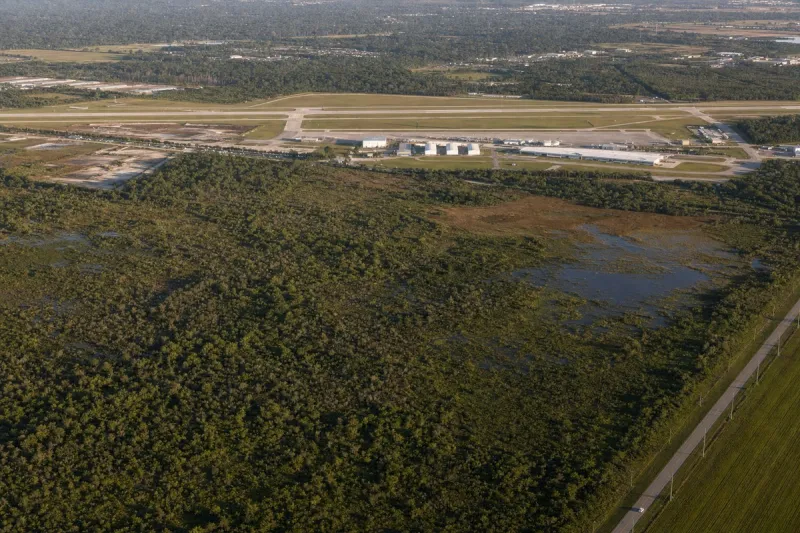
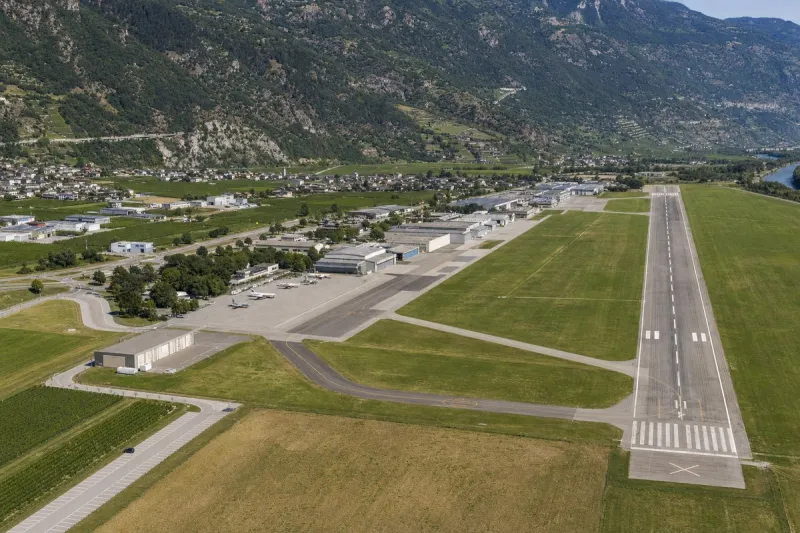
Bahamas Aviation Operators Warn New Airport Fees at Three Family Island Airports 'Getting Out of Hand'
Why It MattersThe dispute shows how airport infrastructure upgrades financed through consortium investment can shift cost recovery directly onto passengers and thin-margin regional operators rather than being absorbed into broader fare structures.
What happened
Bahamian commercial and private aviation operators have warned that airport fees and taxes are "getting out of hand" after the Island Airport Development Partners (IADP) consortium unveiled new and increased levies set to take effect on January 1, 2027, at North Eleuthera, Governor's Harbour and Georgetown (Exuma) airports. The proposed fee schedule includes a $51 passenger facility fee and a $15 processing fee for international travellers at each airport — a combined $66 per international passenger — while domestic travellers would face $25.50 and $7.50, totalling $33. These would stack on top of existing government charges: a $29 departure tax, a $7 security fee and a $1 passenger levy, bringing total direct costs to $70 per head for domestic travellers and $103 for international ones.

Alan Burrows, principal at Tropix Air and a 36-year aviation industry veteran, said landing fees at North Eleuthera for his aircraft are set to rise from $11 to around $30, adding that "for the travelling public it's going to go up about at least $40 per head to clear out of those airports." For a charter carrying nine passengers, the combined passenger facility and processing fees would add $594 on an international flight and $297 on a domestic one, and the proposed fees would apply across commercial, charter, general aviation and private aircraft. The IADP also proposes aircraft parking fees for commercial flights, revised landing fees and updated terminal fees.
The new charges are designed to recoup the consortium's combined $132 million investment in upgrading the three airports. IADP's partners include Plenary Americas, Phoenix Infrastructure — a US infrastructure advisory and investment firm with offices in Washington D.C. and New York — and Avports, an airport and FBO operator; the same group previously carried out an $80 million overhaul of Bimini airport. Dr Anthony Hamilton, president of the Bahamas Association of Air Transport Operators and administrative chief at Southern Air Charter, said the fees would further erode already "slim margins" in the local aviation industry and criticised the lack of prior consultation with operators. Bahamas Director of Aviation Dr Kenneth Romer said the government was aware of industry concerns and was reviewing the proposed fees in discussions with IADP and sector stakeholders, stating that "airport development must remain commercially sustainable while preserving affordability for Bahamian travellers, private aviation operators, commercial carriers and visitors." He also noted the Eleuthera and Exuma upgrades are part of what he described as the country's largest aerodrome infrastructural development programme, covering more than 19 airports across the archipelago.
Industry impact & what to watch
Fee disputes of this kind recur wherever airport upgrades are financed through private consortiums rather than public budgets: the capital has to be recovered somehow, and passenger facility charges, processing fees and landing fees are the direct mechanism for doing it. When that recovery is structured per-enplanement and applied uniformly across commercial, charter and general aviation traffic, small operators serving thin routes absorb a proportionally larger hit than carriers with higher load factors to spread the cost across.
In markets built on island-hopping and charter traffic between family islands, margins are already narrow, so a jump from $11 to roughly $30 in landing fees at a single airport is not easily offset by fare increases without risking traffic itself. Operators' warning that they have "little choice" but to pass costs to travelers signals that near-term ticket prices on these routes are likely to rise regardless of how the review concludes.
The outcome now depends on the review Dr Romer described as underway between the government, IADP and sector stakeholders. Whether the final schedule differs materially from the proposed rates, and whether operators gain a formal consultation channel before future phases of the broader 19-airport programme roll out, will determine whether this dispute is a one-off or the first of several as the rest of that programme proceeds.