Beechcraft Starship: 53 Built, ~40 Destroyed by Manufacturer, Roughly Six Still Flying
Why It MattersThe Starship shows how a manufacturer's own fleet-support economics, not just market demand, can determine whether a technically ambitious aircraft survives in service at all.
What happened
Beechcraft built 53 production examples of the Starship 2000/2000A between 1988 and 1995, developed in partnership with Burt Rutan's Scaled Composites, before ending the programme. The aircraft combined an all-carbon-fibre airframe, a variable-sweep forward canard, twin Pratt & Whitney pusher turboprops, and a Collins all-glass cockpit, and first flew as a full-size aircraft in March 1986.
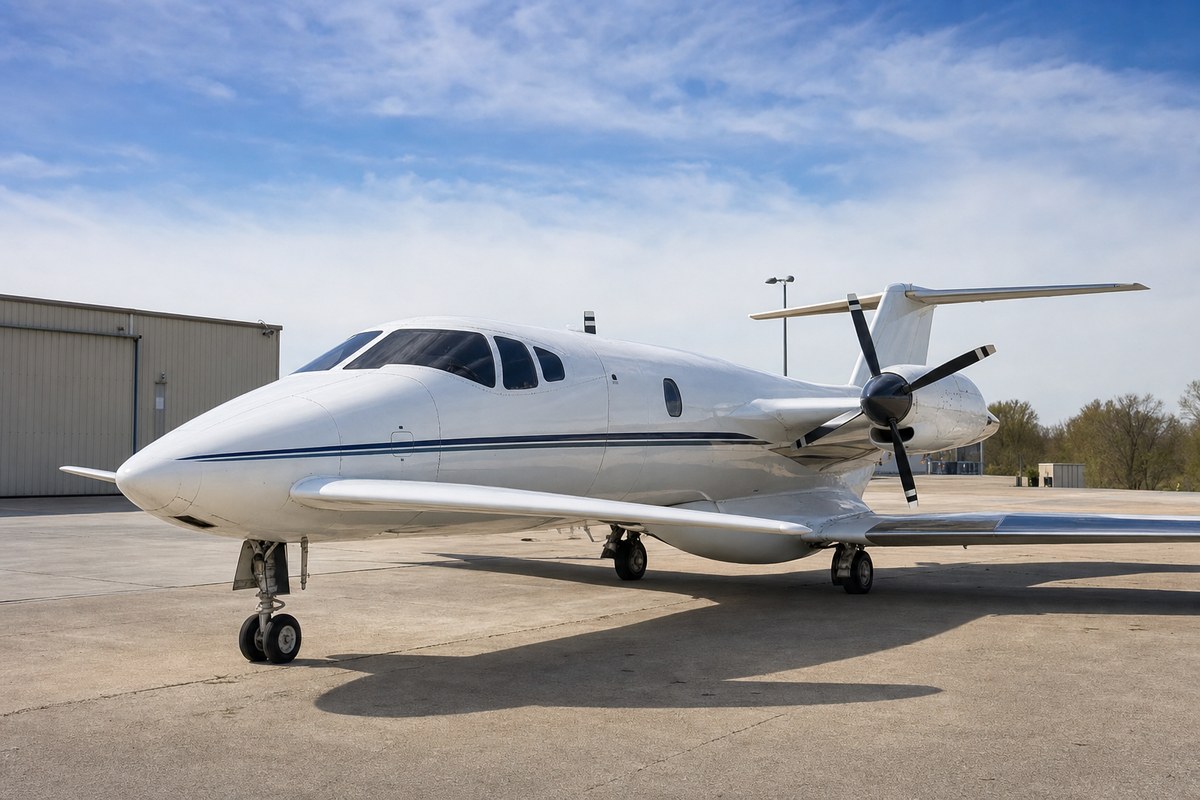
FAA certification requirements for composite airframes, new to regulators at the time, demanded conservative safety margins that added significant weight to the design. The finished aircraft ended up heavier than planned and no faster than the conventional all-metal King Air it was meant to replace, while carrying a price comparable to a small jet and requiring pilots to hold a full type rating.
Starting in 2003, Beechcraft ran a buyback programme that repurchased approximately 40 Starships from their owners, flying them to the Arizona desert where they were deliberately incinerated and dismantled. Roughly six examples remain airworthy today, operated by a small group of private owners, with others preserved in museums or kept as parts sources for the surviving aircraft.
Industry impact & what to watch
The Starship's arc illustrates a recurring risk in business aviation when a manufacturer pushes a genuinely novel airframe technology through certification: regulatory caution designed for an unfamiliar material can erode the very performance gains the design was meant to deliver, leaving an aircraft that costs more than its predecessor without outperforming it.
The buyback-and-destroy decision also shows how support economics, not flying qualities, can end a type's life. A composite fleet too small to justify parts production, maintenance training, and spares inventory becomes a liability for the manufacturer long after the aircraft itself stops selling, and destruction removes the ongoing liability entirely rather than leaving orphaned aircraft in the field.
What happens to the roughly six surviving Starships now depends on the owners who keep them airworthy and the museums holding the rest, since no manufacturer support network remains to draw on.