Gama Aviation Sets Out Design-Led Approach to Infection Control in Air Ambulance and HEMS Operations
Why It MattersThe conflict between NHS cleaning standards and aircraft airworthiness limits shows that infection control in aeromedical operations depends on interior design and engineering sign-off rather than cleaning protocols alone.
What happened
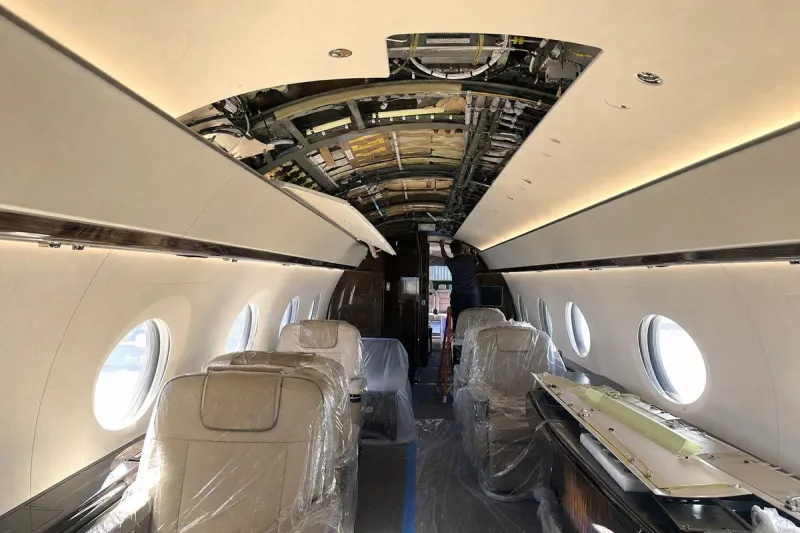
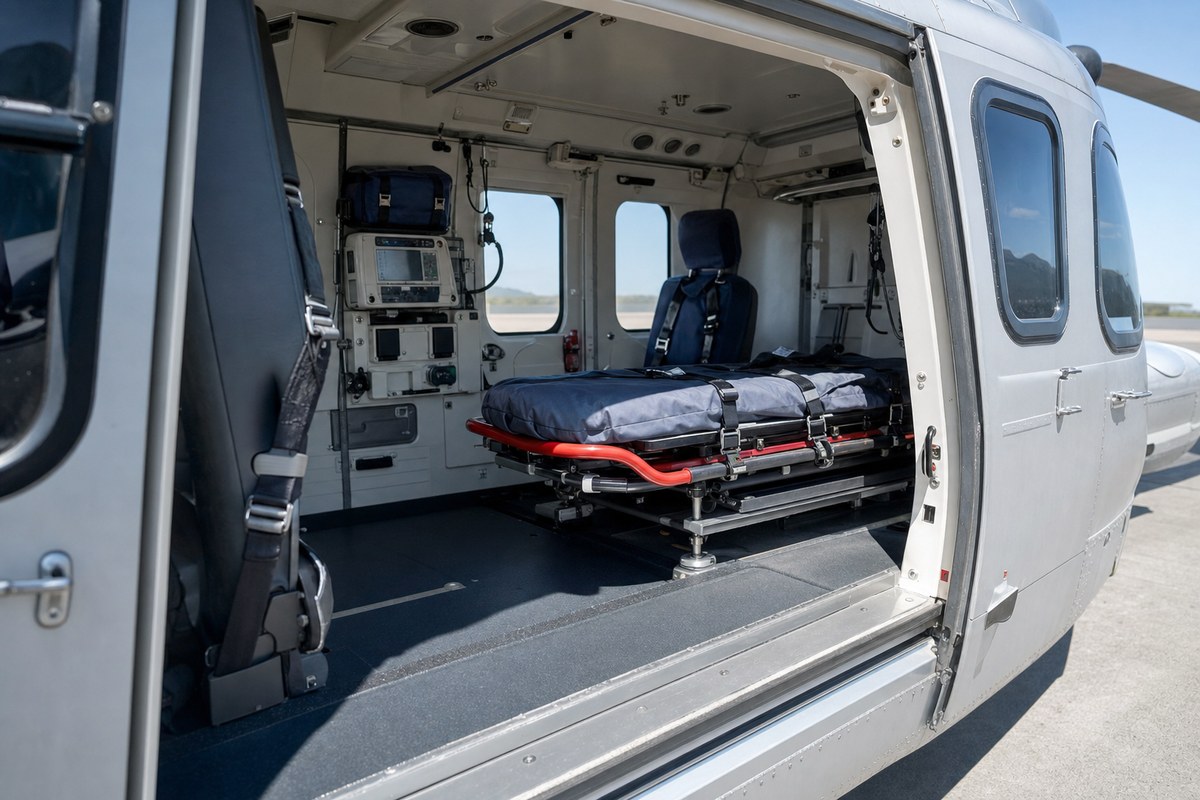
Gama Aviation has set out an industry analysis describing infection prevention and control in air ambulance and Helicopter Emergency Medical Services (HEMS) operations as a challenge that requires reconciling NHS clinical standards, aviation regulation, aircraft certification and the need to maintain emergency availability. The analysis identifies the aircraft environment itself as a core difficulty: many air ambulance platforms were originally designed as multi-role aircraft and later adapted for aeromedical use, leaving cabins that are narrow, curved, weight-sensitive and fitted with certified equipment, oxygen systems and avionics, with limited physical separation between cockpit and clinical areas in some aircraft.
Clinical risks cited include patients with known infections, undiagnosed fever, multi-drug-resistant organisms, body-fluid contamination and aerosol-generating procedures such as suction, ventilation circuit breaks and emergency airway interventions. Specialised transfers — including bariatric, neonatal, paediatric, maternity, extracorporeal membrane oxygenation (ECMO) and intra-aortic balloon pump (IABP) cases — introduce additional equipment and high-touch surfaces requiring cleaning or isolation after each mission. The analysis also describes a conflict between healthcare cleaning guidance and aircraft manufacturer limitations, noting that disinfectants widely used in NHS settings may corrode aircraft materials, degrade plastics, damage fire-retardant properties or compromise certified components, requiring an approved cleaning matrix and, where conflicts arise, risk assessment, clinical sign-off, engineering review and OEM input.
Gama Aviation describes integrating clinical input, design capability and operational experience into aircraft interiors. On the King Air platform, fixed-wing developments have focused on improved cabin layout, increased clinical space, independent ground-use power, enhanced ventilation, HEPA filtration, sealed flooring and physical separation between flight and clinical teams. On the H145 and AW169 rotary-wing programmes, the company's work includes bariatric stretcher position adaptors, toolless incubator adaptations, alternate ground-use battery power for clinical systems, cabin airflow support, provision for sharps and waste bins, cockpit-cabin partition concepts for infectious-patient carriage, and protective films and materials with higher tolerance to approved cleaning agents for repeated disinfection across an aircraft's operational life.
Industry impact & what to watch
This case illustrates a broader pattern in specialised aviation: equipment adapted from a general-purpose role into a safety-critical clinical function inherits constraints — weight, certification, materials — that the original design never anticipated, forcing operators to engineer around limitations rather than simply apply best practice from the adjacent industry. Aeromedical operators sit between two regulatory worlds that were not built to speak to each other, and resolving conflicts between clinical governance and airworthiness requires a formal chain of risk assessment, clinical sign-off, engineering review and OEM approval rather than an operational judgment call made in the field.
What this shows about the segment is that infection control becomes durable only when it is built into cabin layout, ventilation, materials and partition design, since PPE and post-mission cleaning alone cannot resolve a structural mismatch between disinfectant chemistry and certified aircraft components. Gama Aviation's work across the King Air, H145 and AW169 suggests platform-specific engineering — stretcher adaptors, incubator fittings, battery power for ground-based clinical systems — is where the next round of differentiation in air ambulance fleets is likely to occur.
Whether this approach becomes standard across the sector will depend on how other operators and OEMs respond to the same clinical-versus-airworthiness conflict, and on whether NHS commissioning bodies begin specifying cabin design features rather than leaving cleaning protocol alone to satisfy infection control requirements.