Embraer Outlines Expansion Plans for Chihuahua Plant at Nearshoring Summit
Why It MattersIn aerospace manufacturing, capacity constraints are increasingly resolved through specialization and quality differentiation at individual sites instead of blanket output growth across a network.
What happened
Embraer's Plant Director for Mexico, Adolfo Viramontes, presented the company's history, current operations, and future plans during a session titled "Embraer Mexico: A New Chapter in Chihuahua" at the Automotive & Aerospace Nearshoring Summit in Chihuahua, organized by Mexico Now magazine. Viramontes described Embraer as the world's third-largest aerospace manufacturer, tracing the company's origins to an airstrip in Brazil in 1969.
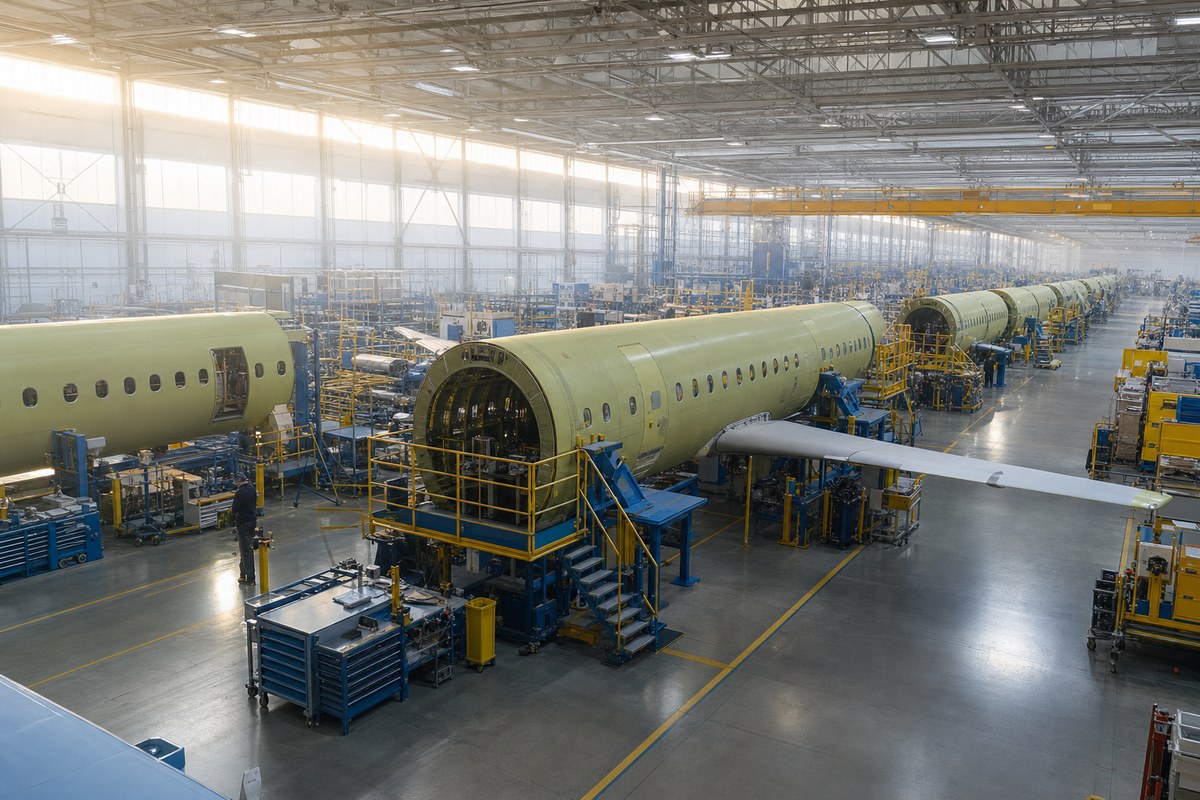
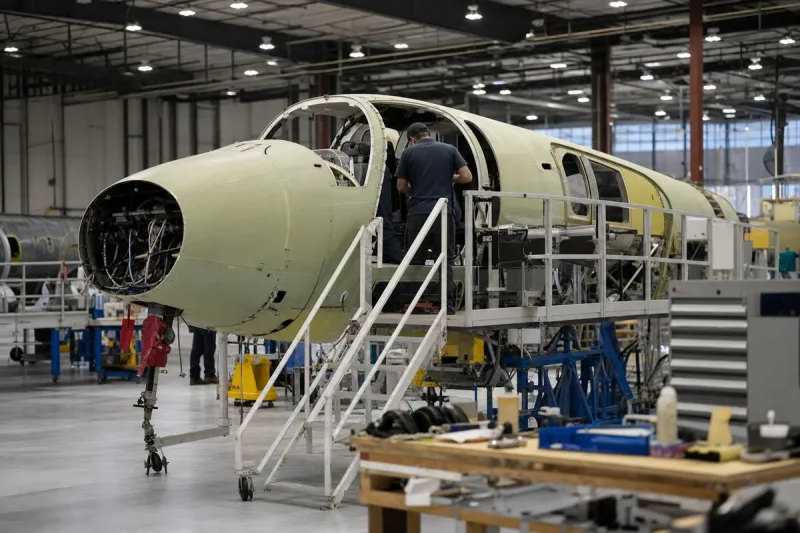
The Chihuahua plant focuses on commercial aircraft manufacturing, assembling parts sourced from multiple countries, and produces aircraft from the E-JETS F1 (first generation) and E-JETS F2 (second generation) families of narrow-body commercial jets. The plant targets production of 88 aircraft in the near term, with a stated goal of reaching 100 aircraft annually. Viramontes said Embraer's global fleet of approximately 9,000 aircraft takes off every 10 seconds worldwide, and he cited the company's business jet segment as a key driver of overall success. The Chihuahua facility is also involved in military aircraft technology development.
Among recent developments, Embraer completed a merger with former partner EZ Air Interior Limited, assuming full control of operations previously shared with Safran, and the Chihuahua plant is expected to be transformed into a center of excellence in interior manufacturing as part of this transition. Viramontes identified the plant's thirteen years of operation in Chihuahua state, specialized local talent, proximity to the U.S. border, and the facility's multiple manufacturing certifications as factors underpinning its strategic importance. The plant acts as its own supplier and manufactures nearly all components for its aircraft lines, with the exception of seats. Viramontes acknowledged that aircraft demand has increasingly outpaced production capacity, and said Embraer's priority is to distinguish itself through quality, safety, and on-time delivery over sheer scale.
Industry impact & what to watch
This case illustrates a pattern common across aerospace manufacturing hubs: when demand outstrips production capacity, a site's response often centers on vertical integration and certification depth instead of simply adding volume. Chihuahua's status as its own supplier for nearly every component except seats, paired with thirteen years of accumulated local expertise, shows how a single-location strategy can substitute for scale when the broader supply chain cannot expand fast enough to match orders.
The narrow-body segment Embraer serves with its E-JETS F1 and F2 families depends on exactly this kind of site specialization — manufacturing certifications, proximity to a major buyer market like the United States, and an established workforce all function as capacity multipliers even when raw output numbers stay fixed. The planned shift of the plant toward interior manufacturing following the EZ Air Interior Limited merger with Safran points to a similar logic: concentrating a specific capability in one location rather than spreading it thin.
What happens next will depend on whether the stated goal of 100 aircraft annually, up from the current target of 88, can be met without compromising the delivery reliability Viramontes framed as the plant's competitive edge. Embraer's own statements about demand exceeding capacity suggest that further announcements on this front — whether about new certifications, facility investment, or supply-chain adjustments — are the clearest signal to track.