Bell 407 Operating Costs: Jettly Guide Puts Hourly Total at $2,300–$2,560 at Moderate Utilization
Why It MattersOperating costs falling steeply as annual hours rise leaves low-utilization light-helicopter owners paying far more per hour than high-hour operators, which strengthens the case for on-demand charter.
A guide on the Jettly blog examines the operating cost per hour of the Bell 407, a single-engine light helicopter used for law enforcement, EMS and HEMS, utility work, offshore support and corporate or VIP transport. The guide says its figures use realistic 2024–2026 data for typical North American conditions, with Jet A fuel at about $7–$9 per gallon, and notes that actual costs vary by operator, region and mission.
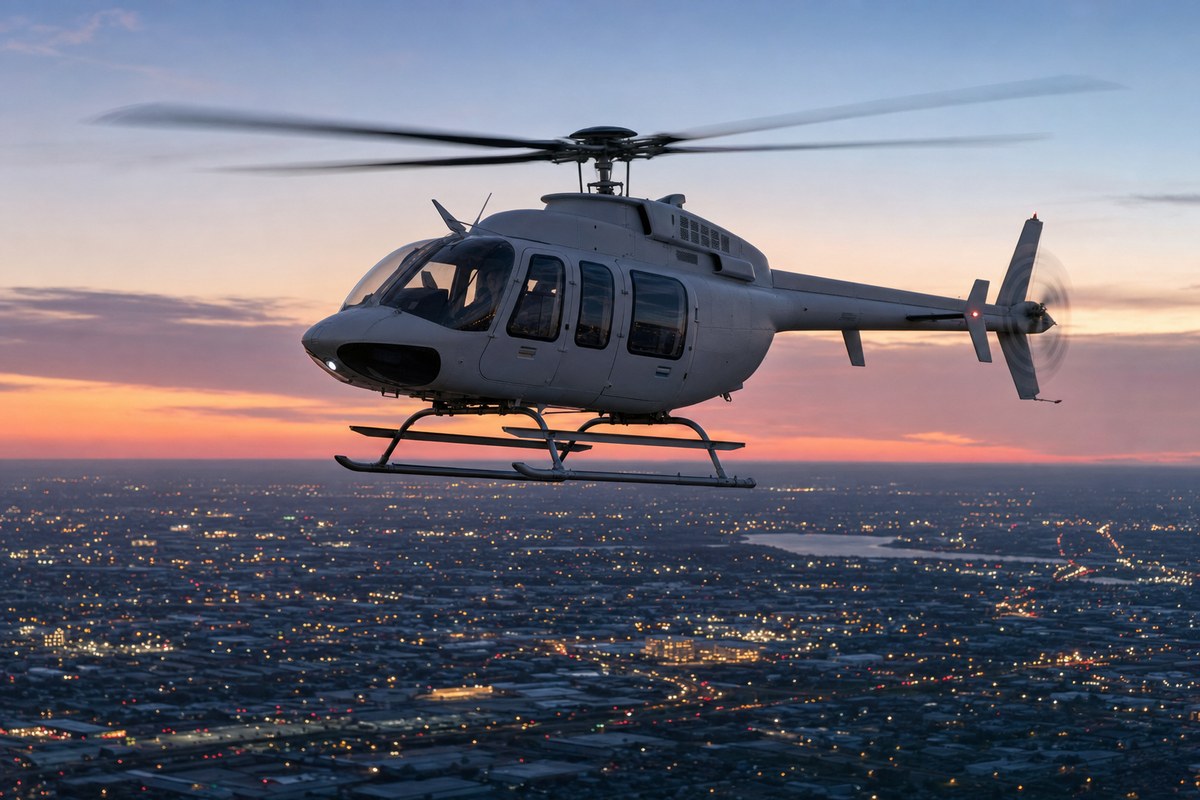
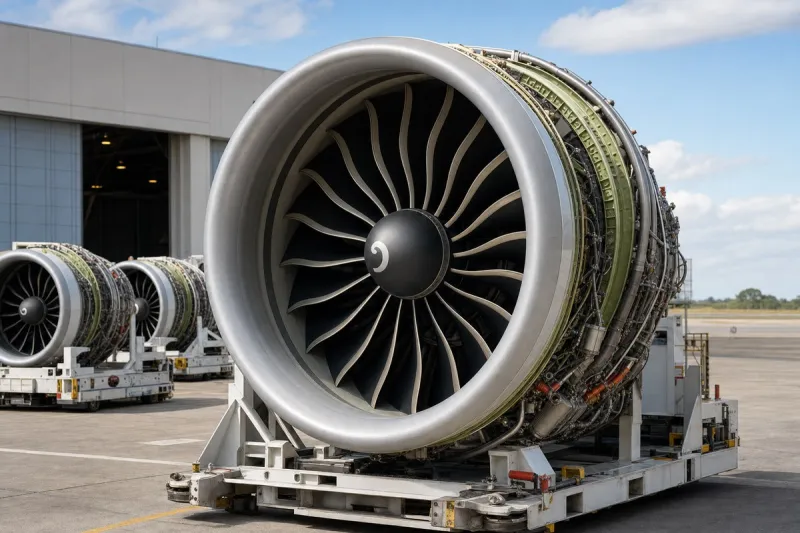
The Bell 407 evolved from the 206 LongRanger line and received type certification in the mid-1990s; the global fleet has accumulated over 6 million flying hours. Modern variants such as the 407GXP and 407GXi use FADEC-equipped Rolls-Royce 250-C47 engines and Garmin G1000H NXi avionics. The cited specifications are one pilot and up to five passengers, a cabin 4 feet 2 inches high and 4 feet 9 inches wide, 23 cubic feet of total baggage capacity, a normal cruise speed of 123 knots, a range of 245 nautical miles with standard fuel and a maximum altitude of 20,000 feet. Fuel consumption is approximately 45 gallons of Jet A per hour in typical cruise, rising to 50–55 gallons per hour in hover operations.
The guide puts the average pre-owned Bell 407 at approximately $2,800,000. Older airframes may trade in the $2.0–$2.5 million range, while newer 407GXi examples with full avionics upgrades command $3.0–$3.6 million as of 2024–2025. Using a $3.0 million acquisition price and straight-line depreciation, an owner might budget $120,000–$150,000 per year, which adds roughly $400–$500 per flight hour at 300 hours annually and $300–$375 at 400 hours.
Annual fixed costs run around $295,000 to $390,000, with some professionally managed operations reaching $391,674. Line items include hull and liability insurance ($40,000–$80,000), hangar or tie-down ($24,000–$60,000), pilot compensation ($150,000–$200,000), recurrent flight training ($15,000–$30,000) and avionics subscriptions, databases and management fees ($10,000–$25,000). Variable costs total around $1,080 per flight hour, or approximately $321,562 annually at moderate utilization, including fuel at $345 per hour, engine reserves of $255–$260 and airframe maintenance, parts and consumables of $400–$475.
Combining the two, average operating costs typically range from $2,300 to $2,560 per hour at moderate utilization, with $2,560 applying at roughly 200 hours per year and about $2,377 at around 300 hours. Worked examples assuming $390,000 in fixed costs and $1,080 per hour in variable costs yield $3,680 per hour at 150 annual hours, $2,380 at 300 hours and $1,860 at 500 hours. Mission profile matters: law enforcement work involves frequent hover and continuous surveillance equipment use, raising fuel burn and maintenance spend, while EMS missions add heavier interior installations and higher insurance and training requirements. For operators flying fewer than 150–200 hours per year, the guide says on-demand charter often delivers a lower effective cost per hour.