Heathrow's £49 Billion Third Runway Plan Targets 756,000 Flights and 150 Million Passengers as Gulf Hubs Expand
Why It MattersThe expansion pits Heathrow against fast-growing Gulf and Istanbul hubs for long-haul traffic while regional UK airports risk losing passengers and jobs to London.
London Heathrow Airport currently operates under an annual cap of about 480,000 flights and handled more than 84 million passengers in 2025, close to its existing capacity limit of around 85 million, with runway utilisation frequently cited at 99%. In November 2025 the UK government selected Heathrow Airport Holdings' £49 billion ($66 billion) third-runway proposal over a rival £25 billion Arora Group plan, choosing a full-length 11,483-foot northwest runway, a new T5X terminal, expanded cargo facilities, and works requiring the M25 to be rerouted into a tunnel; the project is expected to be operational by the mid-2030s.
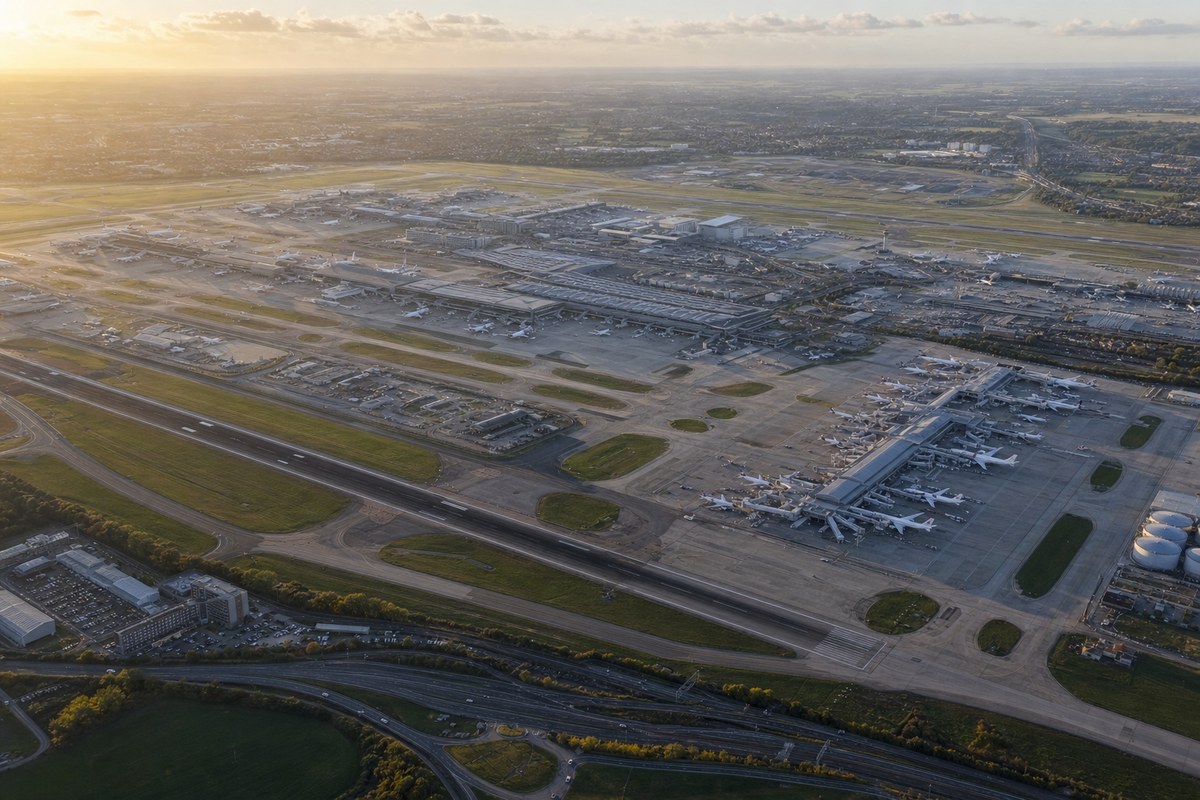
Heathrow Airport Holdings says the new runway would lift annual capacity by 50%, to as many as 756,000 flights and 150 million passengers, adding at least 30 new routes, with the runway able to handle all aircraft sizes including the Airbus A380. In the first half of 2026 Heathrow handled 40 million passengers against 39.84 million at Istanbul Airport, which overtook Heathrow in July 2026 as Europe's busiest airport; Istanbul is preparing a fourth runway that would raise its capacity from 90 million to 120 million passengers, with long-term plans for 200 million. Dubai's Al Maktoum International Airport, under construction, expects a first phase capacity of 150 million passengers in the early 2030s and an ultimate capacity of 260 million, while Riyadh's new six-runway airport is projected to handle up to 120 million passengers by 2030 and 185 million by 2050. Heathrow forecast approximately 83.6 million passengers for full-year 2026, slightly below 2025, partly due to weaker demand tied to the US-Iran conflict.
Analysis by Frontier Economics commissioned by Heathrow estimates the expansion could add 0.43% to UK GDP by 2050, with around 60% of benefits accruing outside London and the South East; Heathrow currently supports around 80,000 jobs as the UK's largest single-site employer and says expansion would support more than 108,000 jobs nationally. Department for Transport modelling, however, indicates the expansion could reduce passenger numbers at several regional airports, with Birmingham Airport projected to handle around 7.5 million fewer passengers annually by 2050 compared with a no-expansion scenario. The New Economics Foundation estimates the project could displace nearly 10,000 jobs in the West Midlands, with around 15,200 aviation-related jobs potentially relocating from other UK regions to London and the South East by 2050.