Canada's MRO Sector: Strong Capabilities but Strategic Gaps Persist Across Business, Commercial and Military Aviation
Why It MattersDomestic MRO capacity alone does not keep lifecycle work onshore when procurement, certification and OEM network structures route authority and workflows to foreign depots instead.
What happened
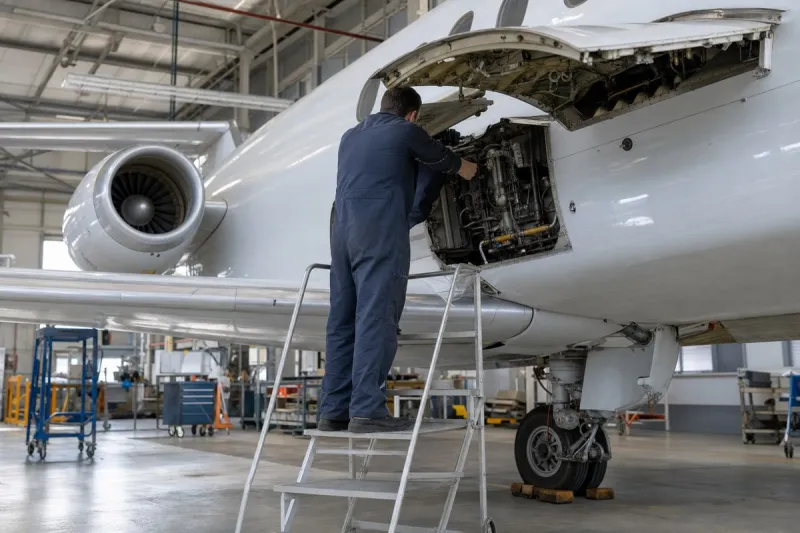
Canada's maintenance, repair and overhaul industry employs approximately 34,800 people, accounting for around 38 percent of Canadian aerospace employment in 2024, with military MRO and modification representing the largest service category within the country's defence aerospace segment. Analysts describe the persistence of aircraft leaving Canada for maintenance and lifecycle support as a strategy problem, not a capacity shortfall.

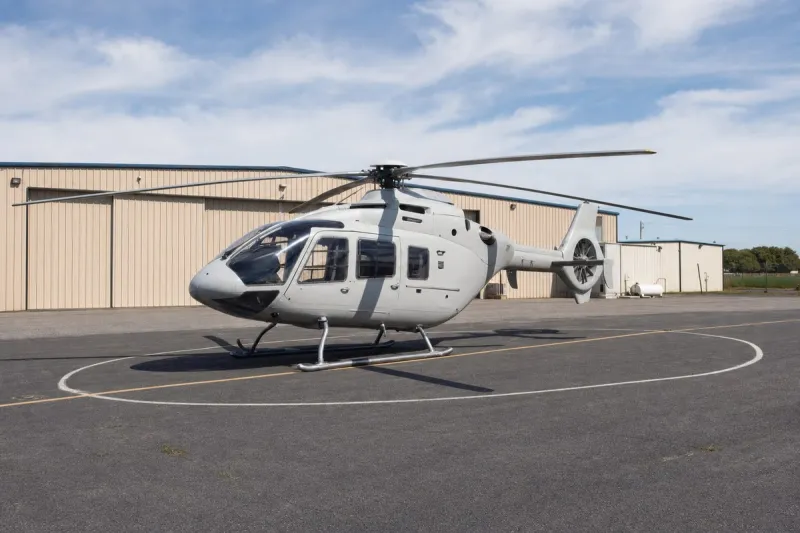
In business aviation, Canada has world-class manufacturers and approved maintenance organisations but lacks the ecosystem density found at major U.S. centres, where heavy inspections, paint, interiors, avionics upgrades, engineering, certification and parts support are combined in one facility or cluster. Skyservice added Vancouver to its Bombardier Authorized Service Facility network, and Execaire became an Embraer-authorised service centre in Canada.
In commercial aviation, the principal opportunity identified is propulsion, where global demand for engine MRO exceeds available shop capacity, with particular pressure on Pratt & Whitney GTF and CFM LEAP engines. StandardAero has been expanding CF34 and CFM56-7B engine MRO capacity in Winnipeg, and Lufthansa Technik and WestJet are developing a LEAP-1B maintenance facility and test cell in Calgary.
In military aviation, procurement decisions determine where depot maintenance occurs, who controls technical data, and how upgrades are authorised over decades of service. Canada's Defence Industrial Strategy and its Build-Partner-Buy framework emphasise sovereign industrial capability and domestic sustainment, with reported progress toward F-35 depot-level maintenance capability at Mirabel, major CC-330 sustainment awards, and further investment in military aviation infrastructure and training.
Industry impact & what to watch
The pattern described here is one where deep integration with the United States gave Canadian operators market access but, over time, concentrated lifecycle authority within foreign primes, overseas depots and global OEM networks. That is a structural outcome of decades of procurement and certification choices, not evidence that domestic technicians or facilities are inadequate.
Each segment shows the mechanism differently. Business aviation needs density — multiple capabilities co-located so an operator can complete heavy checks, paint, interiors and avionics work in one place instead of routing an aircraft across borders for each service. Commercial engine MRO is a capacity race, where backlogs on GTF and LEAP platforms make new shop investment, such as the Winnipeg and Calgary projects, commercially rational independent of any policy push. Military sustainment is different again: it is set by contract terms and technical-data control fixed at the procurement stage, so a depot's location for the F-35 or CC-330 fleets was effectively determined years before any aircraft entered service.
What happens next depends on whether the Defence Industrial Strategy's Build-Partner-Buy framework translates into signed sustainment contracts, and whether the Mirabel F-35 depot milestone and CC-330 awards proceed on their stated schedules. On the commercial side, the Calgary LEAP-1B facility's progress toward operational test-cell status is the nearer-term marker of whether new engine types can be serviced domestically rather than shipped to established overseas shops.