Canada's Productivity Mega Deduction allows 100% first-year aircraft write-off, raising questions for soft aviation insurance market
Why It MattersA tax incentive that accelerates aircraft transactions lands on a soft insurance market, meaning underwriting scrutiny on pre-owned deals now carries as much financial weight as the deduction itself.
What happened
Canada's federal government has announced a Productivity Mega Deduction that allows businesses to immediately write off 100% of the cost of eligible aircraft acquired on or after September 15, 2026, as part of a broader expansion of assets qualifying for full first-year expensing. Prime Minister Mark Carney announced the measure at Canada's inaugural Investment Summit in Toronto. The deduction builds on the Productivity Super-Deduction introduced in Budget 2025, which covered roughly 15% of business capital assets; the new Mega Deduction expands eligibility to more than 65% of business capital assets, adding aircraft, fibre-optic cable, mining property, oil and gas pipelines, software, rail infrastructure and other capital-intensive asset classes. The government projects the change will reduce Canada's marginal effective tax rate on new business investment from 13% to 6.
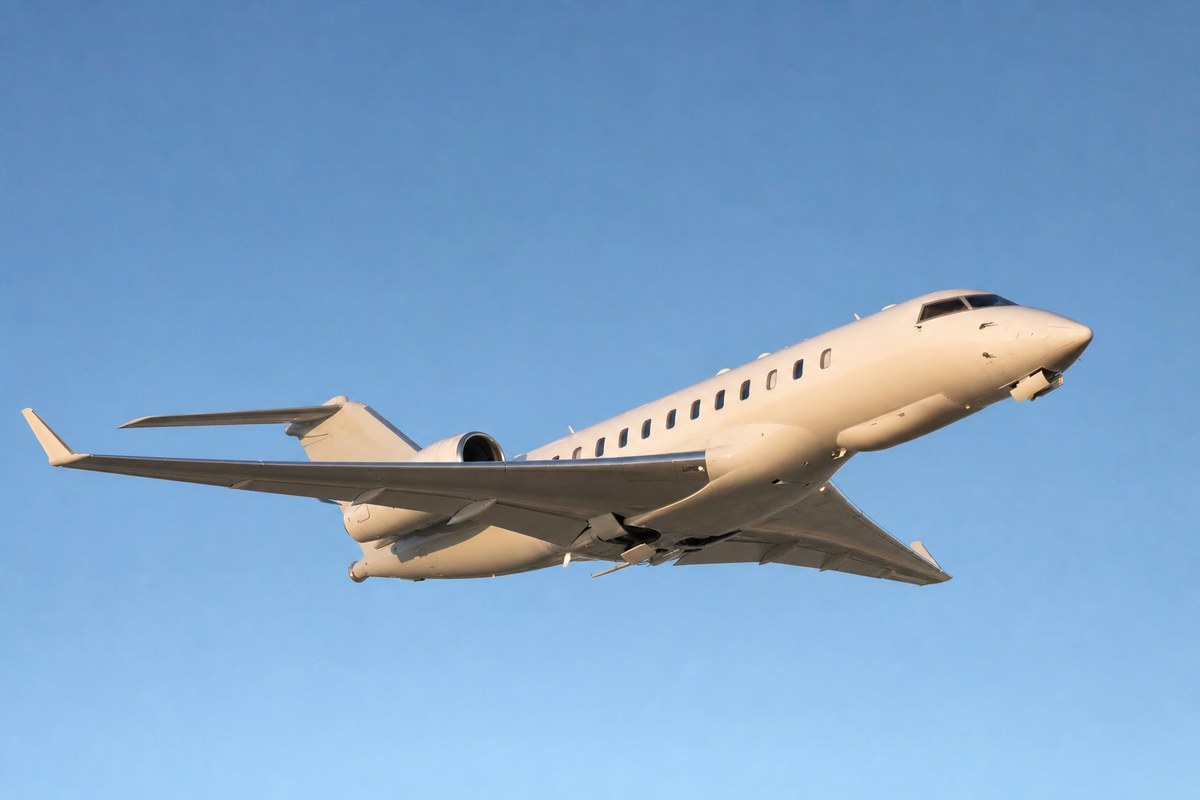
For aircraft specifically, the deduction requires the aircraft to be ready for business use; if it is still being completed or refurbished at year-end, the write-off carries into the year the aircraft becomes usable, according to the Canadian Business Aviation Association (CBAA). Pre-owned aircraft also qualify, subject to restrictions on purchases from a seller who previously owned the aircraft or from a non-arm's-length party. CBAA president and CEO Harlan Simpkins called the measure "a significant advocacy win for CBAA and our members," while noting the association is monitoring implementation as the measure still requires legislative approval. CBAA represents what it describes as Canada's $17.9 billion business aviation industry.
Every registered aircraft in Canada is required to carry liability insurance under Canadian Aviation Regulations Section 606.02, and hull coverage is standard practice; annual insurance and operating costs can range from approximately $700,000 for a turboprop to as much as $4 million for a large jet. WTW reported earlier in 2026 that airline insurers attempting to push through hull and liability rate increases in 2024 encountered excess capacity, leading to rate declines instead.
Industry impact & what to watch
This case sits at the intersection of fiscal policy and insurance cycle timing: a deduction designed to pull forward aircraft purchases is landing on a market where insurers already have more capacity than they can price for. Aviation insurance works on a cycle driven by capacity and loss experience rather than by transaction volume alone, so a wave of new acquisitions timed to the tax deadline would test whether underwriters absorb the extra risk at current soft-market rates or use the moment to tighten terms on individual placements.
The pre-owned aircraft path is the part worth watching most closely, since those purchases carry maintenance history, prior claims and airworthiness records that underwriters must review before binding hull coverage — and that review runs on its own timeline, separate from the tax deadline. Legislative approval of the Mega Deduction itself remains outstanding, and CBAA's own statement flags that as unresolved. Whether insurers hold rates through a possible surge in aircraft transactions, or whether unfavourable hull terms on rushed pre-owned deals erode part of the intended tax benefit, will depend on how underwriting timelines and the September 15, 2026 effective date line up in practice.