Idaho Aircraft Purchases Subject to 6% Sales Tax Even on Private-Party Sales, With Narrow Nonresident Fly-Away Exemption
Why It MattersAircraft tax exposure in the U.S. remains state-specific, forcing buyers to verify residency, intended use, and basing plans before closing rather than assuming a casual-sale exemption applies uniformly.
What happened
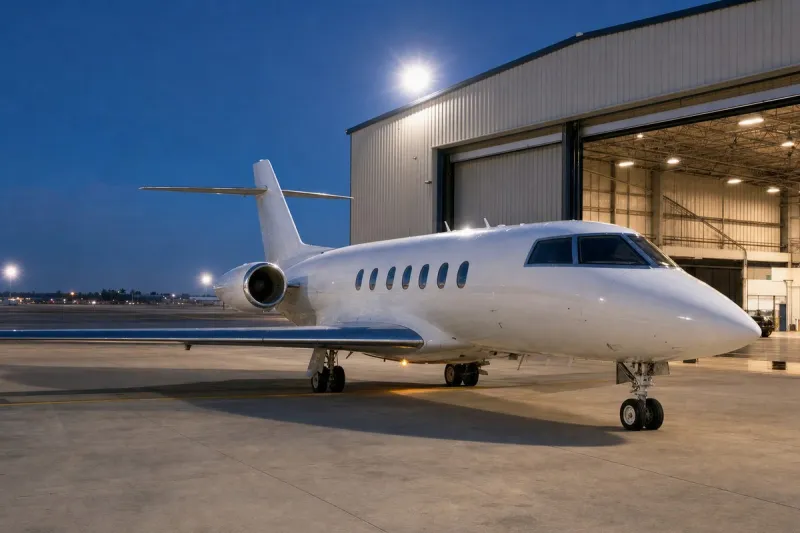
Idaho imposes a 6 percent statewide sales and use tax on aircraft purchases, and this tax applies even to transactions between private individuals — a departure from most U.S. states, which exempt isolated or occasional sales by non-dealers. Some Idaho resort cities add a local option tax of up to 3 percent on top of the state rate. The exclusion of aircraft from Idaho's casual-sale exemption is confirmed in Idaho Administrative Code r. 35.01.02.099 and in guidance published by the Idaho State Tax Commission.
A nonresident fly-away exemption exists under specific conditions: the aircraft must be flown directly out of Idaho at the time of sale, registered in another state, and not used or stored in Idaho for more than 90 days in any 12-month period. Separate, narrower exemptions apply to sales to government entities, common carriers operating charter for hire, and agricultural aerial applicators.
On depreciation, Idaho does not conform to federal bonus depreciation under IRC Section 168(k) and 168(n), and that decoupling remains in effect even after House Bill 559, signed February 10, 2026, which broadly updated the state's general IRC conformity date. Buyers who claim 100 percent federal bonus depreciation must add the deduction back on their Idaho return and depreciate the aircraft on the state's own schedule instead.
Idaho's aviation economy includes 68 general aviation airports, supporting an estimated $988 million in annual economic output, more than 4,600 jobs, and approximately $229 million in labor income statewide. Quest Aircraft, headquartered in Sandpoint and the manufacturer of the Kodiak turboprop, is Idaho's largest aerospace employer behind the commercial airlines, with around 160 workers producing aircraft used in backcountry and humanitarian operations worldwide. All U.S. aircraft closings, including those involving Idaho buyers or aircraft, are conducted through FAA escrow in Oklahoma City.
Industry impact & what to watch
This is a case of state tax treatment diverging sharply from the norm in a market where buyers often assume casual-sale exemptions travel uniformly across state lines. Idaho's refusal to extend that exemption to aircraft means a private-party sale that would be tax-free in many states carries a 6 percent state levy here, plus up to 3 percent more in certain resort cities.
The pattern extends to depreciation: Idaho's decoupling from federal bonus depreciation under IRC Section 168(k) and 168(n) shows how a state's general conformity update — such as House Bill 559 — does not automatically extend to every provision, leaving buyers to reconcile federal and state schedules separately. Because FAA escrow closings in Oklahoma City are procedurally identical nationwide, the tax and depreciation differences are invisible at the closing table and only surface on the state return.
What determines the actual outcome for any given purchase — residency, intended use, and where the aircraft will be based after closing — is fact-specific rather than uniform, so the nonresident fly-away exemption's conditions, including the 90-day limit, become the detail most likely to decide whether a buyer owes the tax at all.