EASA Part-145 MRO Approval in Austria: Process, Requirements and Timelines for 2026
Why It MattersCross-border acceptance of maintenance releases across EASA member states depends on national authorities like Austro Control applying a common Part-145 documentation and audit process consistently.
What happened
Obtaining EASA Part-145 maintenance organisation approval in Austria requires certification through Austro Control, the national competent authority, under Commission Regulation (EU) No 1321/2014, Annex II. The approval authorises an organisation to issue a certificate of release to service, the legal act that returns an aircraft or component to airworthy status, and without it an organisation cannot lawfully certify maintenance work on covered aircraft categories.
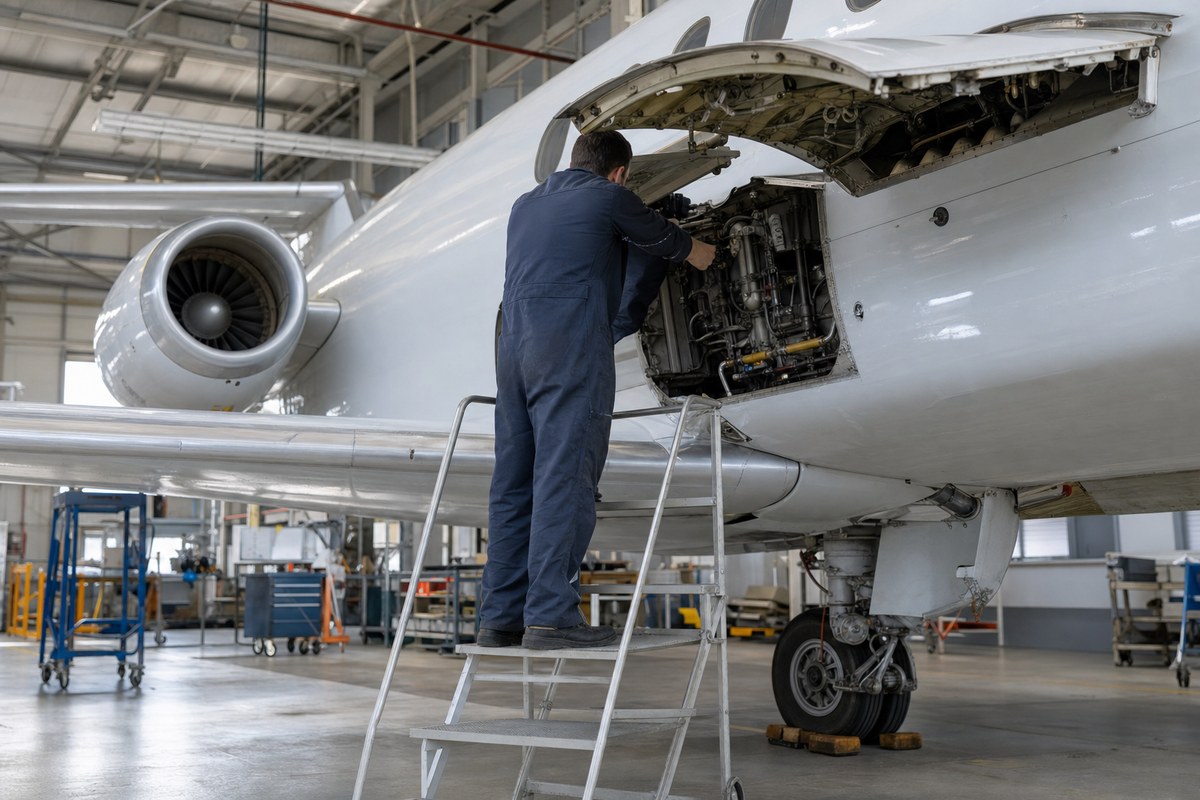
Any legally constituted entity with a fixed place of business in Austria — commonly a GmbH or AG — may apply to Austro Control. Requirements include an accountable manager, nominated post-holders, suitable hangar and workshop facilities, calibrated tooling, controlled parts storage, and personnel with qualifications appropriate to the requested scope. Third-country organisations cannot obtain the domestic approval from Austro Control directly; they are handled instead under EASA's own third-country approval regime, with EASA acting as competent authority.
The application process follows a defined sequence: a pre-application readiness review and gap analysis, conducted by the applicant or a consultant, typically takes two to six weeks. Preparation of the Maintenance Organisation Exposition (MOE) and supporting documentation — organisation charts, procedures and post-holder details — takes four to ten weeks, often overlapping with the readiness review. The formal application is then submitted to Austro Control with the MOE and required annexes, after which Austro Control verifies completeness, confirms fees and allocates a case team, followed by a desk audit of the MOE.
Industry impact & what to watch
This case illustrates how Part-145 approval functions as a gateway credential across the EASA system: it is a precondition for commercial maintenance contracts, participation in airline supply chains, and cross-border acceptance of maintenance releases among member states, so the pace and rigor of the national process feeds directly into how fast an MRO can start earning revenue.
The segment runs on documentation discipline as much as on hangar capability. An accountable manager, nominated post-holders and a Maintenance Organisation Exposition that matches actual practice are the load-bearing elements; a generic MOE or procedures that drift from on-site practice before the audit are the recurring causes of delay that Austro Control and applicants both have to manage.
What determines how smoothly an application moves is whether the readiness review and MOE preparation are treated as sequential gatekeeping steps or genuinely overlapped, and whether the case team's desk audit finds the exposition already reflects the floor as built rather than as planned.