Nepal Flood Relief: Helicopters Central but Coordination, Equipment Gaps Persist, Adviser Says
Why It MattersThe response shows how disaster-relief helicopter operations in under-resourced regions depend on ad hoc inter-agency coordination rather than fixed air traffic infrastructure, exposing gaps that consolidation and fleet upgrades aim to close.
What happened
Nepal's emergency response is shifting from rescue to relief after severe flooding and landslides killed more than 1,000 people and left several thousand missing, according to Abhinav Karki, former CEO of Mustang Helicopter and now a government adviser on aviation reforms. Karki said helicopters remain central to the response, with private operators working alongside the Nepali Army under joint management by the civilian Rescue Coordination Centre and the Military Command Centre.
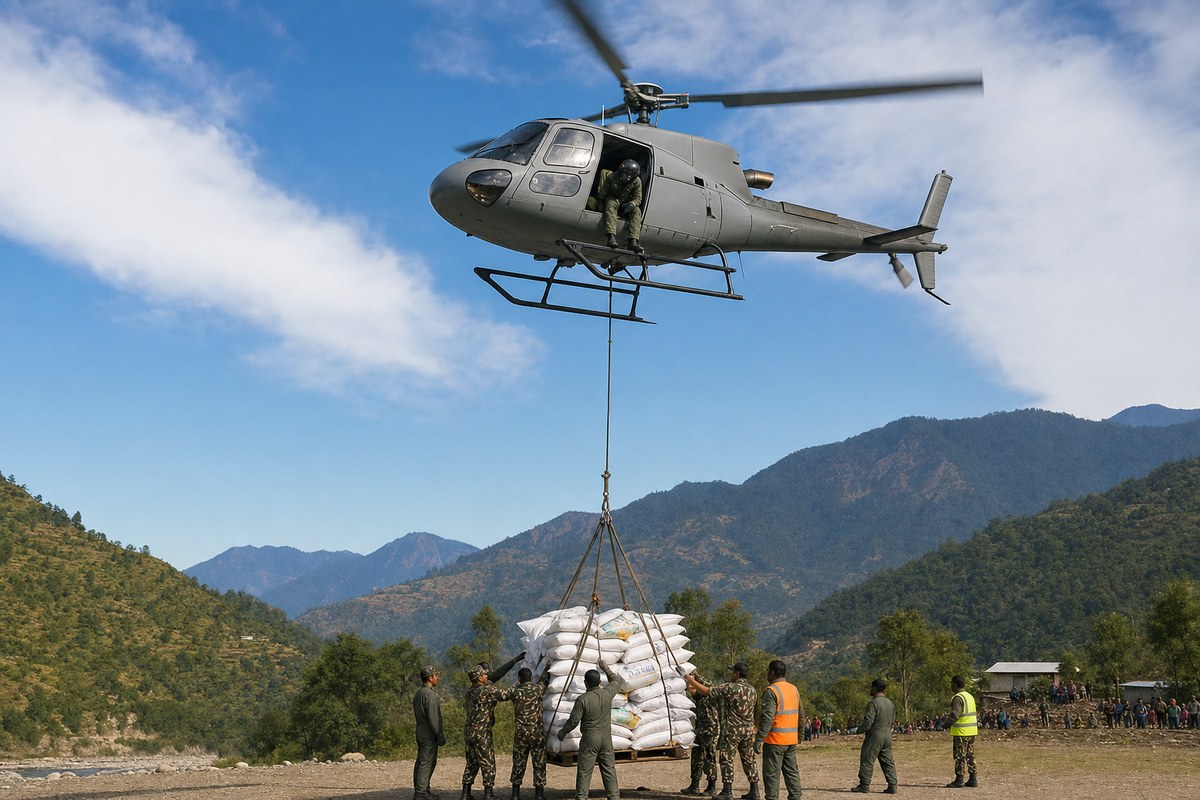
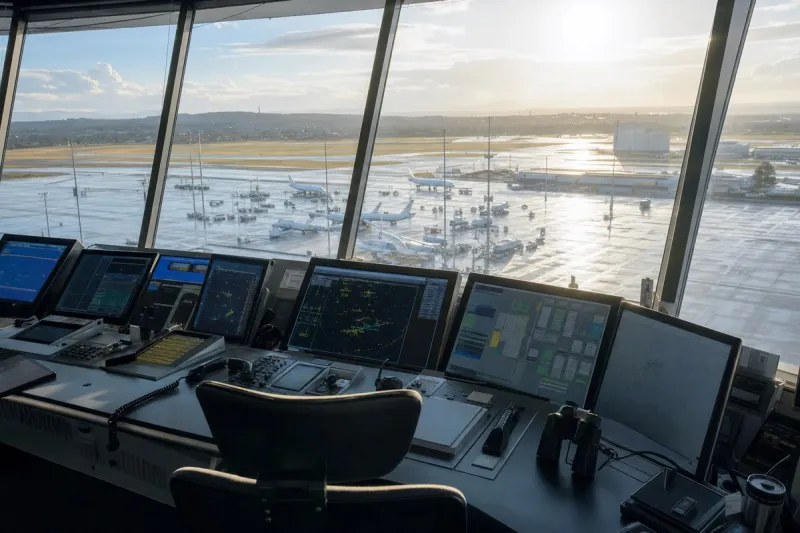
Karki, also a former Airbus executive, said the emergency has exposed a lack of air traffic control infrastructure across Nepal's mountain terrain: of 51 airfields in the country's mountain regions, most have no basic ATC service, forcing pilots to fly VFR in difficult conditions while relying on inter-agency coordination and local navigation aids. "Pilots have been flying in very difficult terrain that has required a lot of coordination to fly VFR," he said.
He called for greater international support, citing a shortage of drones for search and surveillance and a lack of satellite imagery capability for weather information during mission planning. "The first phase was always going to be chaos, and having more drones to find people would have helped," he said. "For the second phase, we could definitely use more helicopters, and especially those with emergency medical support capability."
Nepal's government is pushing for consolidation among helicopter operators, requiring each operator to hold at least five aircraft by 2029, a policy Karki said is expected to trigger mergers. He said local fleets also need more advanced twin-engine helicopters, and that rotorcraft should be recognised as an essential public service, noting that army helicopters routinely transport pregnant women from remote communities to hospitals. He also pointed to the disaster's regional dimension, which has affected the neighbouring Tibet region of China, and called for stronger international frameworks for disaster-relief training and planning.
Fleet policy and equipment gaps
The five-aircraft minimum set for 2029 targets a helicopter sector Karki described as fragmented, and he linked consolidation to the need for more twin-engine capability rather than treating it as a purely commercial reform. He framed the equipment shortfall — drones, satellite imagery, medically equipped helicopters — as the difference between the chaotic first phase of search efforts and a more capable second phase focused on relief.
Industry impact & what to watch
Nepal's experience illustrates a pattern common to disaster response in mountainous or infrastructure-poor regions: helicopters substitute for absent ground access, but that substitution is constrained by the absence of ATC coverage, forcing reliance on VFR flying and manual inter-agency coordination rather than instrument-based traffic management. Where air traffic control infrastructure is thin, mission planning depends on local knowledge and coordination centres rather than standardized procedures, which slows scaling when many aircraft and agencies operate in the same airspace at once.
The push toward operator consolidation, with a five-aircraft minimum by 2029, points to a broader question in smaller helicopter markets: whether fragmented fleets can support the twin-engine, medically equipped aircraft that emergency response increasingly requires, or whether scale has to be mandated first. Karki's call for drones, satellite imagery and international disaster-management frameworks signals that the response's next phase depends on capabilities Nepal does not currently have in-country.
What happens with the 2029 consolidation requirement, and whether mergers actually add twin-engine and medevac-capable helicopters to Nepal's fleet, will be the clearest test of whether this disaster prompts lasting structural change or a temporary surge in outside support.