Pennsylvania State Police Announce TFR and Counter-Drone Operations at Beaver Stadium on September 19, 2026
Why It MattersLarge-venue TFRs paired with active counter-UAS authority show how stadium events are increasingly treated as layered airspace-security operations rather than simple no-fly-zone notices.
What happened
Pennsylvania State Police (PSP) have announced a Temporary Flight Restriction (TFR) and Counter-Unmanned Aircraft Systems (C-UAS) operations around Beaver Stadium, located at 775 Curtin Road, College Township, Centre County, in connection with an upcoming event. The TFR establishes a 3-nautical-mile radius around the stadium extending to 3,000 feet above ground level (AGL), authorized under 14 CFR.
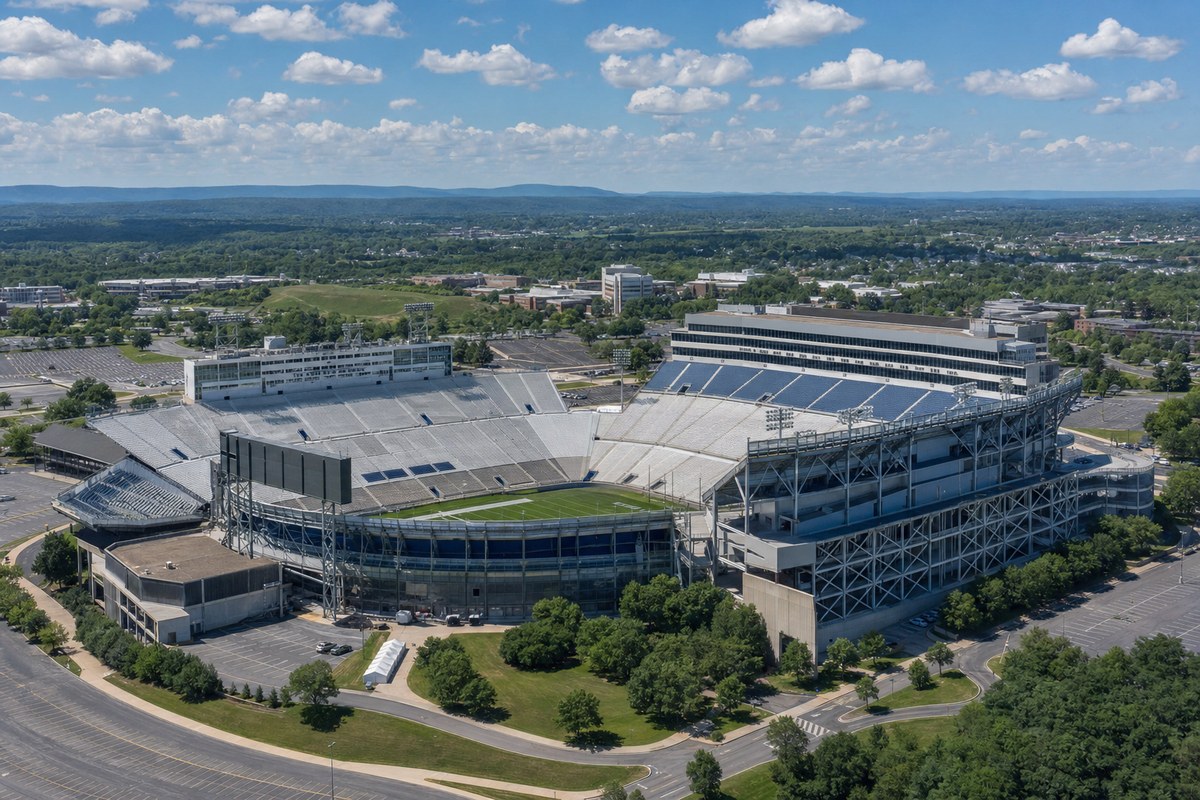
The restriction takes effect on September 19, 2026, at 11:00 a.m. and will terminate one hour after the conclusion of the game. All unmanned aircraft systems (UAS) operations within the restricted airspace are prohibited during that period unless specifically authorized by the Federal Aviation Administration (FAA) in accordance with applicable NOTAMs and federal regulations.
PSP, coordinating with federal, state, and local public safety partners under the authority of 6 U.S.C. § 124n, will conduct C-UAS operations to support public safety. Any unauthorized drone detected within the TFR will prompt an immediate law enforcement response. Drone operators are reminded to review current FAA airspace restrictions and NOTAMs before any flight, and members of the public who observe a suspicious or unauthorized drone near the stadium are urged to report it immediately to law enforcement.
Industry impact & what to watch
This TFR follows a now-familiar template for major sporting events at large venues: a defined radius and ceiling, a fixed start time tied to the event, and an end point pegged to when the game concludes rather than a calendar deadline. What distinguishes this case is the explicit pairing of the airspace restriction with active C-UAS operations under 6 U.S.C. § 124n, giving PSP legal authority to detect and respond to unauthorized drones rather than relying solely on after-the-fact enforcement.
For the drone and UAS operating community, this illustrates how stadium and large-gathering airspace is managed in practice: the FAA sets the restriction through NOTAMs, while a state or local law enforcement partner holds the operational authority to act against violators in real time. That combination shifts enforcement from a paperwork violation to an immediate physical response.
What remains to be seen is whether any unauthorized incursions occur during the window and how PSP responds, since the announcement itself does not report an incident, only the authority and the plan.