Helicopter Noise Frustrates Residents of Larchmont, N.Y., Near Long Island Sound
Why It MattersRecurring helicopter-noise complaints near dense coastal suburbs highlight how local tolerance for low-altitude traffic, not just federal airspace rules, increasingly shapes route and altitude choices around metropolitan areas.
What happened
Residents of Larchmont, N.Y., a suburb of New York City, say low-flying helicopters passing over their neighborhood have become a persistent source of frustration. Jay Davis, a local resident, described the noise as inescapable, saying he hears helicopters while working in his home office, while walking in a nearby park that overlooks Long Island Sound, and during meals on his enclosed porch.
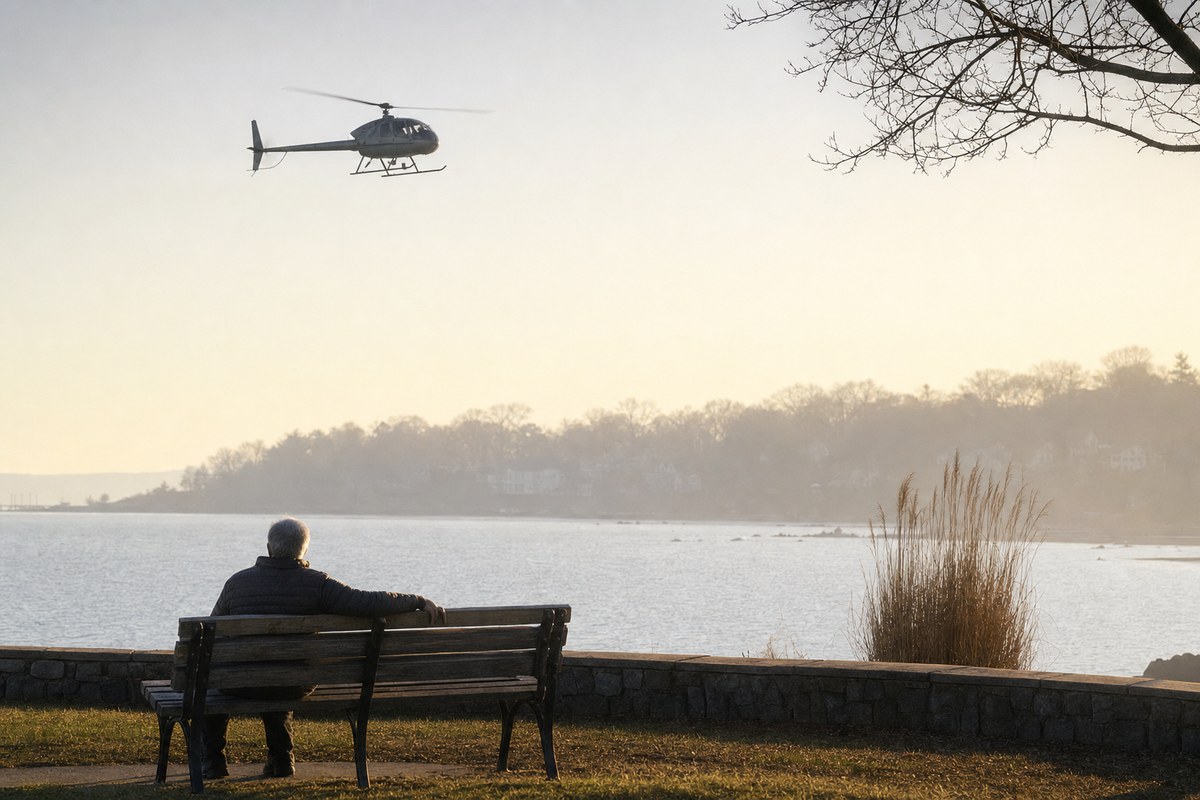
Davis said the noise interrupts conversation during meals and drowns out the television on his porch. He named three distinct settings where the disruption occurs — indoors at home, outdoors in the park, and on the porch — indicating the noise affects him across multiple parts of his daily routine rather than at a single location or time of day.
Industry impact & what to watch
Complaints like Davis's belong to a recurring pattern in communities that sit under helicopter routes near major metropolitan airspace: residents near flight paths, rather than airports themselves, become the point of friction as low-altitude traffic continues. Long Island Sound-area suburbs such as Larchmont sit near common corridors for helicopter traffic serving the New York City area, which puts them in a position to absorb noise from flights that neither originate nor terminate locally.
How this segment operates depends heavily on where operators choose to route flights and at what altitude, decisions that are often driven by air traffic patterns, weather, or proximity to controlled airspace rather than by noise impact on any single neighborhood below. Community pushback of the kind Davis describes typically becomes a factor only when it accumulates into organized complaints to local officials or aviation authorities.
What happens next in Larchmont will depend on whether residents' frustration translates into formal noise complaints or requests for route review, and how any responsible operators or regulators respond to that pressure.