Nigerian Airlines Seek Presidential Intervention as Jet A1 Prices Surge Amid Crude Oil Crisis
Why It MattersWhen fuel represents such a volatile share of operating costs, airlines' margins become hostage to global crude swings and domestic pricing practices they cannot control without government-level intervention.
What happened
Nigerian domestic airlines are calling on President Bola Tinubu to intervene as Jet A1 aviation fuel prices spike sharply across the country, driven partly by disrupted crude shipments and Houthi attacks on Saudi Arabian oil infrastructure. A survey of airports found more than 18 aviation fuel marketers supplying Jet A1, with prices varying significantly by location.
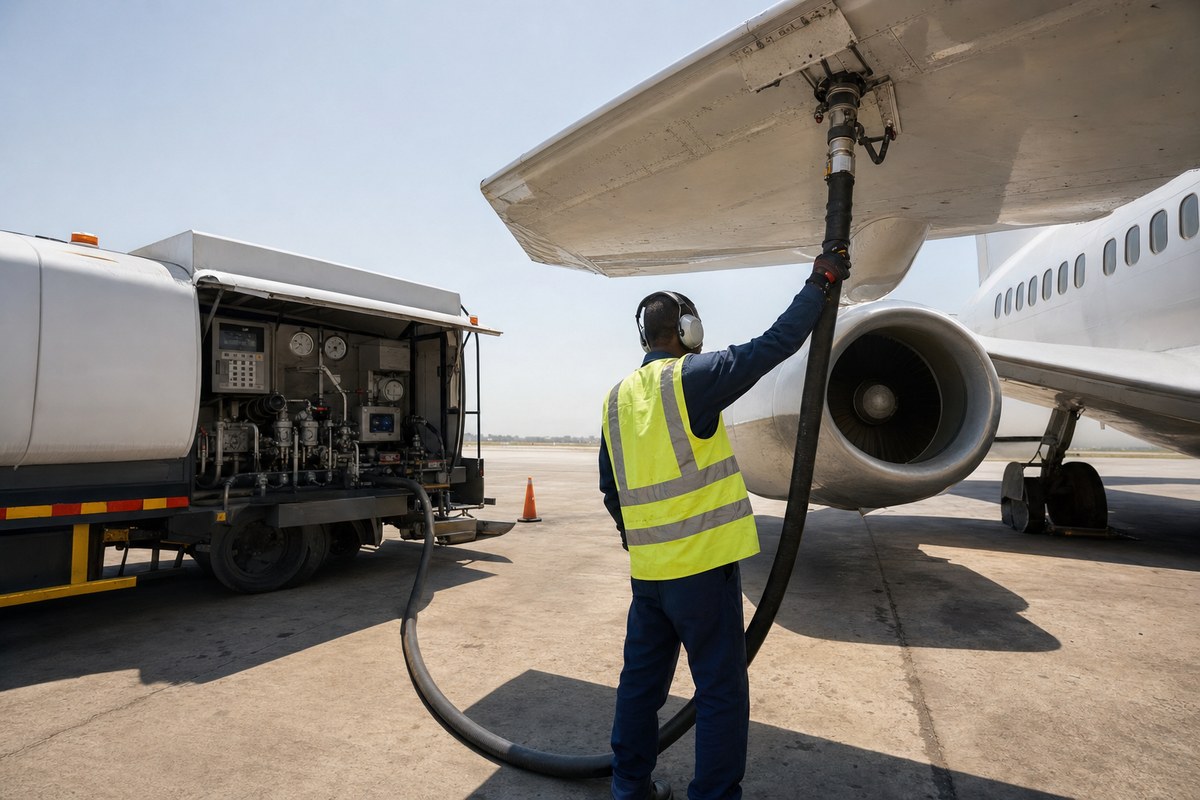
In Lagos, prices range from N1,719 to N2,100 per litre. In Abuja, prices span from N1,190 to N2,150 per litre across different marketers. In Kano, the cheapest fuel is N1,794 per litre, with others selling between N1,851 and N2,047. In Port Harcourt, where only five marketers supply the fuel, prices range from N1,764 to N2,109. In Anambra and Benin, fuel sells at N2,047 and N1,990 respectively, while in Enugu it is N1,990, and in Ilorin N2,120.
The Airline Operators in Nigeria (AON) wrote to Clement Isong, Executive Secretary of the Major Energies Marketers Association of Nigeria (MEMAN), on April 14, warning of a nationwide shutdown of flight operations from April 20, 2026. AON stated that Jet A1 prices had surged from N900 per litre as of February 28 to N3,300 per litre, an increase of more than 300 per cent within weeks, calling the spike "astronomical and unsustainable" and alleging it was artificial and inconsistent with global oil market trends.
Fuel costs declined following the April crisis but have risen again as crude oil reached $108 per barrel. AON accused fuel marketers of actions it said are "decimating the aviation industry" and warned of wider implications for Nigeria's economy, safety, and national security. AON's Vice President, Onyema, said the crisis could be resolved through direct intervention by President Tinubu, noting that Tinubu had previously waived a newly introduced 4% FOB customs duty within hours of being briefed on its impact on indigenous carriers. Onyema said what was needed was an equitable tax and charges framework protecting airlines, aviation agencies, and the travelling public.
Industry impact & what to watch
This case belongs to a broader category of airline distress triggered by fuel-price volatility tied to global crude disruptions rather than domestic demand shifts. When a single input cost can move by hundreds of percent within weeks, airlines operating on thin margins have little room to absorb the swing through ticket pricing alone, especially in markets where fares are constrained by affordability.
Domestic aviation in markets dependent on imported or locally refined jet fuel is structurally exposed to marketer pricing behavior and crude benchmarks simultaneously, which makes fuel cost management as much a policy question as an operational one. AON's push for presidential intervention mirrors past precedent, where a swift customs-duty waiver demonstrated that executive action can alter airline cost structures faster than market mechanisms.
What happens next will likely hinge on whether the government negotiates a tax and charges framework with MEMAN and the airlines, and whether crude prices stabilize below the $108 per barrel level cited. The threatened April 20 operational shutdown is the immediate marker to watch, since AON's letter to Isong set that date as a deadline for resolution.