Canada's SAF Industry Faces $32B GDP Opportunity as Energy Security Joins Climate Goals
Why It MattersThe analysis frames SAF development as an energy-security issue as much as a climate one, linking domestic feedstock production to reduced exposure to global fuel-price shocks.
Canada's sustainable aviation fuel sector is being shaped by energy security concerns alongside climate policy, according to an industry analysis by Justin Reist and Grace Field published September 10, 2026. Aviation contributes more than $82 billion in GDP to Canada annually, yet the country imports approximately 35% of its jet fuel, exposing the sector to global supply disruptions; the Strait of Hormuz closure alone disrupted close to a quarter of global jet fuel supply, and fossil jet fuel prices nearly doubled between February and June 2026.
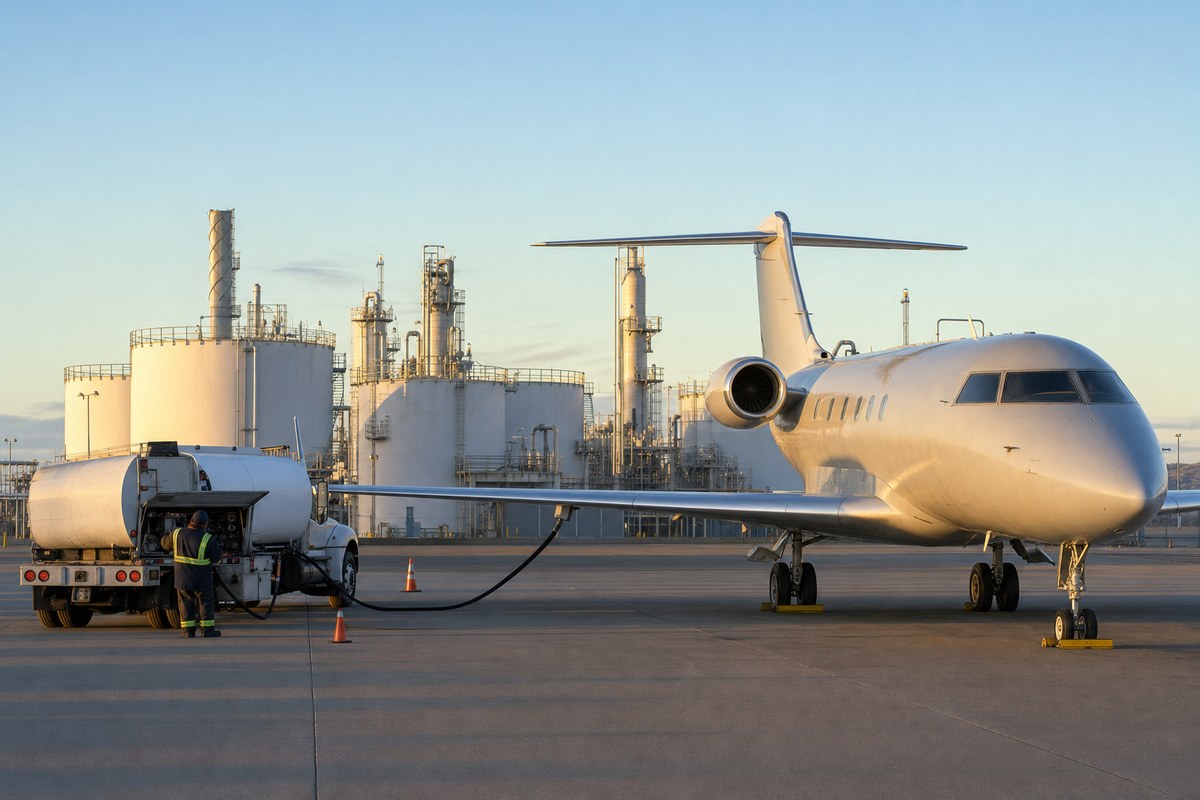
SAF is currently approved for blending with conventional jet fuel at up to 50% without aircraft modifications, producing lifecycle emissions 50–80% lower than fossil jet fuel, with some advanced pathways exceeding 100% reduction. It costs 2x–10x more than fossil jet fuel to produce, but domestic production from Canadian feedstocks—including canola, forestry residues, used cooking oil, captured CO2 and renewable electricity—would be less exposed to global price volatility. Domestic SAF development is estimated to represent a $32 billion GDP opportunity for Canada, also generating new revenue for the forestry and farming sectors.
Five main production pathways are at varying stages of readiness. HEFA, converting vegetable oils, cooking oils and animal fats, is the most mature at TRL 8–9 with 35–85% emissions savings. Co-processing, blending bio-based feedstocks into existing crude oil refineries, is also TRL 8–9 with potential savings above 90%, though SAF-standard certification remains a hurdle. E-SAF/Power-to-Liquid, synthesizing jet fuel from green hydrogen and captured CO2, operates at TRL 6–8 with 85–100% emissions savings but faces high near-term costs.
Globally, SAF demand is projected to reach 13 million tonnes (4% of global jet fuel use) by 2030 and 200 million tonnes (40% of global jet fuel use) by 2050, with global production capacity potentially reaching 18 million tonnes by 2030, though much of the announced project pipeline remains pre-financial close and exposed to financing, policy and execution risk.