Safran Landing Systems Inaugurates 7,500 sq m MRO Expansion at Singapore Site
Why It MattersRegional landing gear MRO capacity is expanding to meet Asia-Pacific and Middle East airline demand as facilities pair expansion with efficiency and sustainability investments to remain competitive.
What happened
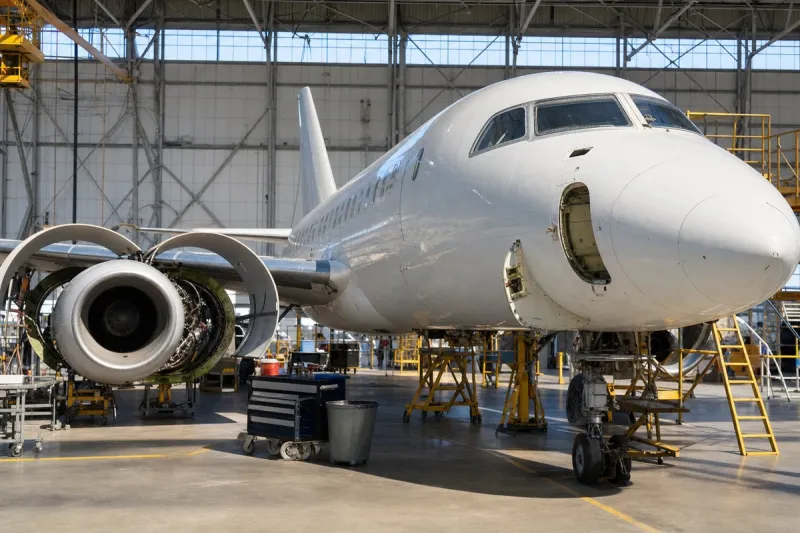
Safran Landing Systems has inaugurated a new 7,500-square-metre extension at its Singapore maintenance, repair and overhaul facility, adding an assembly line dedicated to landing gear overhauls to increase capacity and flexibility for airlines across the Asia-Pacific and Middle East regions.
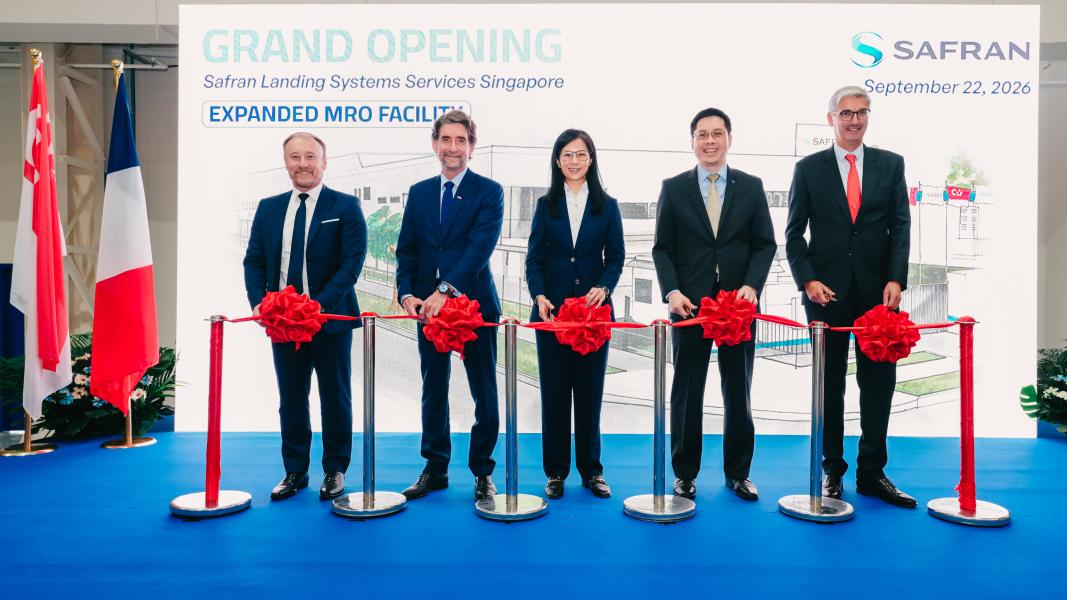
Established in 1979 and a strategic partner of SIA Engineering Company since 2000, the Singapore site is Safran Landing Systems' key regional facility for commercial aircraft landing system MRO. Its capabilities span disassembly, inspection, machining, surface treatment, assembly and final certification, covering aircraft including the Airbus A320 family, A330, A350 and A380, as well as Boeing 737 and 787, and ATR regional aircraft. The expansion is expected to create nearly 100 new jobs by 2030, supported by commitments to continuous training and talent development, with advanced repair technologies to be deployed to broaden the site's technical capability range.
The new building includes 2,800 square metres of solar panels comprising 800 panels, energy-efficient LED lighting, and advanced cooling solutions. The solar installation is expected to generate renewable electricity equivalent to approximately 60% of the site's total consumption, reducing the facility's carbon emissions. Safran Landing Systems operates a global network of seven industrial MRO facilities, and parent company Safran reported revenue of 31.3 billion euros in 2025 and employs more than 110,000 people worldwide, with shares listed on Euronext Paris as a constituent of the CAC 40 and Euro Stoxx 50 indices.
Industry impact & what to watch
Landing gear overhaul work is capital- and space-intensive, and airlines operating across Asia-Pacific and the Middle East need regional turnaround capacity rather than shipping components across continents, which is why an established site expanding footprint and adding a dedicated assembly line matters more than a new greenfield entrant would.
This kind of MRO investment tends to bundle capacity growth with workforce and sustainability commitments, since long-lived facilities need both trained technicians and lower operating costs to stay viable across decades of aircraft programs spanning A320-family jets to widebodies like the A350 and 787.
What determines whether the added capacity actually eases regional bottlenecks is how quickly the nearly 100 new roles are filled and trained by 2030, and how the new assembly line's throughput compares with existing demand from airlines and from SIA Engineering Company as the site's long-standing partner.