NASA X-59 Aims to Reshape Supersonic Travel Rules with Quiet Boom Technology
Why It MattersSuccess could eventually reopen overland supersonic commercial routes now largely prohibited, reshaping long-term prospects for a future civil supersonic aircraft segment.
NASA's X-59 experimental aircraft is designed to address the primary barrier that ended commercial supersonic passenger travel: the disruptive sonic boom produced when an aircraft breaks the sound barrier, a shockwave that once forced Concorde to restrict supersonic flight to oceanic routes away from populated areas.
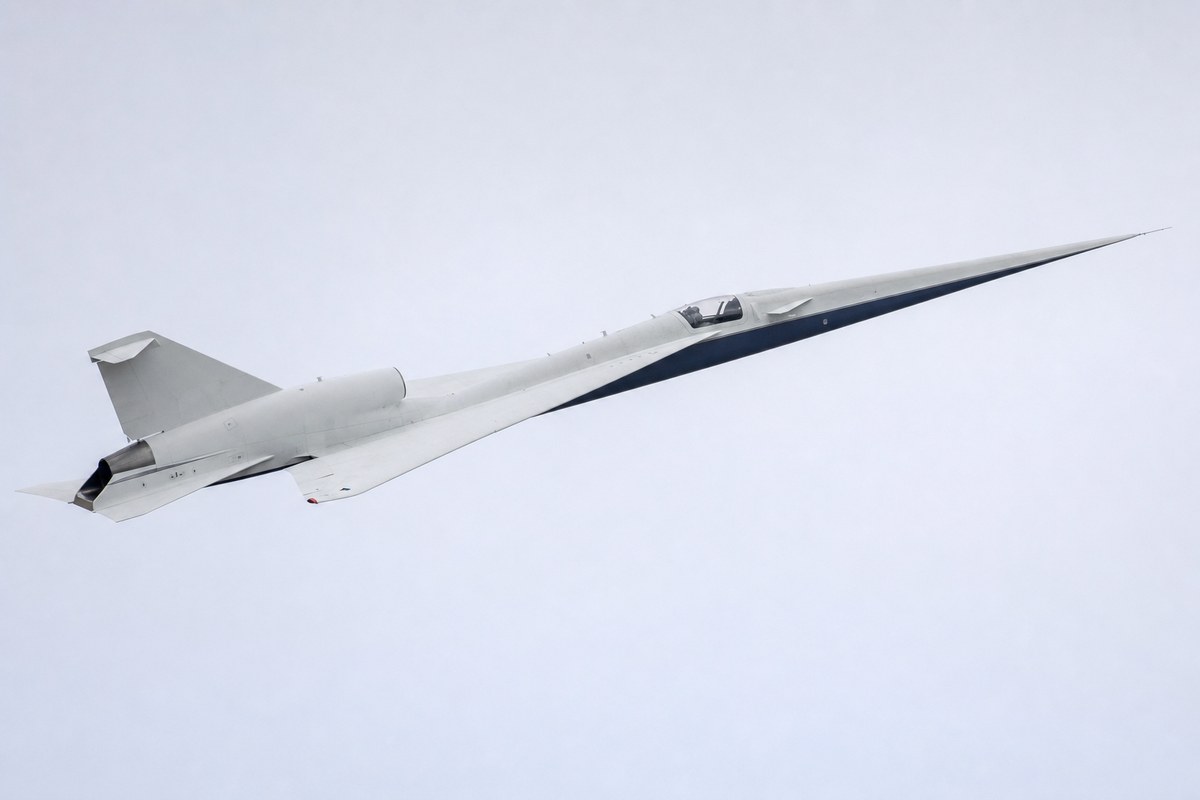
The X-59 employs a distinctive airframe to prevent shockwaves from merging. Its needle-shaped nose extends nearly 30 metres, and the cockpit sits so far aft that the pilot has no forward-facing window, relying entirely on an external camera system for navigation, a configuration meant to flatten what would otherwise be a double sonic crack into a low-level background thump.
The aircraft belongs to NASA's X-plane programme, a lineage of single-objective experimental aircraft dating to the Bell X-1 in 1947, with programme managers describing minimalism — one measurable objective per airframe within a fixed budget — as the initiative's core principle. Flight data gathered by the X-59 is intended to give aviation regulators empirical evidence to evaluate current overland supersonic noise standards, which, if revised, could make overland supersonic commercial routes viable for a future generation of civil aircraft.