Contrail avoidance could delay aviation warming by a decade, Klima Consulting review finds
Why It MattersThe findings support operational contrail-avoidance trials as a near-term climate lever for airlines, alongside rather than instead of continued CO2 reduction efforts.
A scientific review commissioned by campaign group Transport & Environment (T&E) and produced by Klima Consulting, titled "Defining a way forward for the science and technology of contrail mitigation," found that targeted adjustments to aircraft flight paths to avoid warming contrails could delay aviation-related global warming by roughly a decade. Authored by Olivier Boucher, Audran Borella, Grégoire Dannet and Matteo Mirolo, the report estimates that contrail mitigation introduced from 2030 and scaled up to a 50% reduction in contrail warming by 2040 could avoid about 0.025°C of global temperature rise by 2050 and 0.049°C by 2070. Under one modelled scenario, a temperature increase attributable to aviation that would otherwise be reached in 2048 would not occur until 2061.

The study notes that radiative forcing from contrails and contrail-induced cirrus clouds is comparable in magnitude to that caused by aviation's accumulated CO2 emissions, but unlike CO2, contrails are short-lived, so reductions could yield climate benefits quickly. The warming effect is highly concentrated, with an estimated 2-3% of flights responsible for around 80% of contrail warming globally. One mitigation approach involves adjusting altitude or route for aircraft predicted to encounter ice-supersaturated regions, at an additional fuel cost of around 1% per flight, which the researchers consider small relative to the climate benefit.
Operational trials are growing: a test involving 2,400 transatlantic flights by American Airlines found a 62% lower contrail formation rate among 112 flights following avoidance plans versus a control group, with no statistically significant fuel-use difference. Air France reported results from nearly 4,300 commercial flights over the North Atlantic between February and April, in which 130 of 245 high-climate-impact flights were rerouted, reducing contrail-related climate impact. The UK-backed Operation Blue Skies programme will test contrail avoidance in Shanwick Oceanic airspace during the winters of 2026/27 and 2027/28, with around 10,000 flights expected through the airspace during trial hours each year.
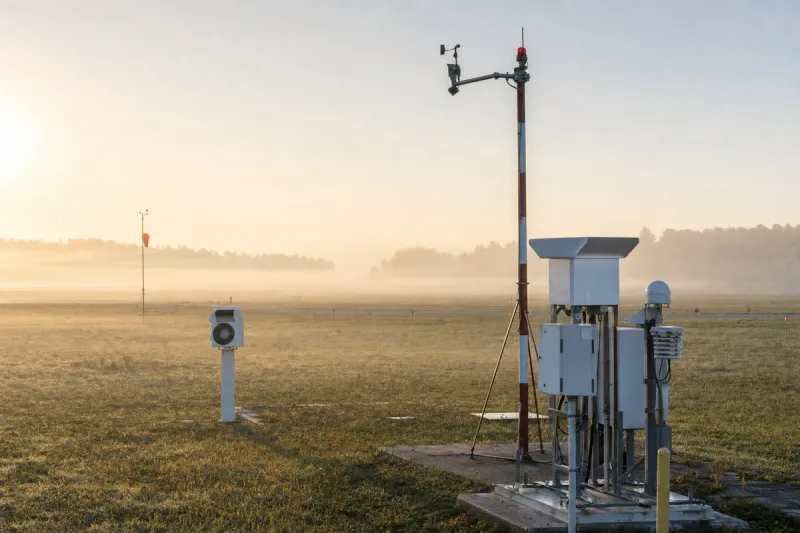
The report identifies remaining uncertainties, including contrails' radiative impact, interactions between overlapping contrails, and weather-model accuracy in forecasting ice-supersaturated regions, and recommends large-scale trials lasting at least a year, improved weather prediction, wider use of open-access contrail datasets, permanently installed humidity sensors on commercial aircraft, and a "digital twin" to verify avoidance measures. The researchers stress that contrail avoidance is not an alternative to cutting CO2 emissions, since its benefit persists only while mitigation continues, and T&E said the science is mature enough for mitigation to proceed while research addresses remaining uncertainties.